
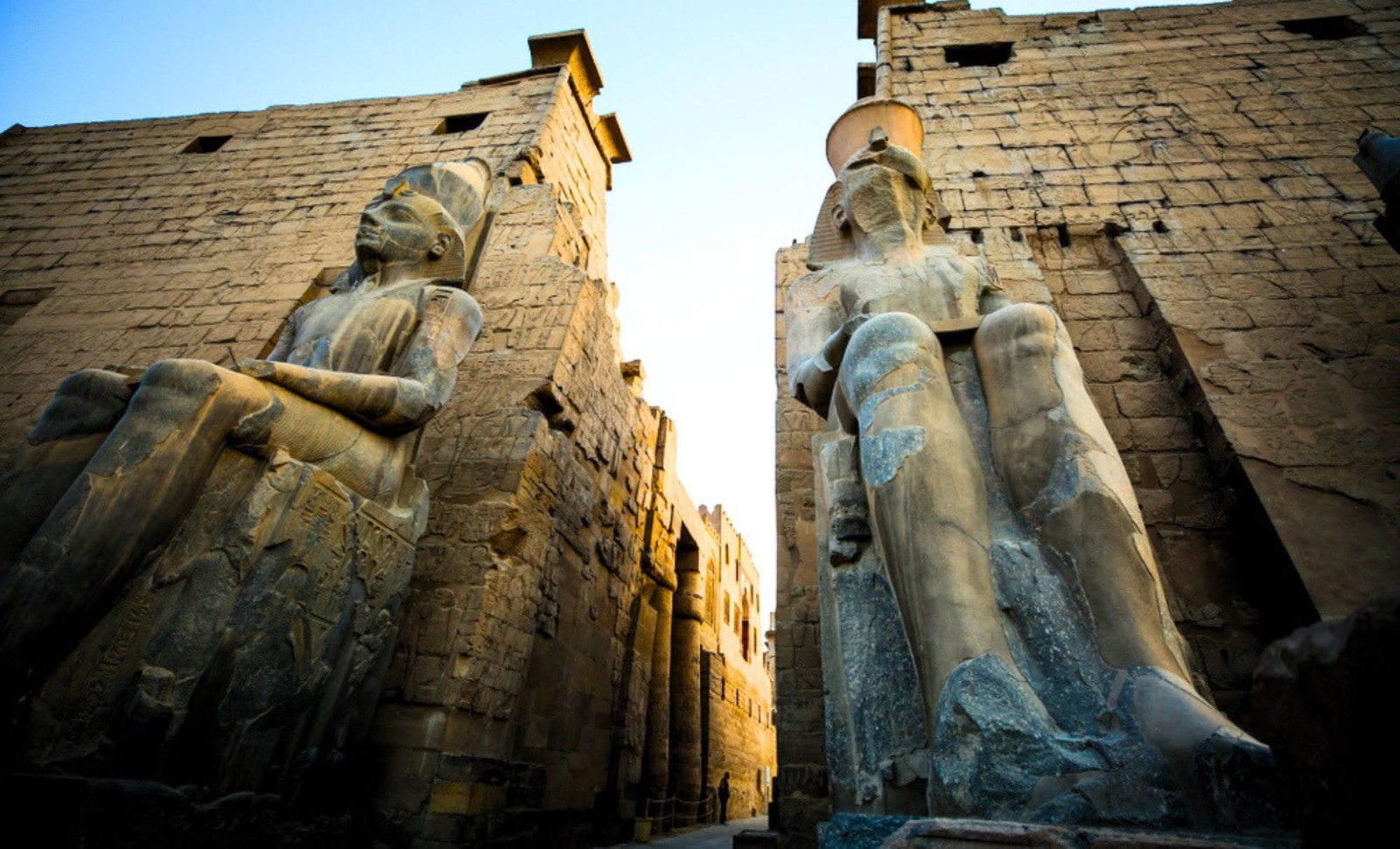
A groundbreaking study has unveiled that the Karnak Temple Complex, one of Ancient Egypt’s most revered religious locations, was originally built atop a previously unrecognized river island formed by Nile waterways over 4,500 years ago. This revelation transforms our historical understanding of Karnak’s origins and implies a deliberate spiritual choice linked to Egypt’s ancient creation myths.
Detailed in Antiquity and conducted by geoarchaeologists affiliated with the University of Southampton, the research utilized sediment cores and advanced dating techniques to determine that Karnak's initial habitation dates back to approximately 2300 BCE, placing it in the Old Kingdom era—earlier than previous estimates.
Equally fascinating is the spiritual significance tied to the site’s unique geography. Scholars propose that Karnak’s placement was not random or politically motivated but designed to evoke the ‘‘primeval mound,’’ a key motif in Egyptian cosmology where land first emerges from chaotic waters.

Where Mythology Meets Geology in Ancient Thebes
Located about 500 meters east of the Nile's current course in present-day Luxor (ancient Thebes), Karnak served as the prominent religious center of Pharaonic Egypt. As highlighted in its UNESCO World Heritage designation, Karnak is recognized as one of the largest religious sites ever built, embodying exceptional universal heritage.
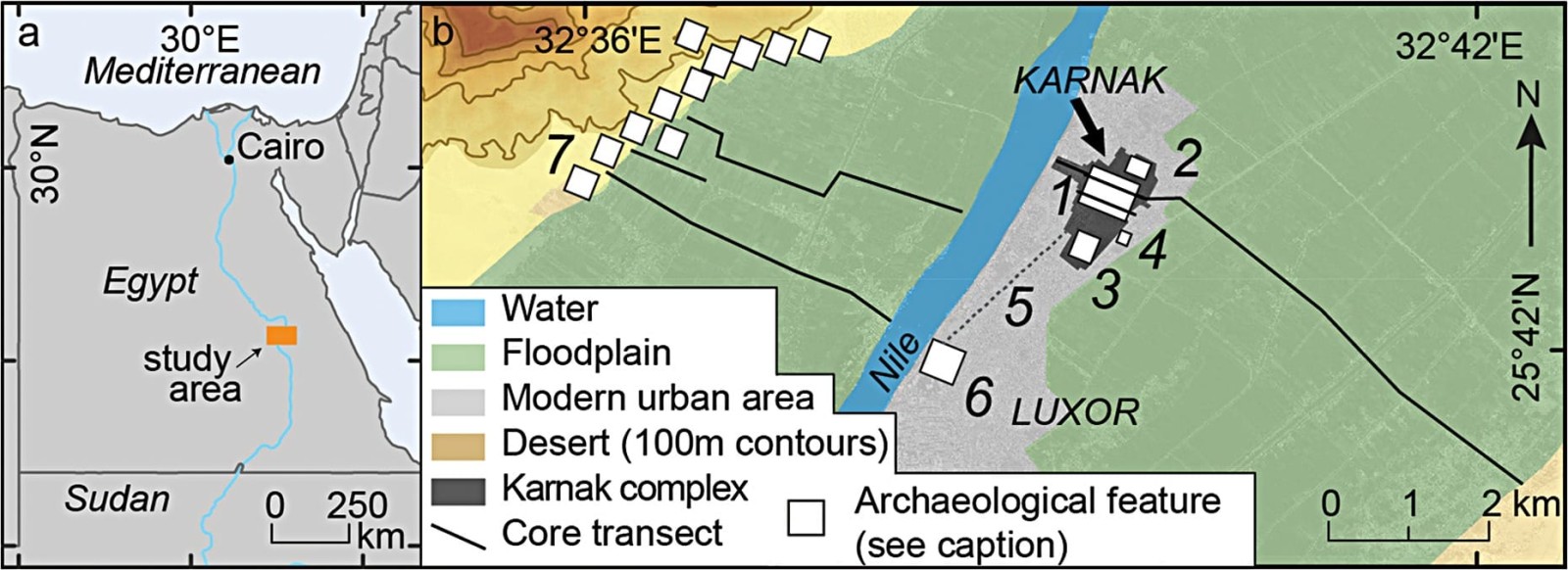
Hidden beneath its grand columns and monuments lies an ancient landscape that likely influenced the temple’s religious importance from its inception. The team collected and examined 61 sediment core samples, tracing historic Nile flow and sediment build-up over thousands of years. Optically stimulated luminescence (OSL) dating combined with ceramic analysis dates the formation of a stable, island-like geological feature to roughly 2520 BCE (±420 years).
The peer-reviewed article in Antiquity explains this elevated landform—considered a fluvial terrace—was sculpted by the erosive forces of Nile branches to both the east and west. Once water receded, this land remained dry enough to support continuous settlement. Ceramics from the late Old Kingdom (circa 2305–1980 BCE) provide archaeological confirmation of early occupation.
“It’s the only known area of raised land surrounded by water in the region,” said Dr. Ben Pennington, a geoarchaeologist at the University of Southampton. “To ancient eyes, this may have looked like the moment of creation made real.”
This discovery fundamentally revises previous assumptions about how Karnak’s site was chosen, indicating that its sacred significance was embedded within the very landscape long before dynastic rulers constructed the monumental temple.
Rediscovering a Lost Branch of the Nile
A key finding in the research is confirmation of a once-prominent eastern channel of the Nile near the temple—a waterway previously thought to be minor or merely hypothetical. Analysis of sediment cores east of Karnak revealed thick layers indicative of bars and levees, containing ceramics from the First Intermediate Period and early Middle Kingdom. These findings confirm a substantial river course adjacent to the temple’s eastern flank over a lengthy period.
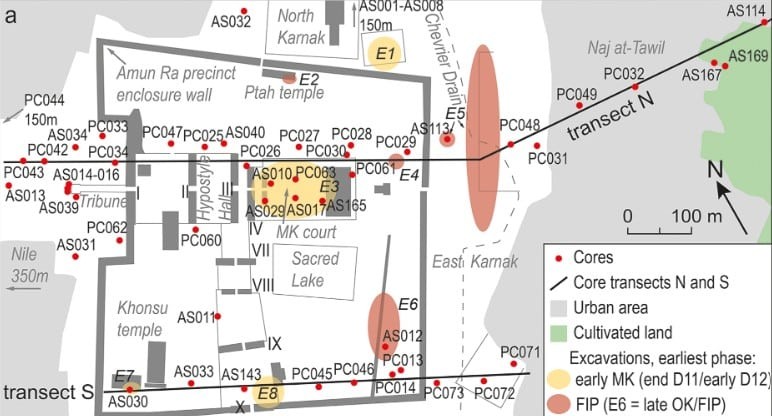
According to the geoarchaeological report, the eastern Nile channel was comparable in size to the western branch, overturning long-held beliefs. Although both waterways gradually filled with sediment over time, the eastern channel remained influential enough to impact temple planning.
The research also uncovered evidence of deliberate human modification of the river’s course. In certain areas, desert sands were strategically deposited into abandoned channels to firm up the ground, expanding buildable land.
“We also see how ancient Egyptians shaped the river itself, through the dumping of sands from the desert into channels,” said Dr. Dominic Barker, a co-author from Southampton’s archaeological team, “possibly to provide new land for building, for example.”
These activities demonstrate an early mastery of environmental manipulation long before large-scale hydraulic engineering became widespread. This perspective reimagines Karnak as a dynamic cultural landscape continuously molded by natural processes and human ingenuity.
The Primeval Mound Takes Shape in Ancient Topography
The findings offer more than geological insights; they deepen the understanding of Karnak’s spiritual symbolism. In Egypt’s Pyramid Texts, creation starts when a mound emerges from the chaotic primordial waters called Nun. By establishing the temple on a naturally occurring island, Theban leaders may have intended to replicate this sacred event physically.
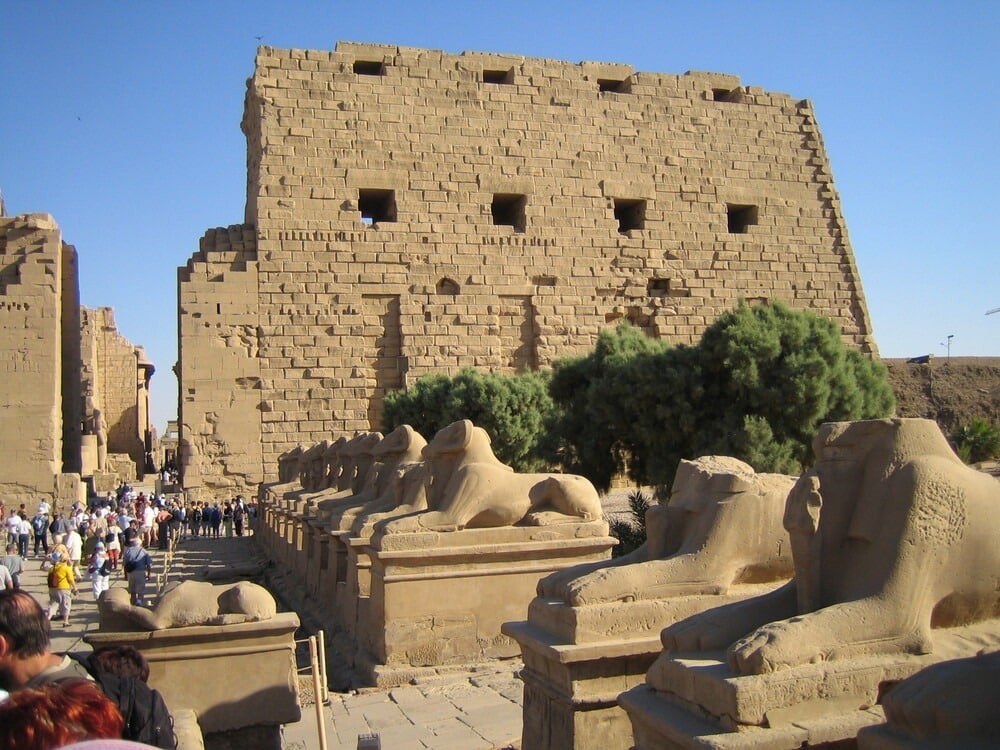
Further analysis of the temple’s elevation and historic flooding shows that during the Middle Kingdom, the annual Nile inundations submerged surrounding areas, leaving the island—and thus Karnak—visible above water. This dramatic imagery would have powerfully evoked the creation narrative of land emerging from the flood.
Later religious writings, such as the Coffin Texts, expand on this symbolism, describing the deity Amun (later merged with Ra) as arising from the watery abyss. These beliefs closely reflect the temple’s unique physical surroundings.
“This was a landscape that mirrored their religious imagination,” Pennington explained. “And that’s a powerful motivation to build.”
The strong connection between legend and landscape was intentional. As noted in UNESCO’s historical summary, Thebes was pivotal in religious development during the Middle and New Kingdoms. This new evidence emphasizes that its sacred prominence may have stemmed as much from its geography as its spiritual doctrines.
- Categories:
- News









0 comments
Sign in to Comment