
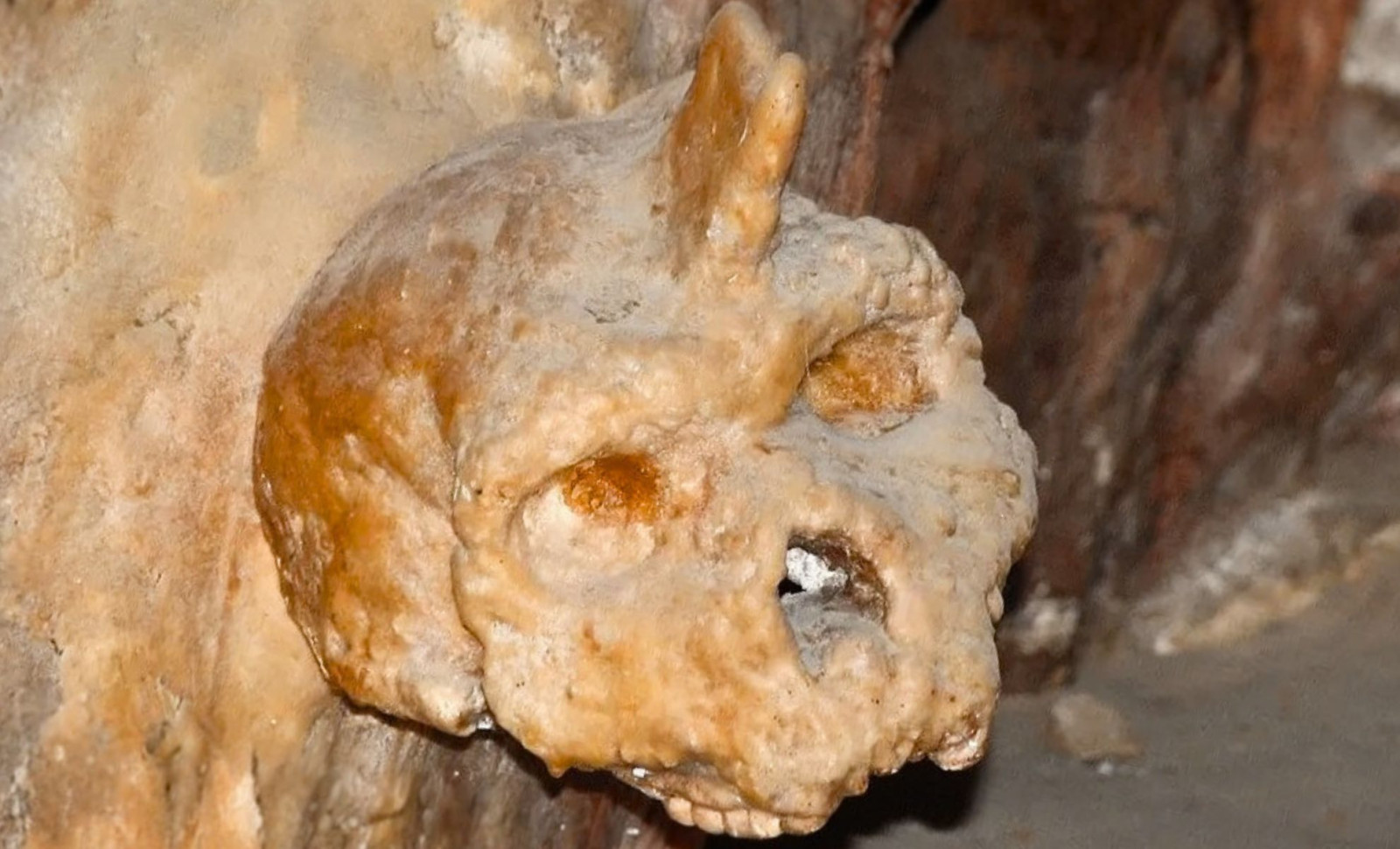
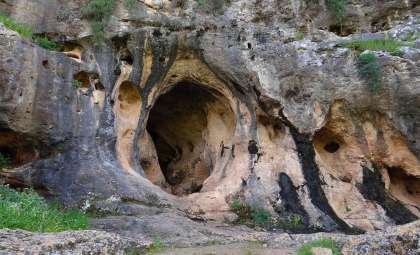
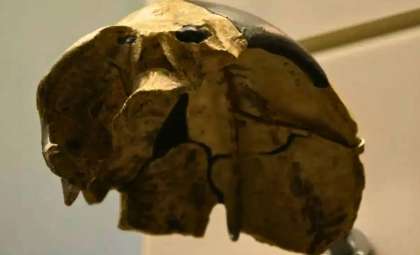
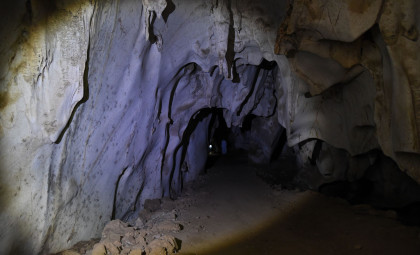
A human skull discovered embedded in a cave wall in northern Greece has intrigued scientists for over six decades. First found by a local villager in 1960, the fossilized cranium was covered in mineral deposits and resisted easy classification.
The Petralona skull appeared archaic but did not fit neatly into established categories of early human relatives. It seemed somewhat human, yet not typical of any known group. For years, researchers debated whether it was an early Neanderthal, a late Homo erectus, or represented another lineage. Its uncertain age posed a major challenge to placing it accurately on the evolutionary timeline.
Dating attempts varied dramatically, with estimates ranging from 170,000 to 700,000 years old—covering a period larger than the span of modern Homo sapiens. Without a reliable age, its evolutionary context remained unclear.

Now, new research published in the Journal of Human Evolution has pinned down the skull’s age using uranium-series dating from the calcite crust formed directly on the bone. These findings show the Petralona fossil is at least 286,000 years old, positioning it among contemporaneous populations that lived alongside Neanderthals in Europe for over 100,000 years.
Calculating Age via Calcite Layers
The calcite that encrusted the skull against the cave wall also preserved the secret to its true age. Uranium-series dating tracks the radioactive decay of uranium absorbed by the calcite as it precipitates from groundwater. This process excludes thorium, enabling precise dating of mineral formation.
The study conducted detailed mass spectrometric analyses on samples taken from the calcite covering the Petralona cranium and determined an age of approximately 286,000 years, with a small margin of error. Because the calcite layer formed after the skull, this establishes a minimum age for the fossil.
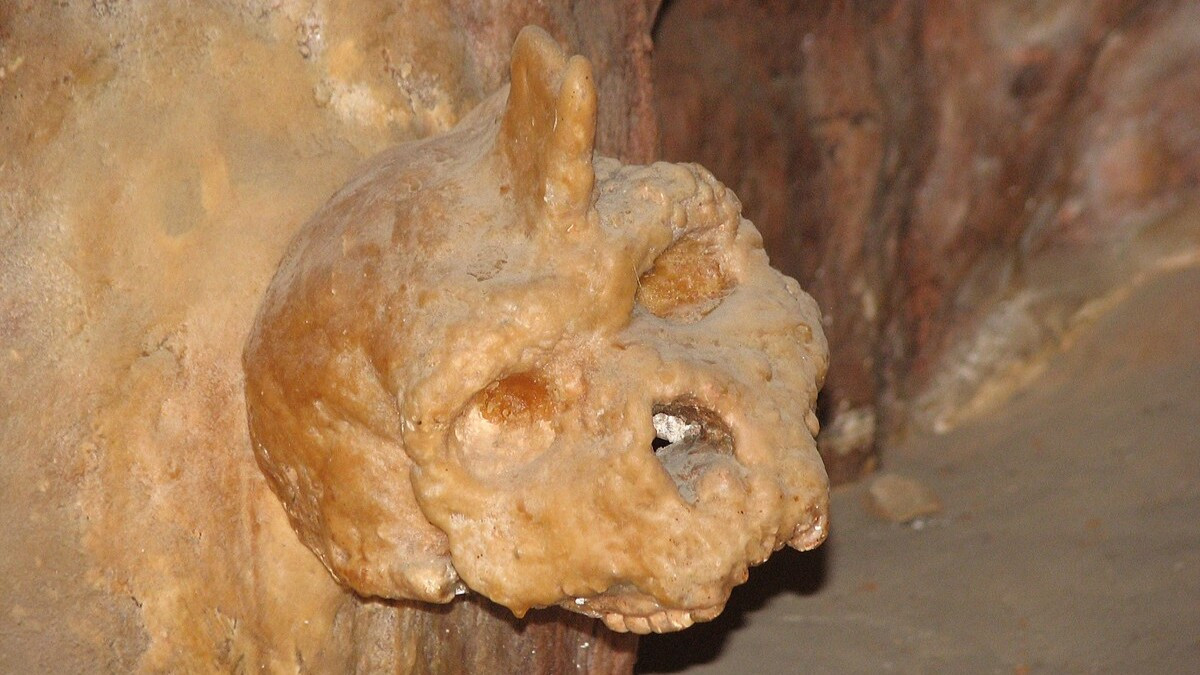
Co-author Chris Stringer from London’s Natural History Museum clarified in an interview with Live Science that the skull’s age is likely just under 300,000 years, given the rapid onset of calcite formation. This conclusion finally settles decades of conflicting dating results.
Previous electron spin resonance dating had produced inconsistent ages scattered throughout the Middle Pleistocene. The newer uranium-series technique only required tiny sample quantities, enabling precise measurements directly on the mineral crust adhering to the bone.
A Unique Human Ancestor
Based on its size and robust features, the Petralona specimen was probably male, with moderate dental wear indicating a young adult. However, the skull’s traits do not neatly align with either modern humans or classic Neanderthals.
Stringer and colleagues propose that the cranium represents Homo heidelbergensis, an archaic species first identified from a jawbone near Heidelberg, Germany, in 1908. According to the Smithsonian Institution's Human Origins Program, this species thrived across Africa and Europe between roughly 700,000 and 200,000 years ago, with a braincase larger than earlier hominins but retaining a pronounced browridge.
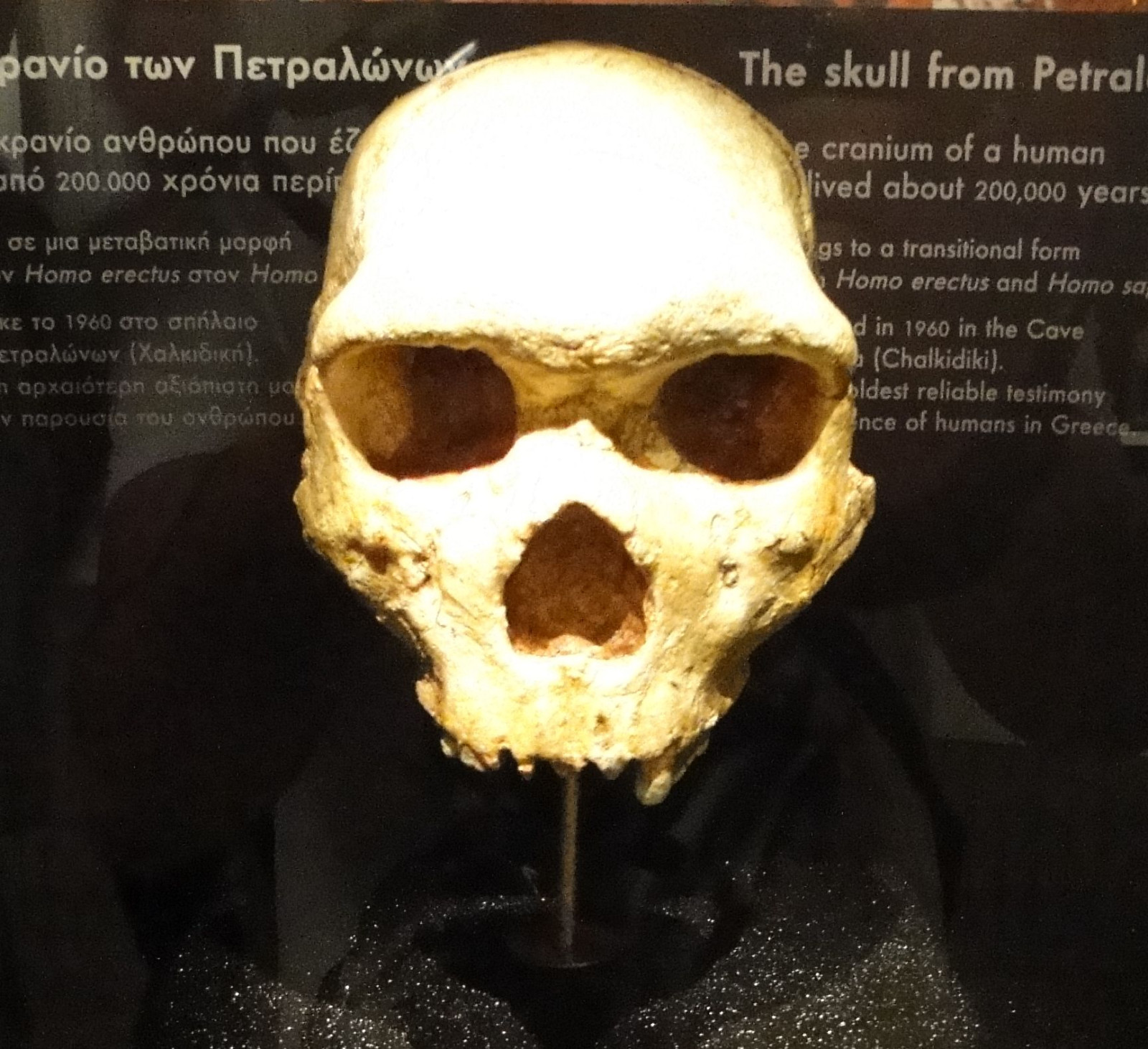
Intriguingly, the Petralona fossil shares significant similarities with the Kabwe cranium from Zambia, located approximately 6,000 kilometers away. A 2020 study in Nature dated Kabwe to nearly 299,000 years old and highlighted its close morphological resemblance to Petralona.
The comparable ages and shared features suggest a widespread population of Homo heidelbergensis spanning from the Mediterranean to southern Africa during the Middle Pleistocene.
Coexisting with Neanderthals
These new age estimates place the Petralona individual in Europe at a time when early Neanderthals were present elsewhere on the continent. Fossils from Spain’s Sima de los Huesos site, dating to about 430,000 years ago, already display traits characteristic of Neanderthals, indicating these groups coexisted for over 100,000 years.
The Journal of Human Evolution paper affirms the coexistence of this population alongside evolving Neanderthals in Europe during the later Middle Pleistocene. Stringer emphasized to Live Science that this coexistence reveals a persistent archaic lineage living contemporaneously with Neanderthals.
It remains uncertain whether these populations interbred or maintained strict biological separation. While genomic data confirms later interbreeding between Neanderthals and modern humans, DNA studies of specimens this ancient and from warm environments are currently impossible.
The Smithsonian Institution notes Neanderthals and modern humans likely diverged from a common ancestor, probably Homo heidelbergensis, between 350,000 and 400,000 years ago.
Continuing Debates Over Classification
The taxonomic identity of Homo heidelbergensis remains contested among paleoanthropologists. Some favor splitting African and European fossils into separate species, while others argue the group represents a valid, single evolutionary lineage.
The study openly discusses this controversy: “There is currently much debate about the validity of the extended hypodigm H. heidelbergensis sensu lato and the evolutionary position of the associated fossils, particularly whether any of them might have been ancestral to H. sapiens or to H. neanderthalensis, ancestral to both, or ancestral to neither.”
The ability to firmly date the Petralona cranium supplies an essential reference point for interpreting other European fossils from this period. However, the fossil reveals only anatomical traits; no tools or artifacts can be definitively linked to it, leaving questions about its behavior and lifestyle unanswered compared to other known Homo heidelbergensis sites.
- Categories:
- Science





0 comments
Sign in to Comment