
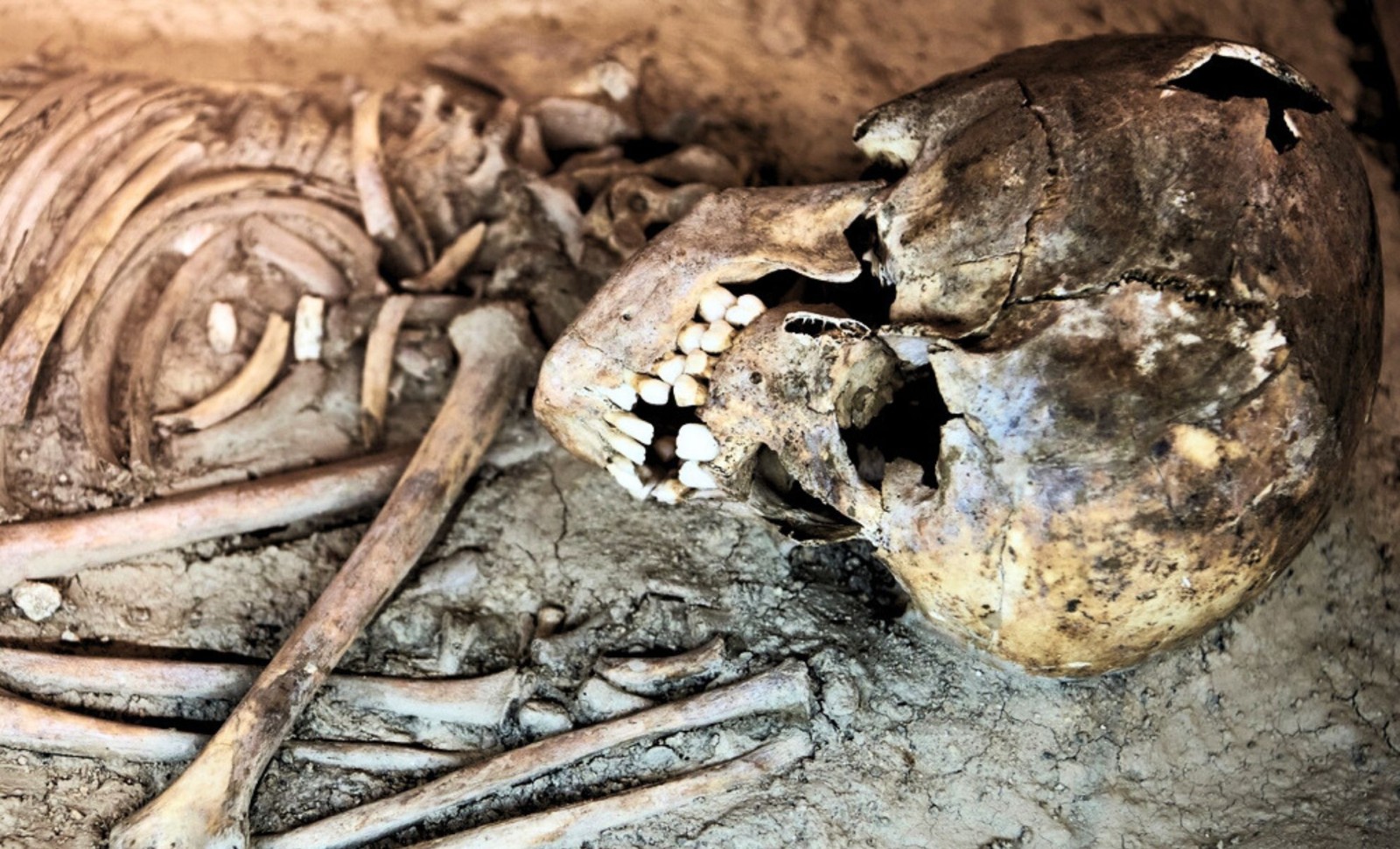
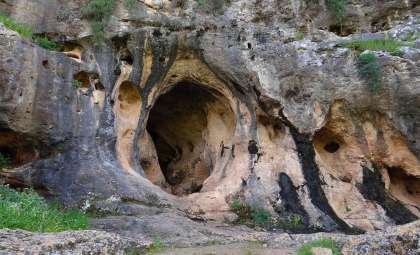
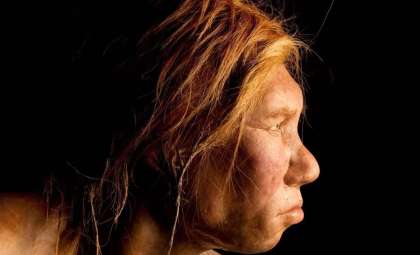
Nearly one hundred years ago, the remains of a young child were uncovered inside a cave on Israel’s Mount Carmel. This individual, dubbed Skhūl I, has long been identified as an early Homo sapiens. However, fresh research suggests a far more intricate identity: this child might represent the earliest documented instance of a human–Neanderthal hybrid, dating back approximately 140,000 years.
Presented in the esteemed journal L’Anthropologie, this new interpretation directly challenges the prevailing view that interbreeding between Homo sapiens and Neanderthals only began around 50,000 years ago. If validated, it implies these two human lineages crossed paths and exchanged genes at least 100,000 years earlier, possibly within a distinct geographic route than commonly believed.
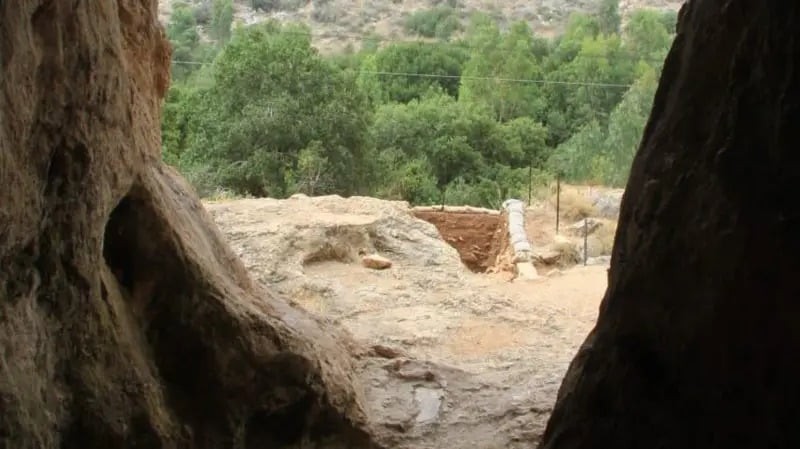
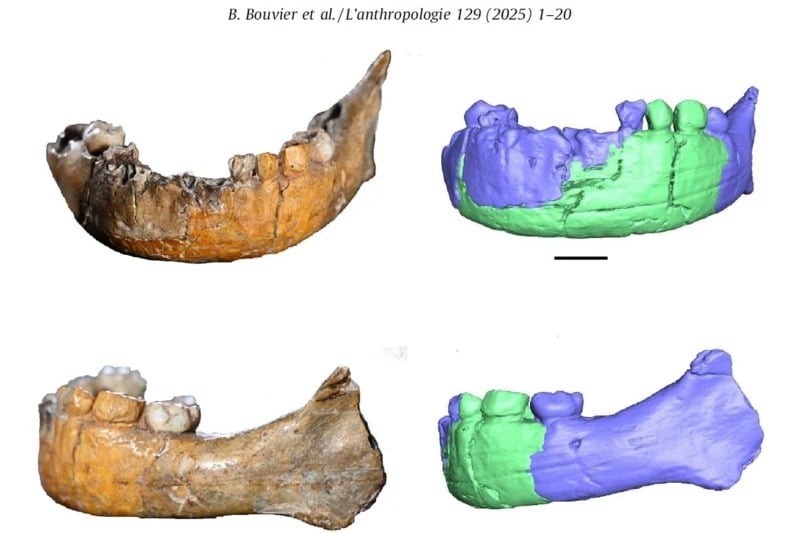
The partial skull and jawbone of this child were excavated in the 1930s and stored away for decades. Recent advances in CT scanning and 3D digital modeling have uncovered a unique assemblage of physical features combining a skull resembling Homo sapiens anatomy with a jaw displaying traits typical of Neanderthals.

Paleoanthropologist Israel Hershkovitz from Tel Aviv University leads the study and emphasizes its significance: “We are seeing evidence of gene flow at a population scale, not a mere isolated hybridization event deep in prehistory.”
Does this child reveal a hidden hybrid lineage?
The Levant has long been recognized as a pivotal corridor connecting Africa, Asia, and Europe, playing a crucial role in early human dispersals. Suggesting this region facilitated persistent interactions between Neanderthals and modern humans as early as 140,000 years ago challenges long-held evolutionary models.
Employing tomographic scans and virtual reconstructions, researchers reexamined Skhūl I’s fragmented remains by contrasting them with fossilized skeletons of both Homo sapiens and Neanderthals, including juvenile specimens.
The analysis uncovered what they call “dichotomous morphogenesis”: the cranial vault shows rounded, modern human-like designs, while the jaw includes distinctive Neanderthal characteristics like a receding chin and a robust mandibular shape.
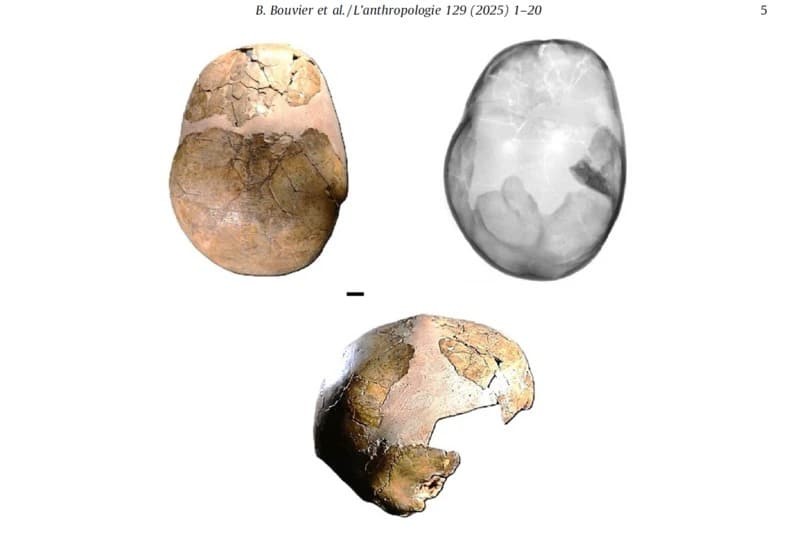
According to Hershkovitz, this morphology might indicate the child was a descendant of multigenerational mixing between humans and Neanderthals, rather than a single hybrid individual.
They describe this as a “paleodeme,” which refers to a genetically diverse group formed through sustained interbreeding among modern and archaic humans.
This concept corroborates earlier genetic discoveries, including a seminal 2010 Science paper revealing that 1% to 5% of DNA in modern non-African populations derives from Neanderthal ancestors. This came from sequencing the Neanderthal genome and identifying signs of ancient hybridization.
Further research, such as a Nature review on human evolutionary models, supports more nuanced views that allow for widespread gene flow among different hominin populations, instead of strict species boundaries.
Ancient burial sheds new light on early hominin behavior
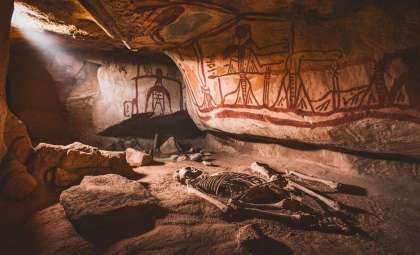
Skhūl I was interred alongside other individuals in what seems to be a shared burial site that could hold ritual importance. Initially excavated by Dorothy Garrod during the 1930s, this does not just represent a burial but may be the earliest confirmed grave with deliberate interment.
This finding complicates traditional assumptions that such burial rites were exclusive to anatomically modern humans. Instead, it suggests that mixed populations practiced symbolic behavior and social cohesion.
“Claiming that only Homo sapiens had intentional burial rituals no longer holds up,” Hershkovitz remarks. “This group clearly shared a sense of community, honored their dead, and likely showed territorial behaviors.”
Still, some scientists advise caution in interpreting these findings.
Antonio Rosas, a senior paleobiologist at Spain’s National Museum of Natural Sciences, points out that while thought-provoking, the study does not irrefutably prove hybrid status. “Using differences between a skull and jaw to assign hybridity is scientifically fragile,” he mentions, noting that the jaw could belong to another individual unintentionally mixed into the burial.
Challenges in interpreting fossil evidence
Critics highlight that morphological features alone cannot conclusively demonstrate interbreeding. While skeletal traits provide valuable insight, they lack the definitive power of genetic data. Without ancient DNA (aDNA) confirmation, claims about hybrid ancestry remain probabilistic and speculative.
“Genetic inheritance doesn’t manifest cleanly within individual bones,” Rosas explains. “Having a Neanderthal-like jaw does not guarantee hybrid origins because gene mixing distributes variably across the genome.”
Moreover, preservation difficulties complicate Skhūl I analysis. The skull and jaw were separated during the 1931 dig, with the mandible reconstructed artificially, raising concerns over potential contamination and errors prevalent in early excavations.
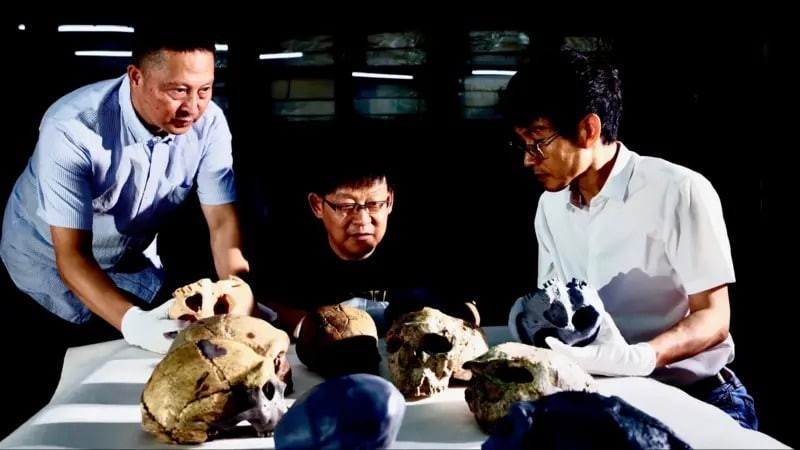
Proponents of the hybrid theory call for more advanced aDNA testing to verify these findings. However, recovering genetic material from fossils of this age—particularly from the Levant’s harsh climate—remains an extraordinary scientific challenge due to DNA degradation.
This situation recalls debates around other ancient remains, such as the Lapedo child in Portugal, dated to roughly 29,000 years ago and also proposed as a human-Neanderthal hybrid. Like Skhūl I, it sparked contentious discussion about hybrid classification and interpretation of burial practices.
- Categories:
- Science


0 comments
Sign in to Comment