
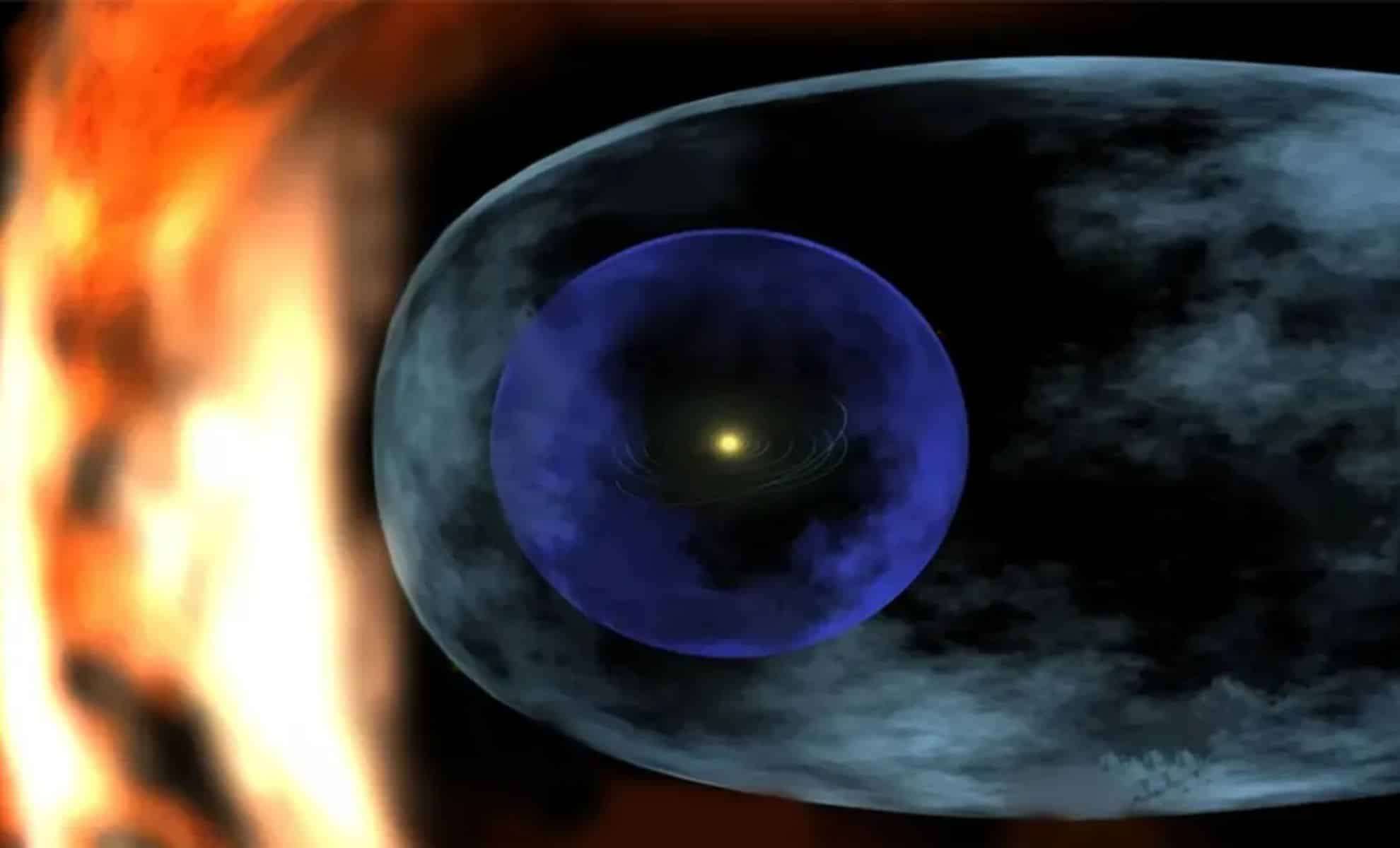
As our Solar System journeys through the Milky Way, it occasionally passes through cosmic regions that can significantly impact Earth’s environment. Several million years ago, one such passage may have compressed the heliosphere, enabling particles from the depths of space to penetrate Earth’s atmosphere. A 2024 Nature Astronomy study suggests this occurred when the Sun and its planets traversed a cold, dense interstellar cloud belonging to the Local Ribbon of Cold Clouds. Geological evidence of iron-60 and plutonium-244 isotopes found on Earth and the Moon supports this scenario.
Shielding Effect of the Heliosphere
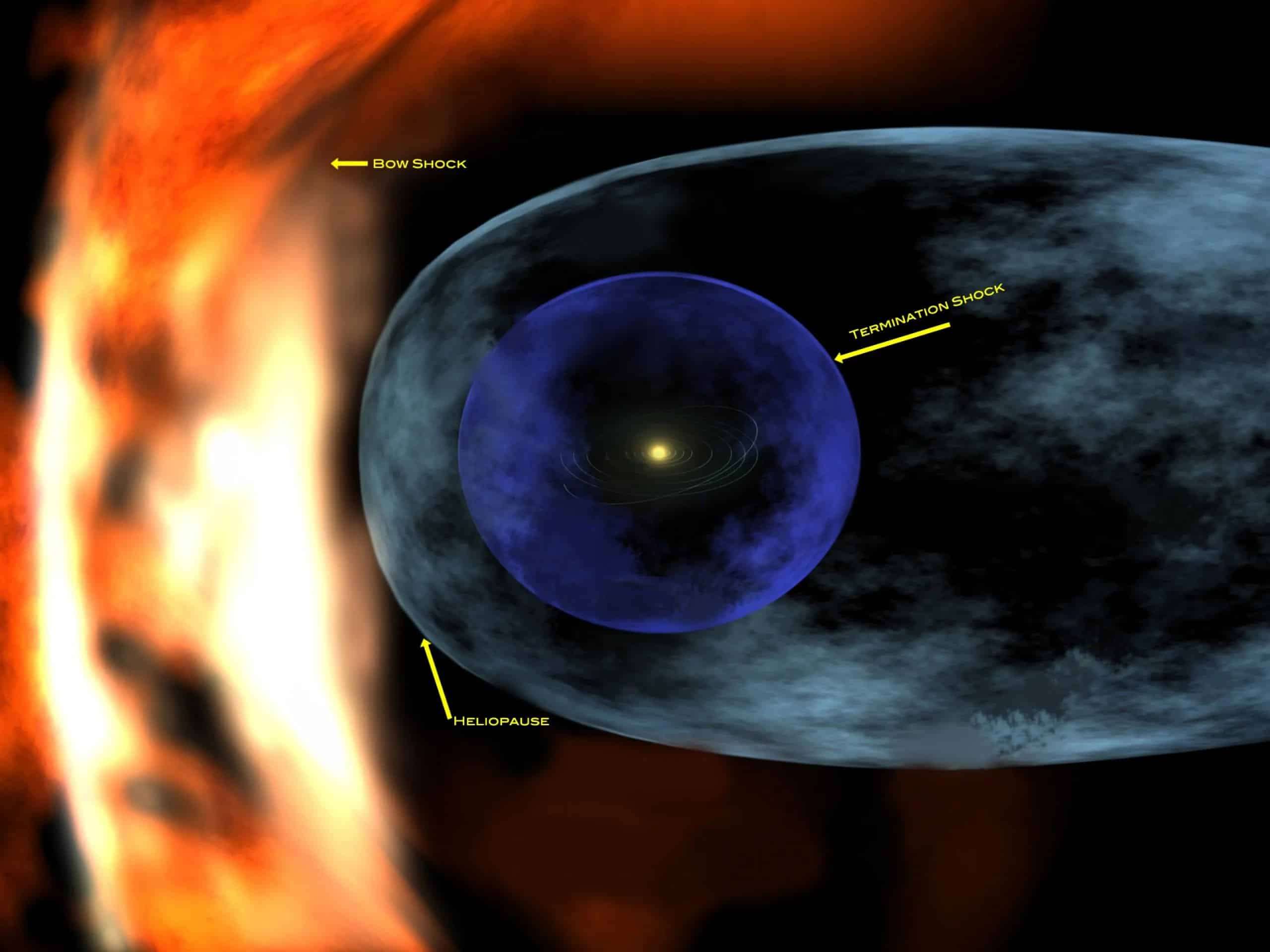
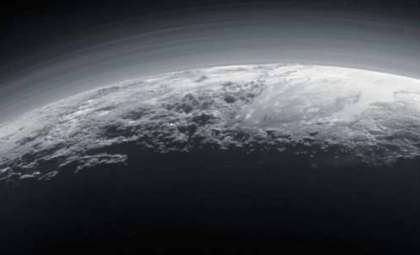
The heliosphere is a vast protective bubble formed by the solar wind, a continuous flow of charged particles streaming from the Sun. This bubble stretches far beyond Pluto’s orbit—nearly three times farther—acting as a shield against the interstellar medium (ISM), which is the sparse matter that fills the space between stars. NASA explains that this barrier protects planets from harmful cosmic radiation, while Earth’s magnetosphere provides an additional layer of defense, preventing atmospheric loss and minimizing radiation exposure.
Currently, the solar system travels through the Local Bubble, a roughly 1,000-light-year-wide zone containing far fewer particles than typical interstellar space—about 0.001 per cubic centimeter versus around 0.1 elsewhere. But this tranquil state has not always persisted.


Journey Through a Dense, Chilly Cloud
Scientists studying the Local Ribbon of Cold Clouds have found indications that a denser region of space was crossed by the Sun millions of years ago. Their models depict the solar system moving through a cold gas cloud with densities soaring beyond 1,000 particles per cubic centimeter. This encounter would have significantly shrunk the heliosphere, exposing Earth more directly to the ISM.
Such exposure might have modified Earth’s atmospheric chemistry, possibly causing ozone layer depletion in the middle atmosphere and initiating a global drop in temperatures. Geological findings reinforce this idea: isotopes like iron-60 and plutonium-244—originating fromsupernova explosions and neutron star collisions—have been detected in Antarctic ice, deep-sea sediments, lunar samples, and ice cores dated to that period. These isotopes may have adhered to interstellar dust within the dense cloud before settling onto Earth during this cosmic crossing.
Lasting Climatic Effects
The heliosphere’s contraction could have persisted from hundreds to a million years, potentially affecting global climate and even influencing human evolution. The research points out that “the emergence of our species Homo sapiens was shaped by the need to adapt to climate change,” hinting that the diminished heliosphere left Earth vulnerable to external interstellar influences.
Space physicist Merav Opher from Boston University remarked, “This paper is the first to quantitatively show there was an encounter between the Sun and something outside of the solar system that would have affected Earth’s climate.” She adds that the heliosphere regained its full protective reach after the solar system moved beyond the cloud.
Preparing for Future Cosmic Events
Researchers anticipate that within the next million years, the solar system might again encounter a dense interstellar cloud capable of compressing the heliosphere. This highlights the necessity of studying heliospheric dynamics and their interactions with the interstellar environment.
Ongoing heliophysics missions such as NASA’s Voyager 1, Voyager 2, and the Interstellar Boundary Explorer continue to explore the solar system’s outer limits, enhancing our understanding of how these cosmic interactions influence planetary conditions and possibly the course of life itself.
- Categories:
- News






0 comments
Sign in to Comment