
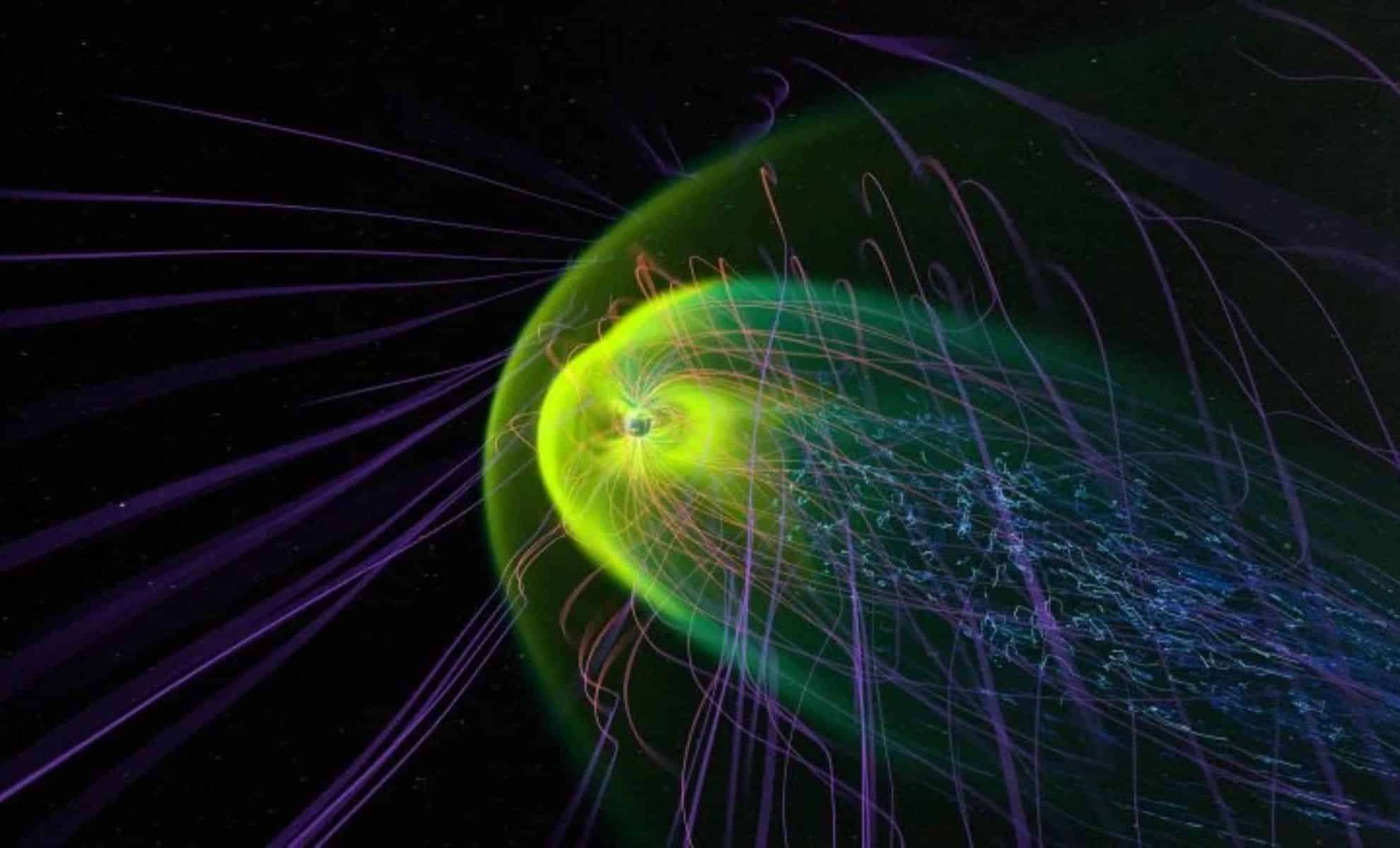
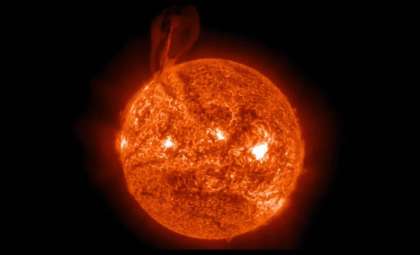
A recent investigation detailed in Geophysical Research Letters highlights how a powerful solar superstorm in May 2024 induced the abrupt appearance of uncommon metal-enriched clouds within Earth’s upper atmosphere. These formations, known as sporadic E layers, are slender, intensely concentrated patches of ionized particles triggered by geomagnetic disturbances—a reaction previously believed to be mostly invariant to solar activity. This breakthrough sheds light on one of the most enigmatic regions of the ionosphere and opens new questions regarding effects on radio communications and space weather monitoring.
An Unexpected Focus on the Ionospheres E Layer
While previous studies have largely concentrated on the F layer—the primary zone for ionization—this research explored the less-studied E layer, situated between 90 and 120 kilometers altitude. With leadership from Professor Huixin Liu of Kyushu University, the team observed the sudden intensification of these sporadic E patches following the solar storm’s arrival.
“When studying the Mother’s Day geomagnetic storm, many researchers looked at what happened in the F layer of the ionosphere. It is about 150–500 km above sea level and is where the most ionization occurs,” explains Professor Huixin Liu. “The sporadic E layer hasn’t been studied very much during the storm because it appeared unaffected by solar storms. But we wanted to see if something as powerful as the Mother’s Day geomagnetic storm did anything to the E layer. What we found was very interesting.”
Add Cosmo Herald as a Preferred Source

The researchers combined data from a network of 37 ground-based ionosondes with measurements taken by the COSMIC-2 satellites, assembling one of the most comprehensive global datasets on this effect. This integrated approach allowed detailed tracing of the formation and movement of the ionized metal clouds.
Unexpected Worldwide Movement Sheds Light on Atmospheric Processes
Initially detected in polar regions, the sporadic E clouds later appeared progressively at lower latitudes across the South Pacific, Southeast Asia, and Australia. This broad, latitudinal shift during the geomagnetic storm’s recovery phase indicates that a vast atmospheric wave was generated—an aspect not typically linked with the E layer.
“This large amount of data was critical for both detecting the presence of sporadic Es and tracking where they formed as time went by,” continues Liu. “In our analysis, we found that sporadic Es formed after the main phase of the solar storm, during what we call the recovery phase. Sporadic Es were also detected first in the higher latitude regions, around the Earth’s poles. They were then detected gradually in lower latitudes over time. This propagation characteristic from high to low latitudes suggests that sporadic E layers are most likely caused by the disturbed neutral winds in the E region.”
This new evidence challenges earlier views that sporadic E layers arise mainly from localized atmospheric phenomena and are not significantly affected by widespread geomagnetic disturbances. Instead, it suggests that the E layer is more dynamically linked with broader space weather activity than once assumed.
Consequences for Communication Technologies and Space Weather Prediction
The sporadic E layer is well-known for disrupting radio transmissions, especially those operating in HF and VHF frequencies utilized by aviation, maritime services, and military communication. With these findings proving that E layers can intensify across the globe during distinct phases of solar storms, the threat to communication infrastructure might be higher than previously recognized.
Pinpointing the timing and geographical development of these ionized clouds could enhance forecasting models. Since sporadic E layers intensify following the peak geomagnetic disturbance—during the recovery stage—this knowledge may provide extra lead time for preventive measures.
“This propagation behavior gives us a new diagnostic tool,” said Liu. “We now know that sporadic Es enhance during the recovery phase of a solar storm, so perhaps we can forecast more accurately sporadic Es using the propagation characteristics found in our study and mitigate potential communication disruptions.”
- Categories:
- News






0 comments
Sign in to Comment