
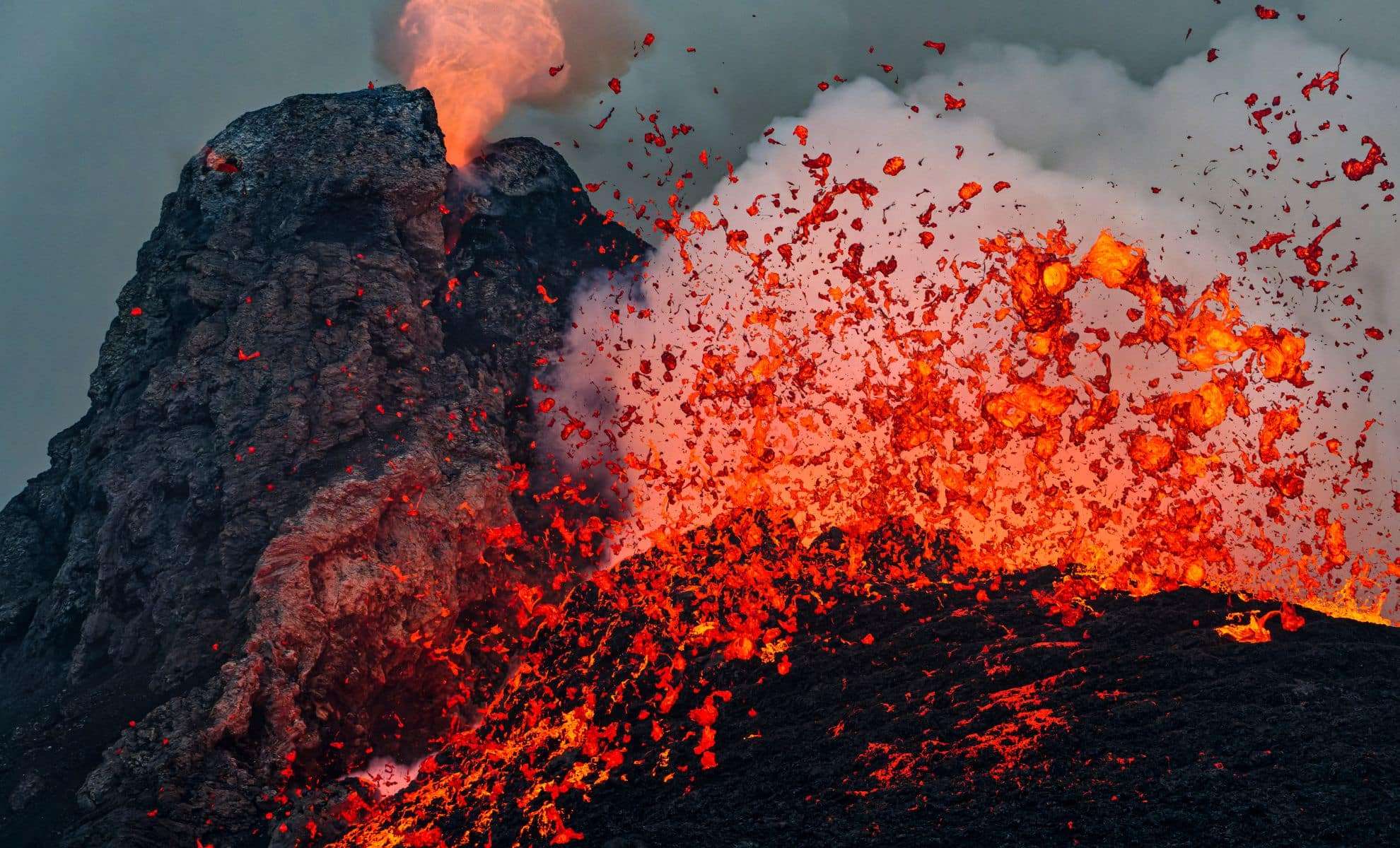
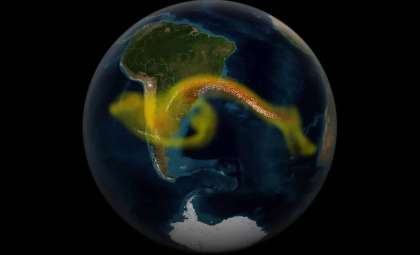
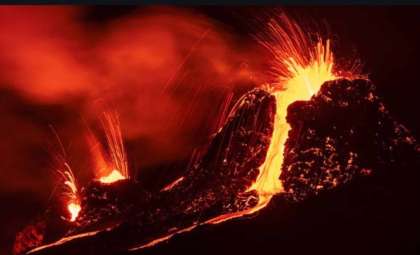
Volcanic eruptions don’t just disperse ash and gases; recent studies reveal they also catalyze the emergence of cirrus clouds—delicate ice formations high in the atmosphere. How exactly do these clouds form following an eruption? Utilizing advanced satellite observations, researchers have uncovered the mechanisms driving this unexpected process.
Volcanic Particles Spark Ice Cloud Development
Volcanoes significantly influence Earth’s climate by emitting gases such as sulfur dioxide and carbon dioxide that can alter atmospheric temperatures. Alongside these gases, volcanic eruptions thrust ash and dust aerosols into the upper atmosphere where clouds typically materialize. Although it was long proposed that these particles might affect cloud formation, the precise interactions remained elusive.
In a groundbreaking study conducted by researchers at Lawrence Livermore National Laboratory (LLNL), it was demonstrated that volcanic ash particles serve as focal points for ice crystal formation. Acting as nucleation sites, these particles enable water vapor to crystallize, giving rise to cirrus clouds composed mainly of ice.

“This work fills a crucial gap in understanding how volcanic eruptions impact cloud dynamics,” stated Lin Lin, an atmospheric scientist involved in the research.
Unexpected Insights Into Ice Crystal Formation
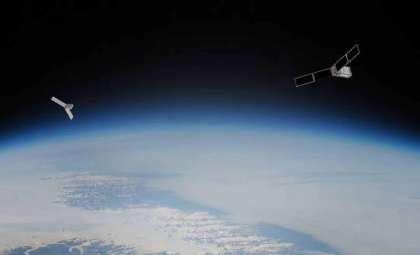
Leveraging a decade’s worth of data from NASA’s CloudSat and CALIPSO satellites, Lin Lin’s team investigated cloud development following three notable volcanic eruptions. Their findings revealed an increase in cirrus cloud frequency post-eruption, but with distinctive features.
Contrary to initial hypotheses predicting more numerous ice crystals, the volcanic ash led to fewer ice crystals that were significantly larger than those found in typical cirrus clouds. This surprising pattern suggested that water vapor collected on ash aerosols before freezing, promoting the growth of larger ice clusters rather than many small crystals.
“We anticipated altered cloud characteristics due to volcanic influence, but the precise nature of these changes was unexpected,” Lin remarked.
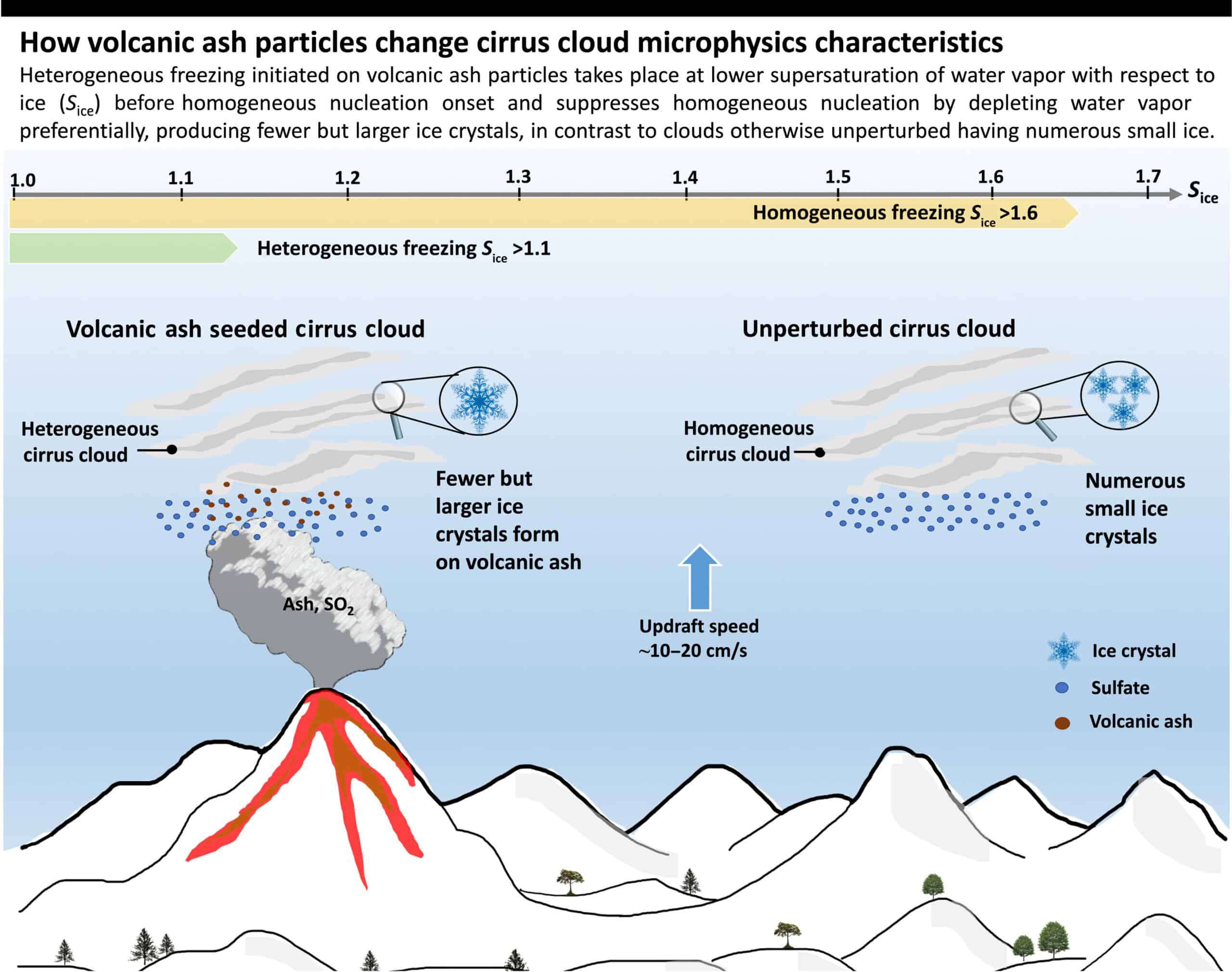
Volcanic Aerosols and Their Impact on Climate Systems
Cloud cover, enveloping roughly 70 percent of the Earth's surface, is vital for regulating climate by reflecting solar radiation and trapping heat. Cirrus clouds, which exist at elevated altitudes and consist primarily of ice, play a pivotal role in this energy balance.
The research team aims to extend their investigation to Arctic cloud systems and integrate their findings into global climate models. Their goal is to enhance understanding of how volcanic events influence weather patterns on both regional and planetary scales. They also look forward to monitoring the effects of upcoming eruptions to corroborate their conclusions and delve deeper into volcanic aerosol interactions with clouds.
- Categories:
- News


0 comments
Sign in to Comment