
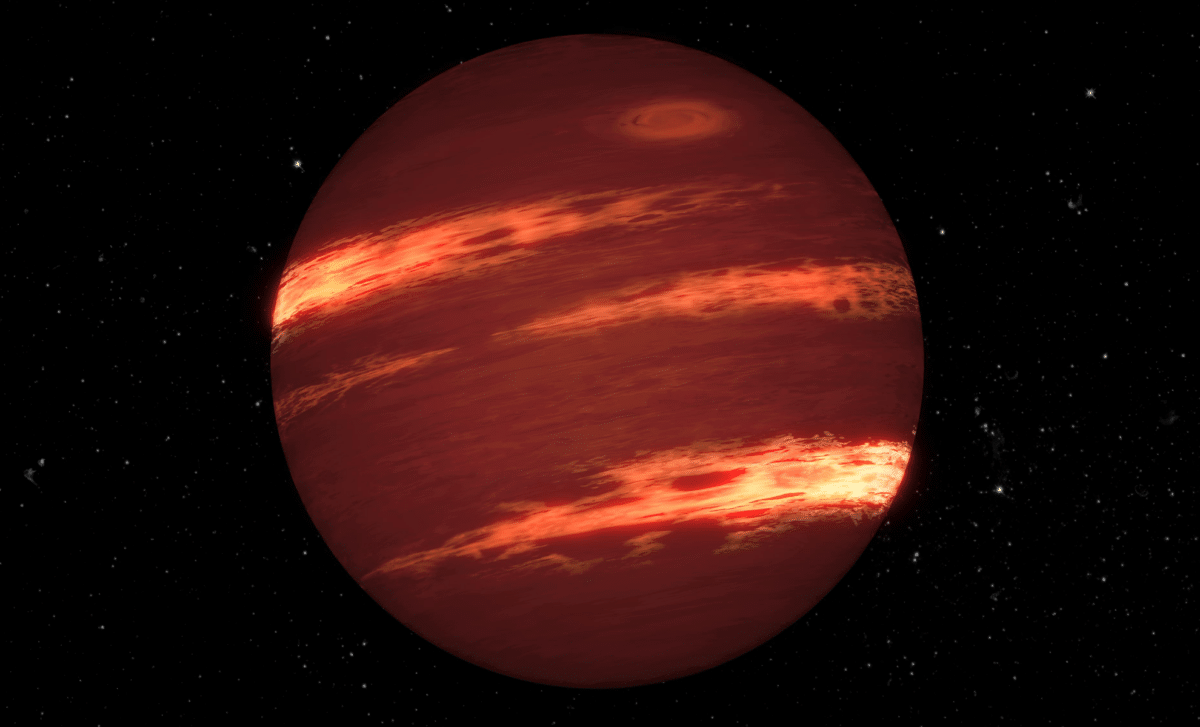
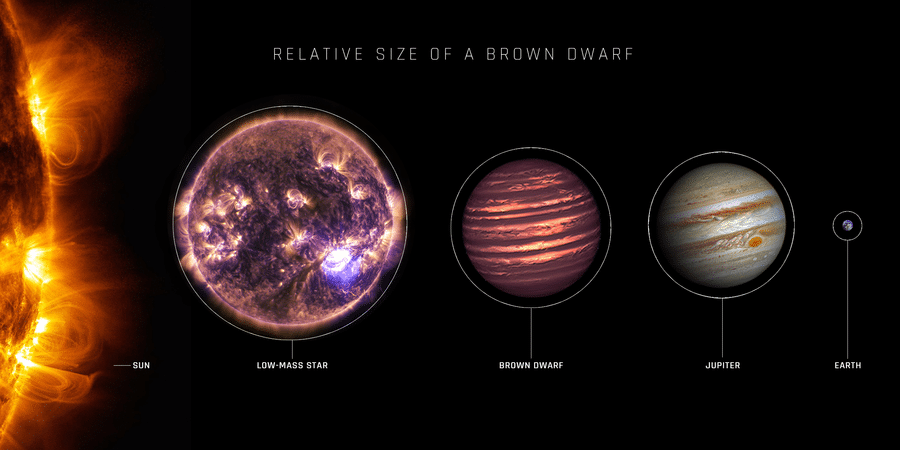
Across the immense universe, there exist objects that defy straightforward classification, occupying a size range between planets and stars. Brown dwarfs fall into this intriguing category, being too hefty to categorize as planets but lacking the mass needed to sustain star-like fusion. These celestial bodies pose a puzzle for astronomers who strive to understand their nature and origins. Are they simply stars that never ignited, oversized planets, or something else altogether? This question continues to fuel scientific curiosity and teaches us that the cosmos is full of surprises.
Understanding the Puzzle of Cosmic Classification
One of the main hurdles in cosmic classification lies in determining an object's mass and its genesis. By definition, stars must exceed a mass threshold of about 80 times that of Jupiter to initiate nuclear fusion. Contrastingly, planets such as Jupiter form through material gathering within a protoplanetary disk around a young star. Objects like brown dwarfs, which sit between these two extremes, complicate this picture because their formation mechanisms and sizes challenge conventional categories.
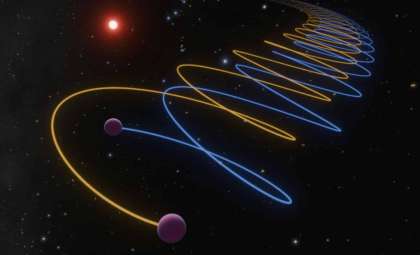
Steven Giacalone and his team recently explored objects within the 13 to 80 Jupiter-mass bracket. This range covers the borderline separating stellar and planetary formation. By analyzing parameters such as orbit shape and the chemical characteristics of the stars these objects orbit, the study aimed to clarify whether these bodies are more akin to undeveloped stars or massive planets.

Published in The Astronomical Journal, the research found no definitive dividing line. The investigators commented, “Exactly how large of an object can be formed by core accretion or how small of an object can be formed by disk instability or cloud fragmentation remains to be determined.” This emphasizes gaps in current knowledge and reflects the intricate reality of classifying these celestial objects.
Complexities in Celestial Formation
Determining how brown dwarfs and sub-brown dwarfs come into existence remains a challenging question. Two predominant formation mechanisms exist: core accretion and gravitational collapse. Core accretion involves dust and gas joining to build a central mass gradually, typically resulting in planets or brown dwarfs. Gravitational collapse occurs when a gas cloud contracts under gravity, forming stars or brown dwarfs.
The study highlighted that these processes are not always distinct. For instance, some brown dwarfs appear to form through core accretion, a method generally linked to planets. Conversely, various sub-brown dwarfs—too small to be brown dwarfs—seem to emerge from gravitational collapse, a process traditionally associated with stellar formation. This blurring of processes suggests we may need to refine our models of how these mid-sized cosmic bodies arise.
Summing up, the researchers stated, “Perhaps a clear dividing line between formation channels does exist, but we have not found it yet, either because we do not have enough objects or because we have not yet examined the right combination of parameters.” This points to the necessity for enhanced observations and further investigation to better understand these bodies that exist between stars and planets.
Metallicity's Impact on Object Formation
The study also examined how metallicity affects the birth of massive objects. Metallicity measures the concentration of elements heavier than hydrogen and helium in a star system’s environment and influences planet formation capacity. The team explored if a correlation exists between host star metallicity and the mass of their orbiting objects but found no straightforward connection.
This finding challenges expectations that denser metallicity environments would favor the creation of hefty, brown dwarf-like objects by providing more material for accretion. In fact, some sub-brown dwarfs formed around stars with modest metallicity levels, indicating that factors such as gravitational instability may play a more prominent role than previously assumed. This complexity suggests a multifaceted formation process, varying widely across different cosmic conditions.
- Categories:
- Astronomy



0 comments
Sign in to Comment