
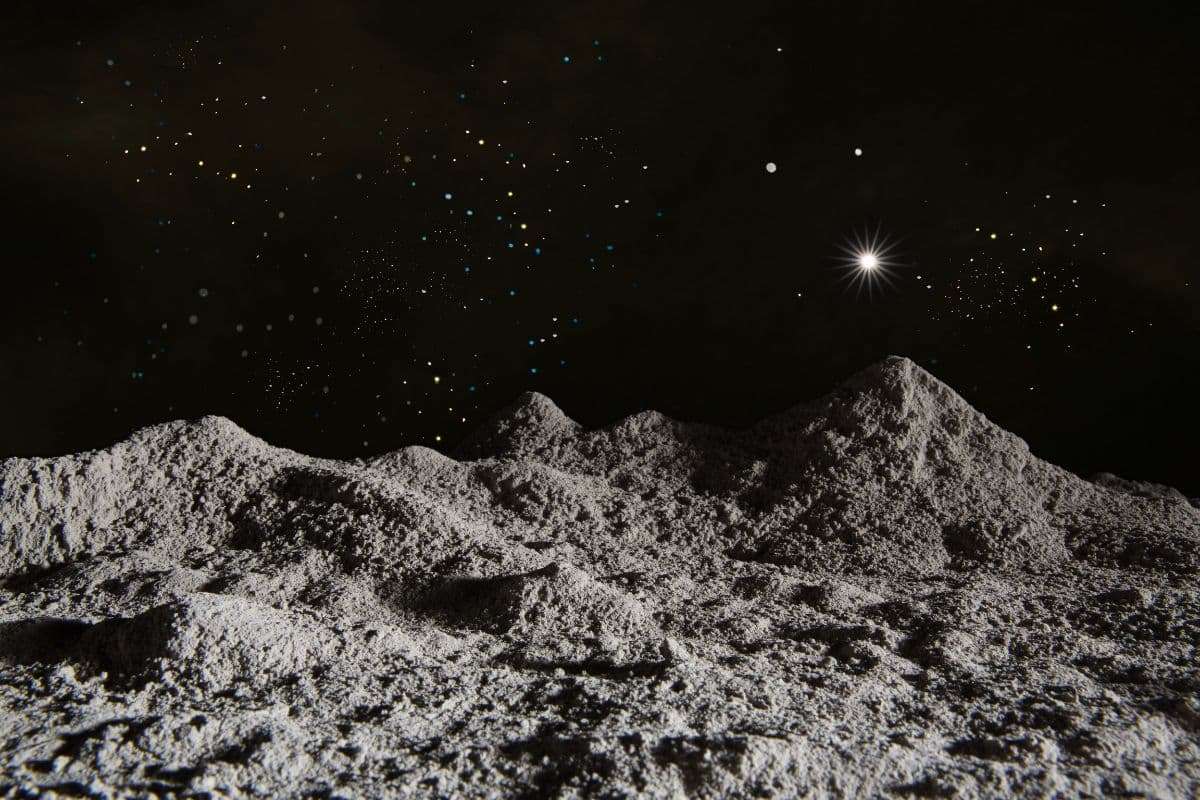
Researchers examining the rugged terrain of the Moon have uncovered a startling phenomenon—two immense canyons, each reaching depths of 2.2 miles, were created in mere minutes nearly 3.81 billion years ago.
This discovery reveals the intense and destructive events that have shaped the lunar surface and offers valuable clues about cosmic collisions that have influenced planetary evolution throughout the solar system.
The Moon’s Impact on Earth’s Evolution
More than just Earth’s natural satellite, the Moon formed about 4.5 billion years ago following a colossal strike involving a Mars-sized object colliding with early Earth. The debris from this cataclysmic event eventually merged to form the Moon we observe today.
Its influence extends to stabilizing Earth’s axial tilt, affecting climate stability, and driving tides. Investigations of the lunar surface enable scientists to unlock secrets of the early solar system, shedding light on the processes that forged planets and moons.

A Monumental Collision That Reshaped the Moon
Approximately 3.81 billion years ago, a massive asteroid struck the area now known as the Imbrium basin on the Moon. The impact’s tremendous energy carved out two huge canyons in a matter of minutes, displacing astronomical amounts of lunar rock and creating permanent, deep scars.
Unlike Earth, which experiences weathering and geological activity that erase many ancient craters, the Moon’s surface lacks these processes. As a result, the lasting marks of such violent collisions remain intact, offering valuable records of the solar system’s chaotic past.
Why This Finding Is Revolutionary
The realization that profound canyons can form almost instantly challenges previous geological assumptions. On Earth, erosion and tectonics act over millions of years to shape landscapes, but this lunar evidence proves that under extreme conditions, drastic terrain changes can occur rapidly.
According to farmingdale observer, researchers suggest that similar high-energy impacts may have formed deep valleys and rifts on other worlds such as Mars, Venus, and some of Jupiter’s and Saturn’s moons. Comparing these formations helps scientists understand how various celestial bodies react to massive impacts.
Piecing Together an Ancient Catastrophe
To decode this millions-of-years-old event, experts used information from Apollo missions, orbiting lunar probes, and detailed satellite imagery. Analyzing crater geometry, mineral makeup, and surface changes enabled reconstruction of the impact and its dramatic effects.
The findings support the notion that asteroid bombardments were rampant during the Moon’s early epochs, known as the Late Heavy Bombardment, a phase when collisions shaped the landscape of many planetary bodies.
Implications for Future Exploration and Defense
This breakthrough carries significant importance as space agencies plan crewed missions to the Moon and beyond. Understanding the history and dynamics of lunar impacts will assist astronauts in safely navigating and constructing habitats.
Furthermore, these insights are key to advancing planetary protection efforts. Studying the Moon’s impact record enhances asteroid impact modeling, which could one day be critical for shielding Earth from hazardous cosmic objects.
- Categories:
- Astronomy







0 comments
Sign in to Comment