
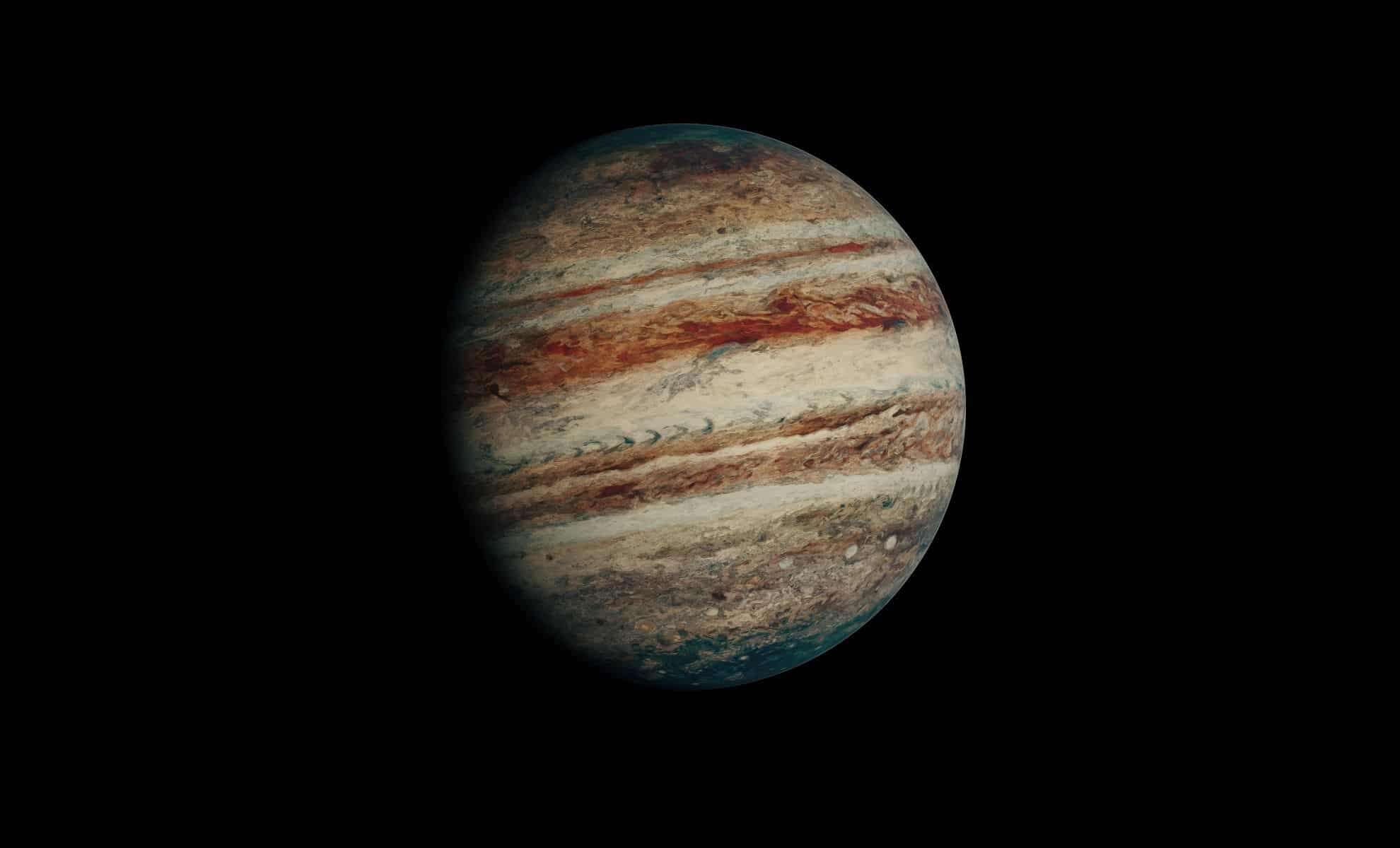
Using the advanced capabilities of NASA’s James Webb Space Telescope, researchers might have spotted strong indications of a large planet orbiting Alpha Centauri A, a star similar to our Sun located just four light-years away. As NASA reports, this could be the nearest exoplanet ever directly imaged around a Sun-like star, providing a unique window into planet formation and the conditions that could support life outside our solar system.
A Curious Discovery Around a Nearby Solar Twin
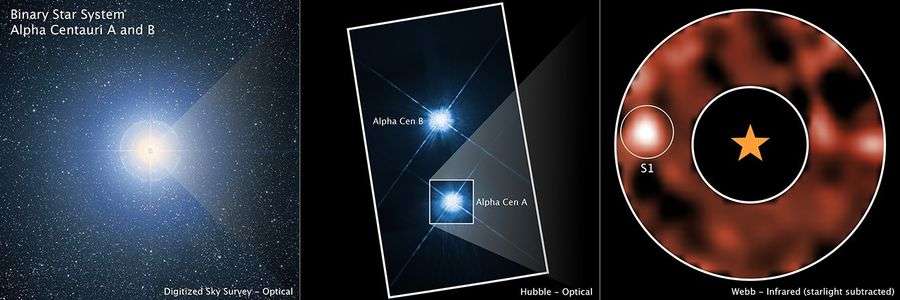
Data collected by Webb’s Mid-Infrared Instrument (MIRI) in August 2024 revealed a faint source near Alpha Centauri A. Scientists estimate this object to be similar in mass to Saturn and orbiting at a distance approximately twice that between Earth and the Sun.
Alpha Centauri A belongs to a triple star cluster with Alpha Centauri B and the red dwarf Proxima Centauri. Although astronomers have confirmed the existence of three planets around Proxima Centauri, until now, Alpha Centauri A had no confirmed planetary companions.

Dr. Carly Howett, associate professor at the University of Oxford, emphasized, “This star is similar to our Sun in temperature and brightness, which is crucial when studying potentially habitable planets.”
The Vanishing Planet That Sparked Debate
Follow-up observations in February and April 2025 failed to detect the object again, leading to doubts about its presence. However, scientists now propose that the planet’s elliptical trajectory might have brought it too close to Alpha Centauri A during those times, obscured by the star’s brightness.
To test this hypothesis, researchers conducted millions of orbital simulations using Webb’s data together with a 2019 hint from the European Southern Observatory’s Very Large Telescope. These models incorporated gravitational effects from Alpha Centauri B, showing that the planet’s orbit is stable yet sometimes veils it from view.
“In about half of the simulated orbits, the planet would have been too close to the star to be visible during the 2025 observations,” explained co-author Aniket Sanghi. This explanation reinforces the idea that the initial detection was genuine, rather than a false signal or background object.
Overcoming Imaging Challenges with Innovative Techniques
Directly photographing planets around the Alpha Centauri system is complicated due to the stars’ brightness and close proximity. The system’s dynamic motion adds further difficulty. To tackle this, the Webb team utilized a coronagraphic mask on MIRI to block overwhelming light from Alpha Centauri A.
They crafted a specialized observing strategy tailored for this challenging target. By subtracting light from Alpha Centauri A and B, researchers uncovered a faint source roughly 10,000 times dimmer than the star, consistent with a planetary presence.
Charles Beichman from NASA’s Jet Propulsion Laboratory remarked, “Capturing these observations pushed the limits of the world’s top space telescope. The Space Telescope Science Institute’s team developed a custom sequence specific to this target, and their dedication yielded amazing results.”
Implications for the Search for Extraterrestrial Life
If this discovery is confirmed, it could revolutionize exoplanet research by presenting a rare example of a planet orbiting within a binary star environment, challenging current theories of planetary development. Sanghi noted, “A planet surviving and thriving in a system with two closely spaced stars defies our previous understanding of planetary dynamics.”
NASA’s upcoming Nancy Grace Roman Space Telescope, expected to launch by 2027, is equipped to study systems like Alpha Centauri in visible light. Its observations will complement Webb’s infrared data, aiding in measuring the planet’s size, reflectivity, and atmosphere.
- Categories:
- News












0 comments
Sign in to Comment