
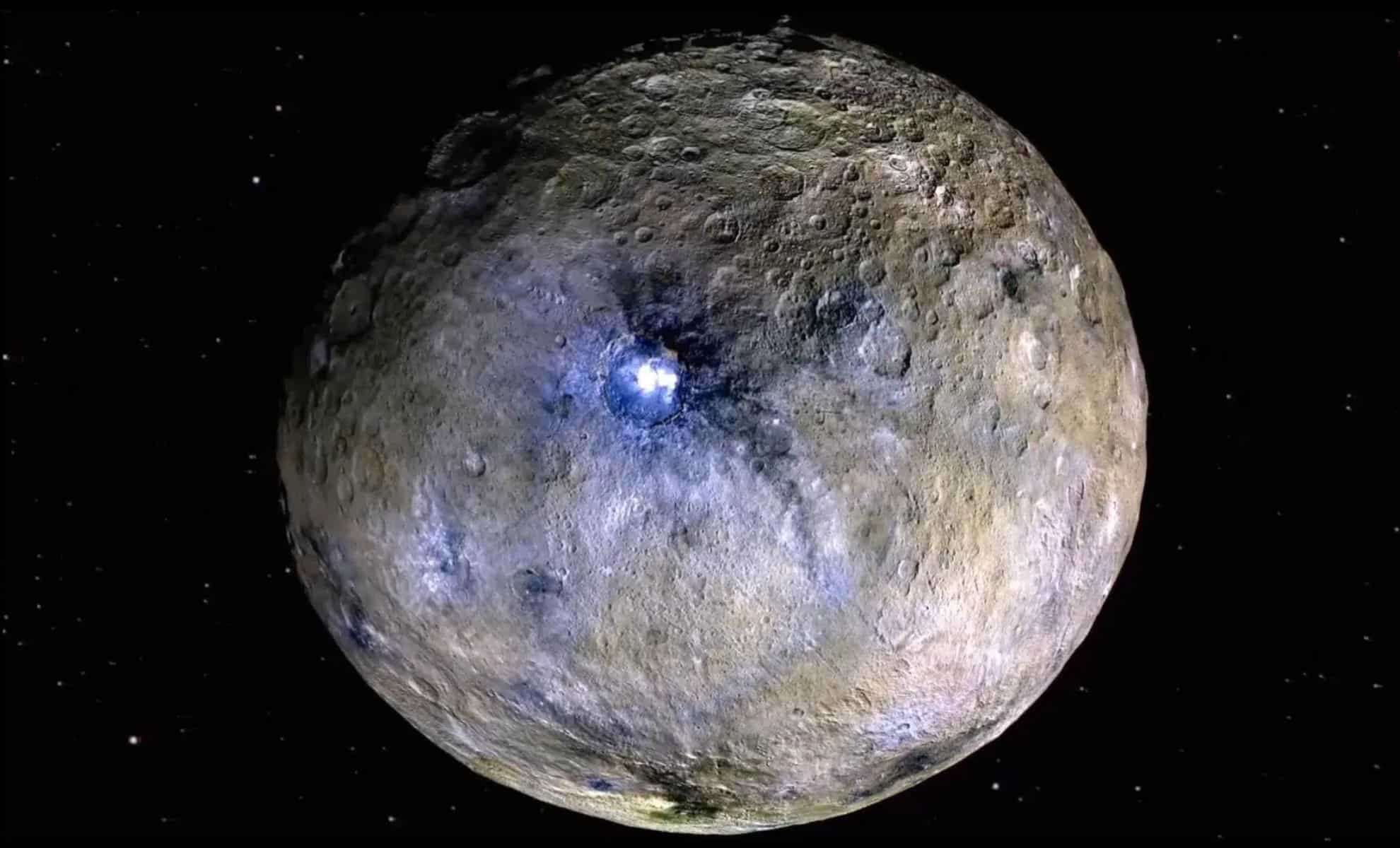
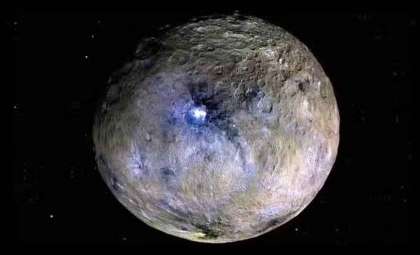
A recent investigation published in Science Advances on August 20 has presented compelling evidence pointing to the possibility that Ceres, the dwarf planet in the asteroid belt, once possessed conditions conducive to life. Data collected from NASA’s Dawn spacecraft indicates that Ceres might have maintained a source of chemical energy for an extensive period, potentially sustaining microbial organisms billions of years ago. Though there is no direct proof of life having existed there, these discoveries reinforce the idea that early in its history, Ceres’ subsurface water could have supported living organisms. The coexistence of liquid water, organic compounds, and sustained chemical energy presents a promising environment for life’s emergence.
Situated in the main asteroid belt between Mars and Jupiter, Ceres has long fascinated researchers who note its distinctive surface features marked by salt-rich brines and organic matter. These elements are fundamental for life’s building blocks and play a critical role in evaluating its habitability. Recent thermal and geochemical models reveal that ancient Ceres could have harbored a subsurface ocean heated by the planet’s rocky core. This heat would drive the circulation of energy-laden fluids capable of supporting microbial ecosystems.
The Role of Chemical Energy in Supporting Life
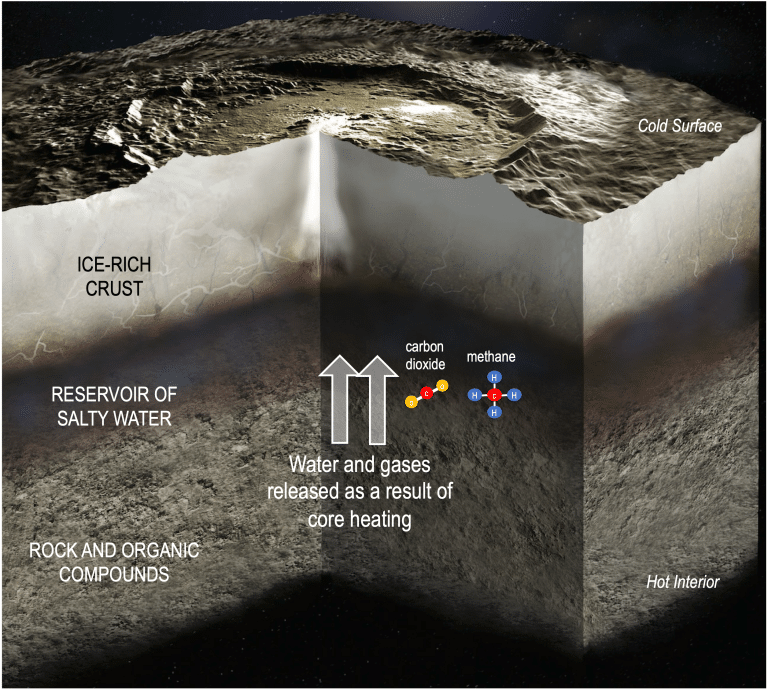
A key highlight of the research is the identification of a probable long-term chemical energy source within Ceres. The models propose that around 2.5 billion years ago, the subsurface ocean was likely enriched by gases and chemicals released through metamorphism of the interior rocks. This process mimics Earth's deep-water hydrothermal systems, where chemical energy sustains diverse life forms.

“On Earth, the blend of hot water and ocean chemistry at deep vents sustains rich microbial communities. Understanding whether Ceres experienced a hydrothermal influx is vital for assessing its habitability,” explained Sam Courville, lead author of the study. Their data indicate that such environments on Ceres may have provided the chemical energy necessary for microbial survival in its ancient ocean.
This hypothesis centers on the interaction between subsurface water and Ceres’ rocky core, warmed by heat produced from radioactive decay. During the dwarf planet’s early years, this heat likely maintained liquid water beneath its surface for substantial periods, fostering conditions suitable for life deep below.
Investigating Hydrothermal Systems on Ceres
The dwarf planet’s ability to support microbial ecosystems depends heavily on the presence of sustained hydrothermal circulation. On Earth, such underwater vents create energy-rich environments by mixing heated water with minerals, enabling ecosystems independent of sunlight. If similar hydrothermal activity existed on ancient Ceres, it could have been a hotspot for microbial life in its subsurface ocean.
Courville and colleagues used time-evolving models to assess Ceres’ internal temperature and chemistry, focusing on interactions conducive to hydrothermal systems. Their analysis suggests that internal heat from radioactive decay peaked between 2.5 and 4 billion years ago, possibly rendering the dwarf planet warmer and more geologically dynamic during this era. This thermal window could have enabled a chemically rich ocean capable of supporting life.
Evolving Environmental Conditions on Ceres
Currently, Ceres is vastly different from the potentially life-friendly environment it might have once been. Over time, the dwarf planet cooled, turning its once-liquid subsurface ocean into ice, and the remaining brines are far less hospitable. The decline of radioactive heating diminished any ongoing hydrothermal processes, resulting in a colder and more inert interior.
Without sustained internal heat, Ceres transformed into a frigid and geologically quieter body. Nevertheless, ongoing studies continue to investigate its surface and interior features to piece together its ancient conditions. These new insights not only deepen our understanding of Ceres’ history but also offer valuable clues relevant to icy worlds across the outer solar system.
- Categories:
- News









0 comments
Sign in to Comment