
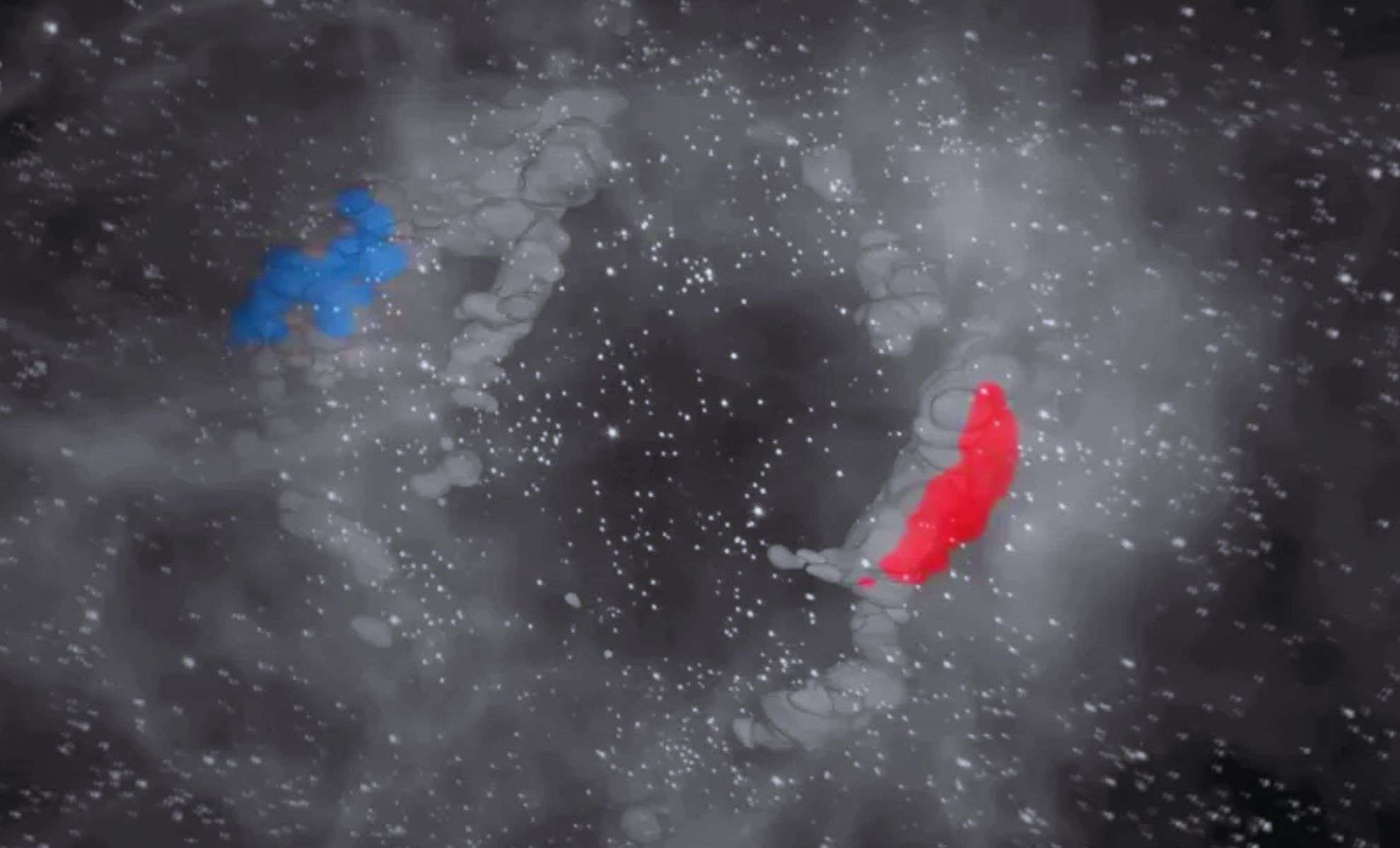
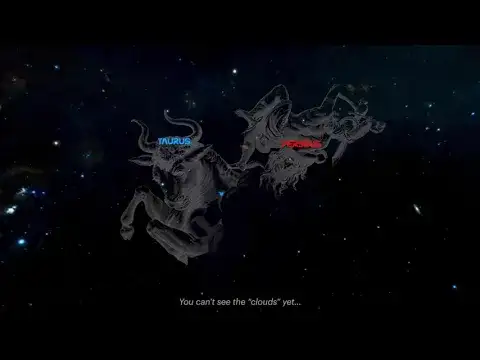
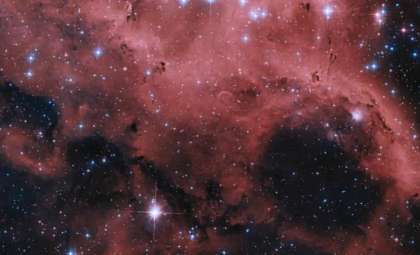
Researchers have identified an enormous empty region within our galaxy that was previously overlooked. Positioned between the Taurus and Perseus molecular clouds, this 500-light-year-wide void was mistakenly viewed as a dense cloud of star-forming material. In reality, it is an expansive hollow shell, most likely sculpted by a supernova blast that occurred millions of years ago.
A study from the Harvard-Smithsonian Center for Astrophysics, published in The Astrophysical Journal Letters and detailed further in this paper, overturns previous assumptions about this portion of the Milky Way. What seemed like a connected gas structure turns out to be a visual effect caused by Earth-based perspective, clarified now through cutting-edge 3D mapping techniques.
Supernova Explosion Created a Massive Void
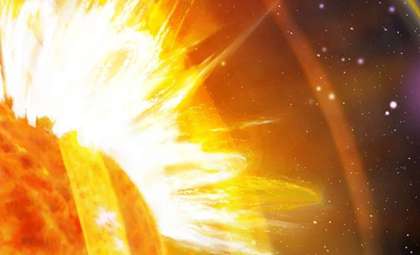
Scientists propose that the Perseus-Taurus Supershell originated between 10 and 20 million years ago when a massive star ended its life in a supernova, emitting forceful shockwaves. These waves expelled material outward, carving out an extensive hollow bubble in the surrounding interstellar medium.

“Either one supernova went off at the core of this bubble and pushed gas outward forming what we now call the Perseus-Taurus Supershell, or a series of supernovae occurring over millions of years created it over time,” said Shmuel Bialy, the lead author of the study and a postdoctoral researcher at Harvard-Smithsonian.
As the bubble expanded, gas accumulated along its perimeter. This compressed gas then collapsed to form hundreds of new stars, including many in the Perseus and Taurus molecular clouds that now adorn the region.
3D Imaging Exposes a Galactic Illusion
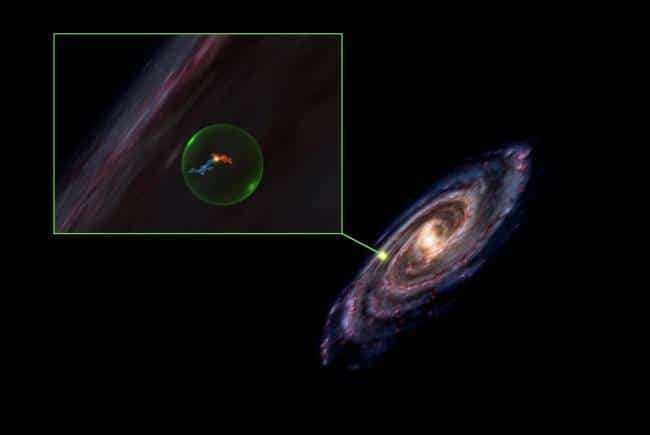
For decades, astronomers believed the Taurus and Perseus clouds were physically connected through a lengthy gas filament. However, these conclusions stemmed from two-dimensional observations that obscured their genuine spatial arrangement. Using data from the Gaia space observatory, the team constructed a three-dimensional model of the dust distribution, which challenged earlier interpretations.
According to Live Science, the filamentary structure solely corresponds to the Taurus side of the cavity, creating the false impression of a link between the two clouds from our viewpoint. In fact, these clouds reside at opposite edges of the enormous bubble.
This represents the first detailed 3D mapping of molecular clouds. The researchers published a companion paper describing how they leveraged Gaia’s parallax measurements to chart the precise locations of dust and gas, unveiling the true geometry hidden by prior 2D projections.
From Stellar Catastrophe to Star Birth
Although the Perseus-Taurus Supershell was created by a cataclysmic supernova, the resulting shockwaves ultimately promoted new star formation. As the blast swept outward, it compressed gas at the cavity’s edges, triggering the collapse that gave rise to fresh stars on both sides.
“This demonstrates that when a star dies, its supernova generates a chain of events that may ultimately lead to the birth of new stars,” said Bialy.
As confirmed by the Harvard-Smithsonian Center for Astrophysics, hundreds of stars have likely formed along the shell’s rim due to this spectacular event millions of years in the past. With this innovative 3D mapping approach, astronomers are poised to identify additional concealed cavities scattered throughout the galaxy.
- Categories:
- News



0 comments
Sign in to Comment