
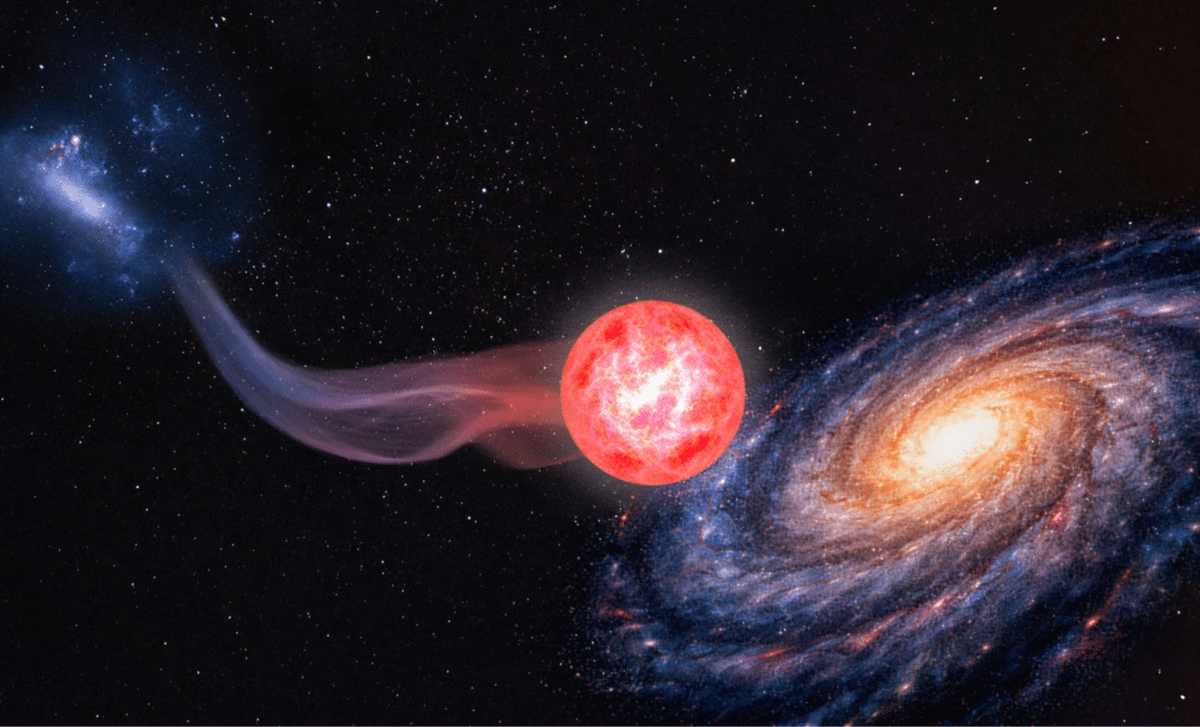
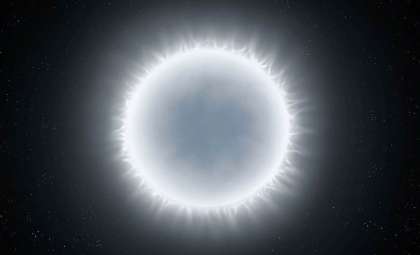
Astronomers have pinpointed the most unaltered star ever detected, offering an extraordinary glimpse into the creation of the earliest stars and galaxies. By leveraging data from the Sloan Digital Sky Survey-V (SDSS-V) paired with advanced observations through the Magellan telescopes at Carnegie Science’s Las Campanas Observatory in Chile, the team discovered SDSS J0715-7334, now recognized as the universe’s purest star. This finding, detailed in Nature Astronomy, could significantly deepen our comprehension of cosmic origins and the formation of elements.
Introducing SDSS J0715-7334: A Stellar Relic
SDSS J0715-7334 stands out as a remnant from the universe’s infancy, having formed just a few billion years post-Big Bang. Its extraordinary value stems from its ultra-low metal content—elements heavier than hydrogen and helium. This star contains less than 0.005% of the Sun’s metal abundance, making it twice as metal-deficient as the previous record-holder for pristine stars.
Described in Nature Astronomy, this breakthrough was achieved through a collaborative initiative spearheaded by Alexander Ji at the University of Chicago, alongside Juna Kollmeier from Carnegie Observatories. This international group, including undergraduate researchers from UChicago, identified the star via the ongoing SDSS-V survey. The crucial follow-up analyses performed at Las Campanas verified its unique composition, enabling astronomers to glimpse the conditions surrounding early star formation.

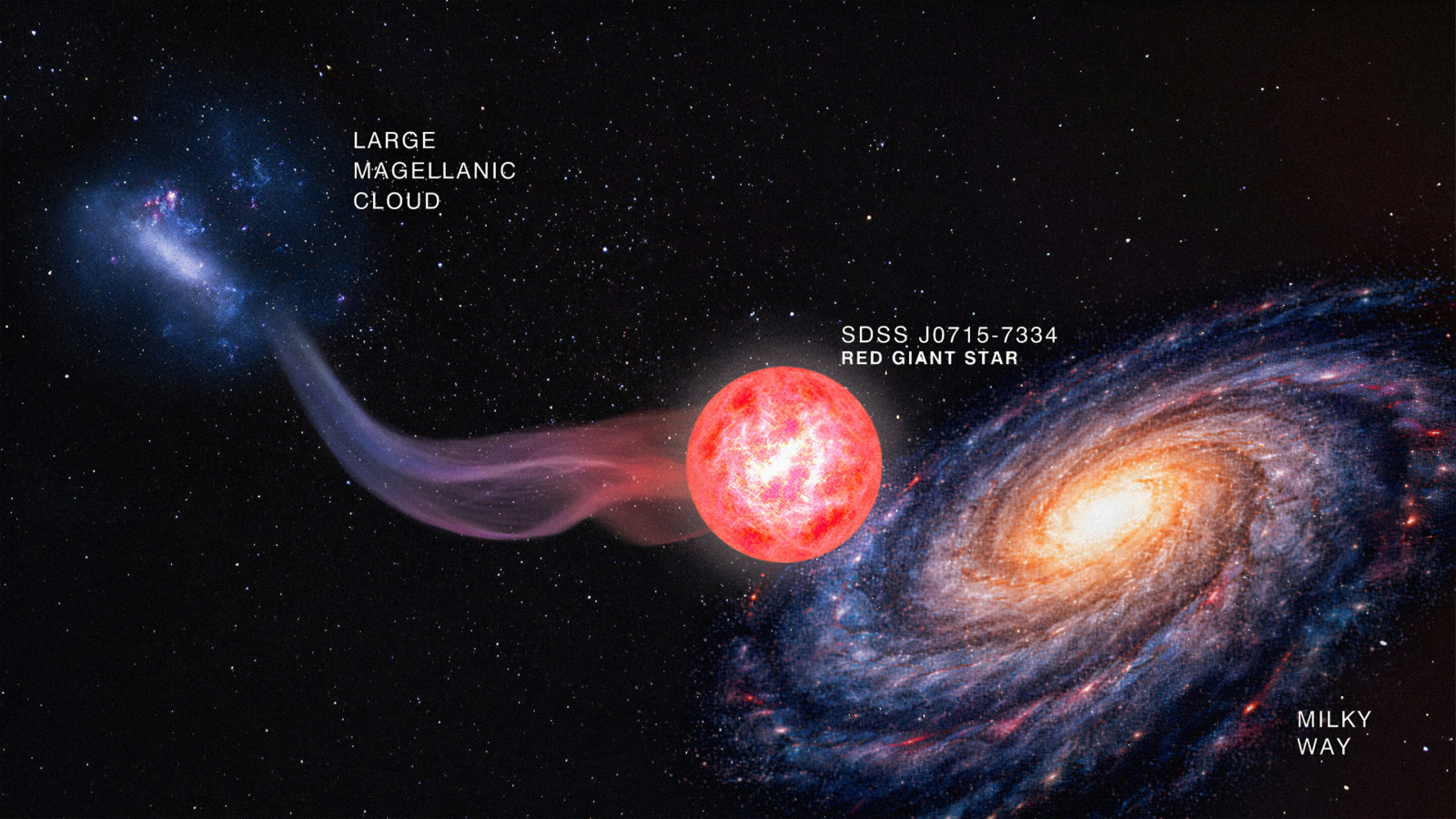
A Celestial Time Capsule From the Universe’s Early Epoch
“SDSS J0715-7334 is truly remarkable as a star made almost exclusively from primordial hydrogen and helium, much like the universe’s first stars,” Ji remarked. “These untouched stars serve as gateways to understanding the universe’s earliest chapters of stellar and galactic formation.” This discovery sheds vital light on the conditions that fostered the earliest star generations, which influenced the birth of galaxies and the elemental makeup found throughout the cosmos today.
Beyond assessing its elemental purity, the researchers sought to uncover broader implications on the mechanisms driving star formation. Objects like SDSS J0715-7334 are extraordinarily uncommon; finding one provides a critical testbed for models of how the first stars ignited and evolved into complex celestial formations observed now.
SDSS-V and Las Campanas: Enablers of the Discovery
The SDSS-V project, mapping millions of optical and infrared spectra across the sky, was essential in spotting SDSS J0715-7334.
“We have to look in our cosmic backyard to find these objects, because we can’t yet observe individual stars at the dawn of star formation,” said Kollmeier. “Since these stars are rare, surveys like SDSS-V are designed to have the statistical power to find these needles in the stellar haystack and test our theories of star formation and explosion.”
The research’s success owed much to the state-of-the-art instrumentation at the Las Campanas Observatory. The synergy between SDSS-V’s dataset and the Magellan telescopes’ high-resolution capabilities was key to confirming that SDSS J0715-7334 is a significant cosmic relic rather than an ordinary star. Michael Blanton, Director of Carnegie Science Observatories, highlighted the indispensable contribution of the Las Campanas facilities: “The ecosystem of telescopes at Las Campanas was critical to nearly every aspect of this breakthrough work.”
Understanding Metal-Poor Stars and Their Importance
Stars like SDSS J0715-7334 hold profound scientific importance because they reveal clues about the universe’s earliest stellar stages. The first generation of stars consisted only of hydrogen and helium, lacking heavier elements. As these primordial stars lived and perished, they released heavier elements like carbon, iron, and oxygen, which then became foundational for subsequent stars, planets, and life itself.
Ji underscored the significance of discovering stars with minuscule metal content:
“All of the heavier elements in the universe, which astronomers call metals, were produced by stellar processes—from fusion reactions occurring within stars to supernovae explosions to collisions between very dense stars.”
By investigating such rare, metal-deficient stars, researchers can better reconstruct the conditions prevalent in the early cosmos and understand the role stars played in shaping the universe as we observe it today.
- Categories:
- Astronomy



0 comments
Sign in to Comment