
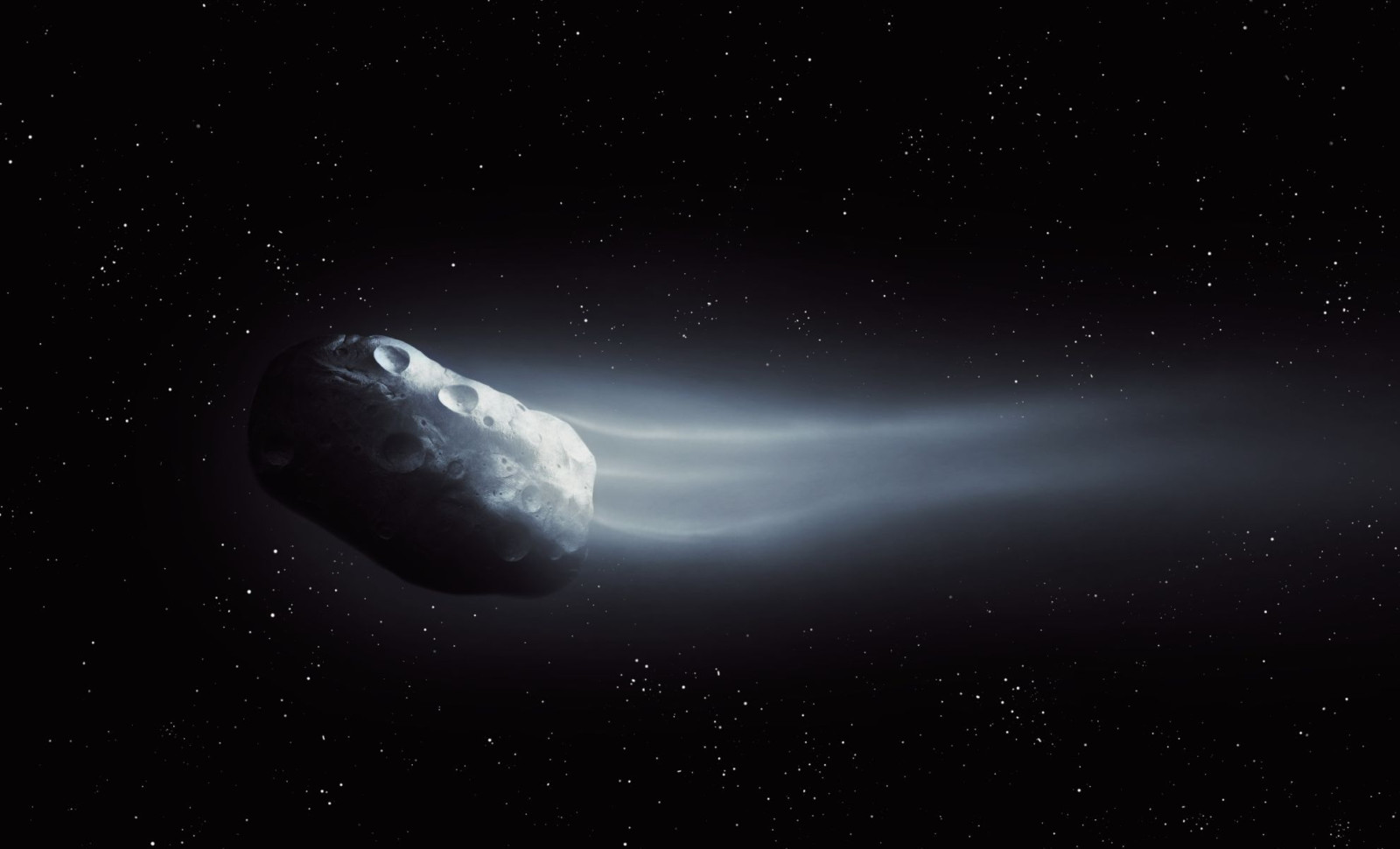
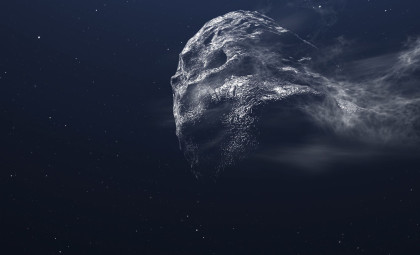
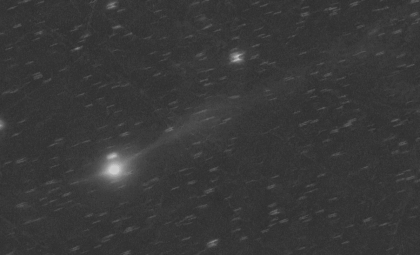
A recently studied comet has surprised scientists by completely changing the direction in which it spins. Data from NASA’s Hubble Space Telescope have shown the comet decelerate, nearly halt, and then begin rotating in the opposite direction. This rare event demonstrates the delicate and evolving nature of these icy celestial objects.
Comet 41P/Tuttle-Giacobini-Kresák completes an orbit around the Sun every 5.4 years, having been nudged inward from the Kuiper Belt by the gravitational influence of Jupiter. Its modest diameter of roughly 1 kilometer makes it particularly susceptible to changes caused by solar radiation and the release of gases.
Rapid Deceleration Followed by Spin Reversal
Initial measurements taken in March 2017 using the Discovery Channel Telescope recorded the comet spinning steadily. By May, observations from NASA’s Neil Gehrels Swift Observatory revealed that its rotation period had slowed down to approximately three times the original duration.

Subsequent analysis based on Hubble telescope data from December 2017 showed the rotation period shortened drastically to about 14 hours, a sharp contrast to the prior measurements ranging between 46 and 60 hours. Scientists interpret these shifts as the comet nearly stopping its rotation before reversing direction entirely. This phenomenon, detailed in The Astronomical Journal, marks the first recorded instance of a comet undergoing such a spin reversal.
Gas Emissions Triggering the Reversal
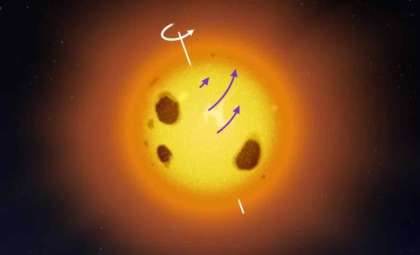
The driving force behind this behavior is tied to jet-like streams of gas erupting from the comet’s surface. When sunlight warms the nucleus, frozen compounds sublimate, venting material into space and producing thrust. David Jewitt of UCLA explains that these gas jets function as natural thrusters.
“If those jets are unevenly distributed, they can dramatically change how a comet, especially a small one, rotates.” He added, “It’s like pushing a merry-go-round. If it’s turning in one direction, and then you push against that, you can slow it and reverse it.”
Due to 41P’s small size, these effects are amplified. Its minimal gravity and structural fragility mean that even modest jets can significantly alter its rotational dynamics.
An Evolving Comet within a Human Timescale
Researchers also found that the comet’s activity level had significantly dropped. According to the study, 41P exhibited much higher gas emissions during its 2001 perihelion than in 2017, with a decline by nearly a factor of ten. Scientists hypothesize that surface volatiles may have been exhausted or coated by insulating dust, thereby altering how the material escapes and how forces are applied on the comet’s surface.
“Modeling based on the measured torques and mass loss rates suggest that continued rotational changes could eventually lead to structural instability for comet 41P. If a comet spins too rapidly, centrifugal forces can overcome its weak gravity and strength, potentially causing fragmentation or even disintegration,” based on findings from NASA.
Even with these swift transformations, 41P has likely been following its present orbit for approximately 1,500 years. This makes its rapid and observable spin reversal a phenomenon unfolding within a timescale accessible to human observation.
- Categories:
- Space





0 comments
Sign in to Comment