
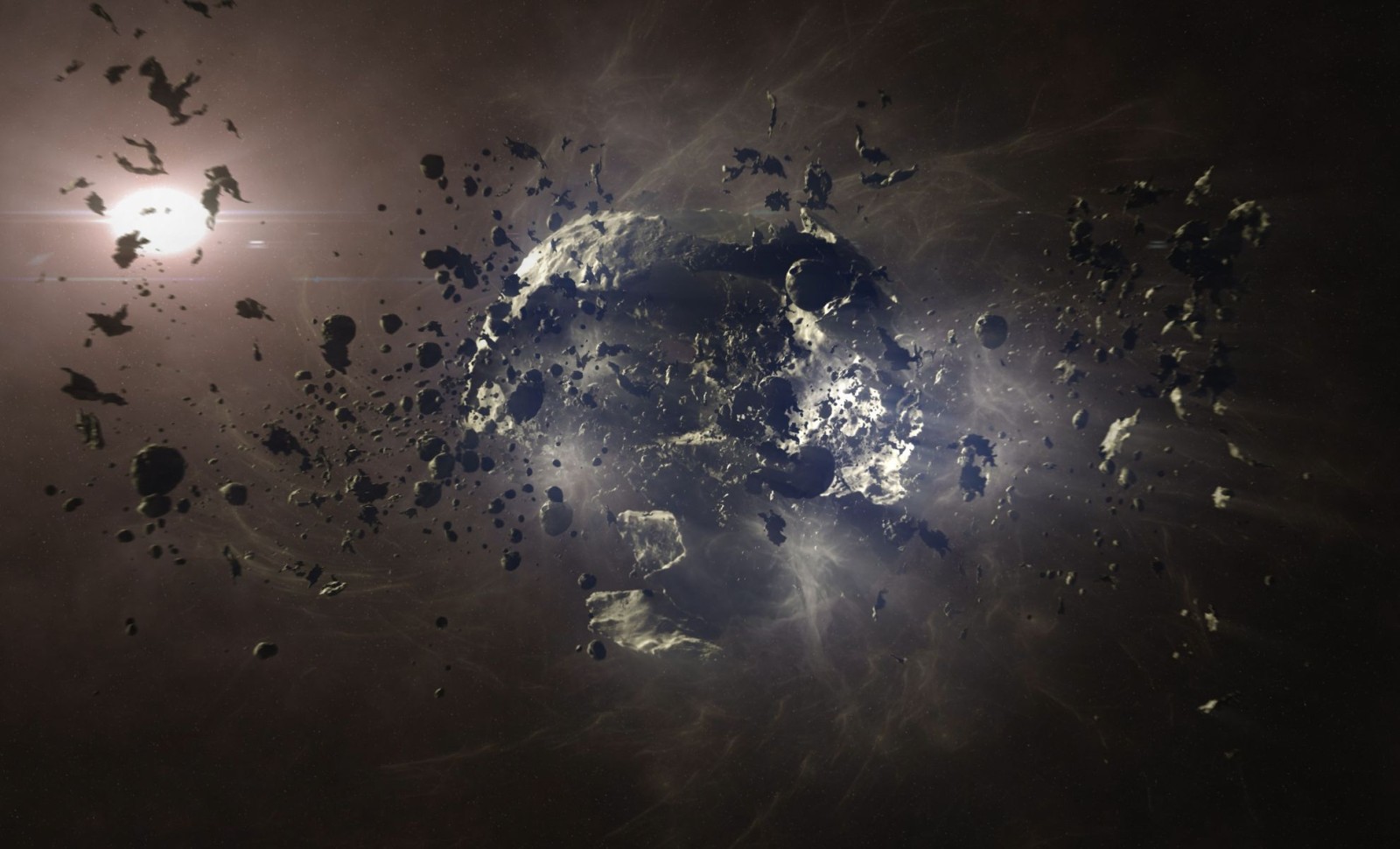
White dwarfs represent the compact, cooling cores left behind after stars comparable to our Sun deplete their nuclear fuel. Though these stellar remnants no longer sustain fusion, their powerful gravity continues to influence nearby material. Generally, white dwarfs are believed to fade quietly over billions of years.
However, the star known as LSPM J0207+3331 defies expectations with notable activity. Researchers employing the HIRES spectrometer at Hawaii's W. M. Keck Observatory have detected an unusual presence of heavy elements in its atmosphere, indicating it is currently ingesting planetary debris.
Detection of Heavy Elements in a Stellar Remnant
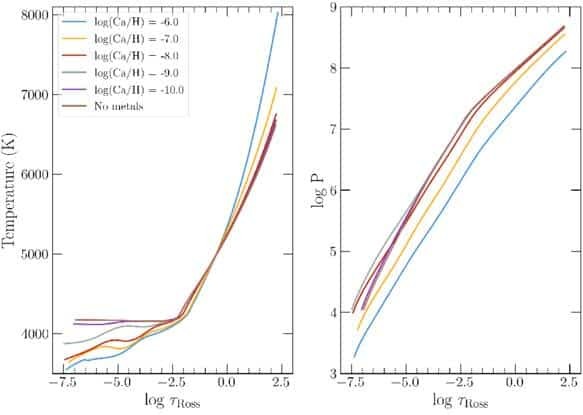
Through spectroscopic examination of LSPM J0207+3331, scientists identified 13 distinct elements including iron, nickel, silicon, and calcium — typical ingredients of rocky planets. As noted by Earth.com, this matter likely originates from a disrupted rocky body measuring at least 120 miles across, now being drawn into the star’s immense gravity.

This observation is especially intriguing given the star's hydrogen-dominated atmosphere, where heavy elements usually sink and disappear quickly. Their continued existence signifies active accretion of material. Patrick Dufour, co-author from Université de Montréal, described the quantity of debris as “uncommonly large” for a white dwarf of this stage.
The elemental makeup implies the disrupted object was highly differentiated, possessing a layered structure with a metallic core and a rocky outer shell, somewhat resembling Earth but with elevated levels of iron, nickel, and cobalt. These siderophile elements tend to gather in planetary interiors, suggesting the star has consumed deep planetary fragments.
Planetary Debris Encircles the Star
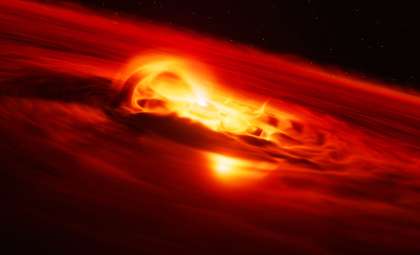
The shattered fragments now form a warm ring of dust orbiting LSPM J0207+3331, emitting an infrared glow first identified in 2019. A recent publication connects this emission to the recent breakup of a rocky object that ventured within the white dwarf's Roche limit, the distance at which tidal forces disintegrate small bodies.
This debris disk appears freshly formed rather than a long-lasting remnant, implying the planetary body was recently destabilized. John Debes, a co-researcher from the Space Telescope Science Institute, remarked, “Clearly, something disturbed this system well after the star’s death.”
Such phenomena are unexpected billions of years after a star’s transformation into a white dwarf. This suggests the system remains dynamically vibrant, with gravitational forces altering planetary paths and propelling debris inward.
Distant Giant Planets May Have Played a Role
One plausible cause for the recent disruption involves the gravitational influence of massive, unseen gas giants orbiting far from the white dwarf. Their gravity could be gradually destabilizing smaller bodies’ orbits, causing them to drift inward over extended periods. These distant giants are considered the prime candidates behind the planet’s breakup, according to the source.
This scenario fits with the model of delayed dynamical instability, where gravitational interactions unfold planetary chaos over lengthy timescales. The lead author, Érika Le Bourdais from University of Montreal, highlighted that LSPM J0207+3331’s persistent activity challenges longstanding ideas about post-stellar evolution.
If such processes are widespread, they could eventually influence our own solar system. When the Sun evolves into a white dwarf billions of years from now, previously stable planets and asteroids might be nudged into shifting orbits, causing comparable collisions and dust formation.
- Categories:
- Space






0 comments
Sign in to Comment