
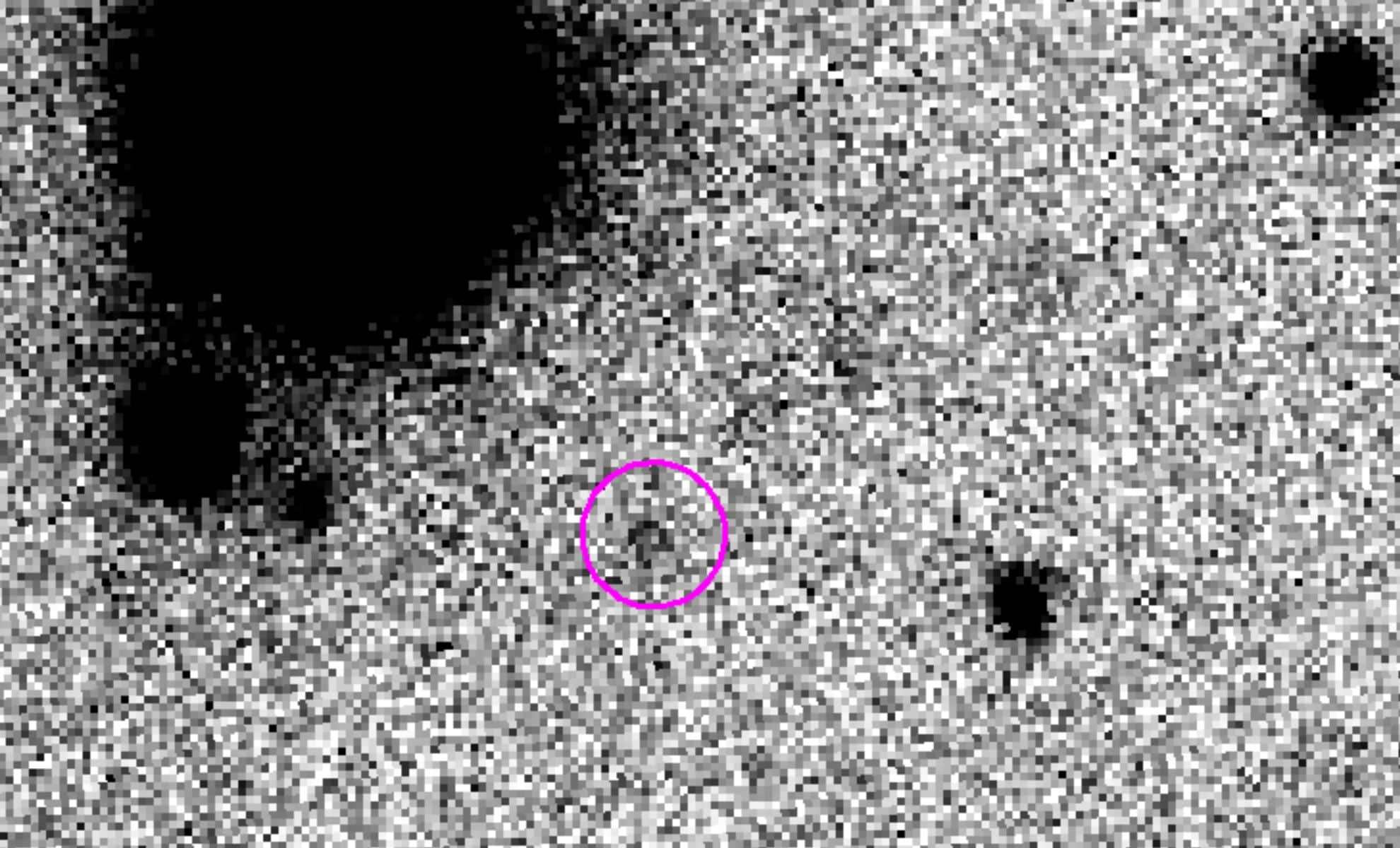
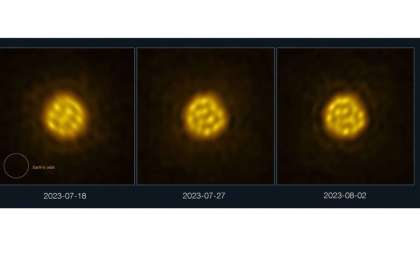
A recently detected celestial body on the outskirts of our solar system is offering fresh insights into the complex architecture of our cosmic surroundings. This enigmatic entity, nicknamed “Ammonite,” was identified using the Subaru Telescope at Hawaii’s Mauna Kea Observatory and is estimated to span between 220 and 380 kilometers across. Ammonite joins the exclusive group of distant small objects known as sednoids, which exhibit unusual trajectories around the solar system’s remote regions.
Ammonite: A Window into Solar System History
Ammonite is regarded as a “fossil” of the early solar system, preserving vital evidence from its formation period. Initially spotted by the Subaru Telescope in 2023, follow-up investigations verified its distant orbit around the Sun.
This discovery marks the addition of the fourth known sednoid, a rare class of objects characterized by highly stretched orbits extending into the solar system’s fringes.

Ammonite’s detection illuminates an otherwise little-understood segment of our solar system. Dr. Fumi Yoshida, who heads the Formation of the Outer Solar System: An Icy Legacy (FOSSIL) research effort, emphasized the significance of such insights: “Most of the vast Solar System remains unexplored. Wide-field observations with the Subaru Telescope are steadily pushing back the frontier.”
Understanding the Sednoids and Their Weird Paths
Ammonite’s addition enriches our knowledge of sednoids, a group first unveiled in 2003. In that year, NASA scientists discovered Sedna, then the most remote known solar system object, situated some eight billion miles from Earth. These bodies are distinguished by their elongated, eccentric orbits that deviate from the patterns of other solar objects. This peculiarity has prompted extensive investigation.
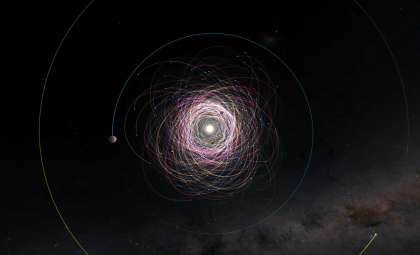
What sets Ammonite apart is its orbit, which diverges notably from those of previously found sednoids. This anomaly challenges the Planet Nine hypothesis—the idea of a large, unseen planet influencing the paths of outer solar system bodies. Dr. Yukun Huang of the Center for Computational Astrophysics at NAOJ ran simulations showing that “The fact that Ammonite’s current orbit does not align with those of the other three sednoids lowers the likelihood of the Planet Nine hypothesis.”
Reevaluating the Planet Nine Hypothesis
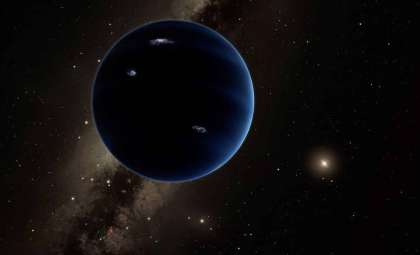
For many years, astronomers have proposed a ninth planet far beyond Neptune as the cause behind the bizarre orbits of distant icy bodies, a theory known as the Planet Nine hypothesis. Yet, Ammonite’s distinct path complicates this hypothesis, indicating that the outer solar system’s structure might be more intricate than previously assumed.
Dr. Yoshida also noted the unusual nature of Ammonite’s discovery zone, commenting, “Ammonite was found in a region far away where Neptune’s gravity has little influence. The presence of objects with elongated orbits and large perihelion distances in this area implies that something extraordinary occurred during the ancient era when Ammonite formed.”
- Categories:
- News



0 comments
Sign in to Comment