
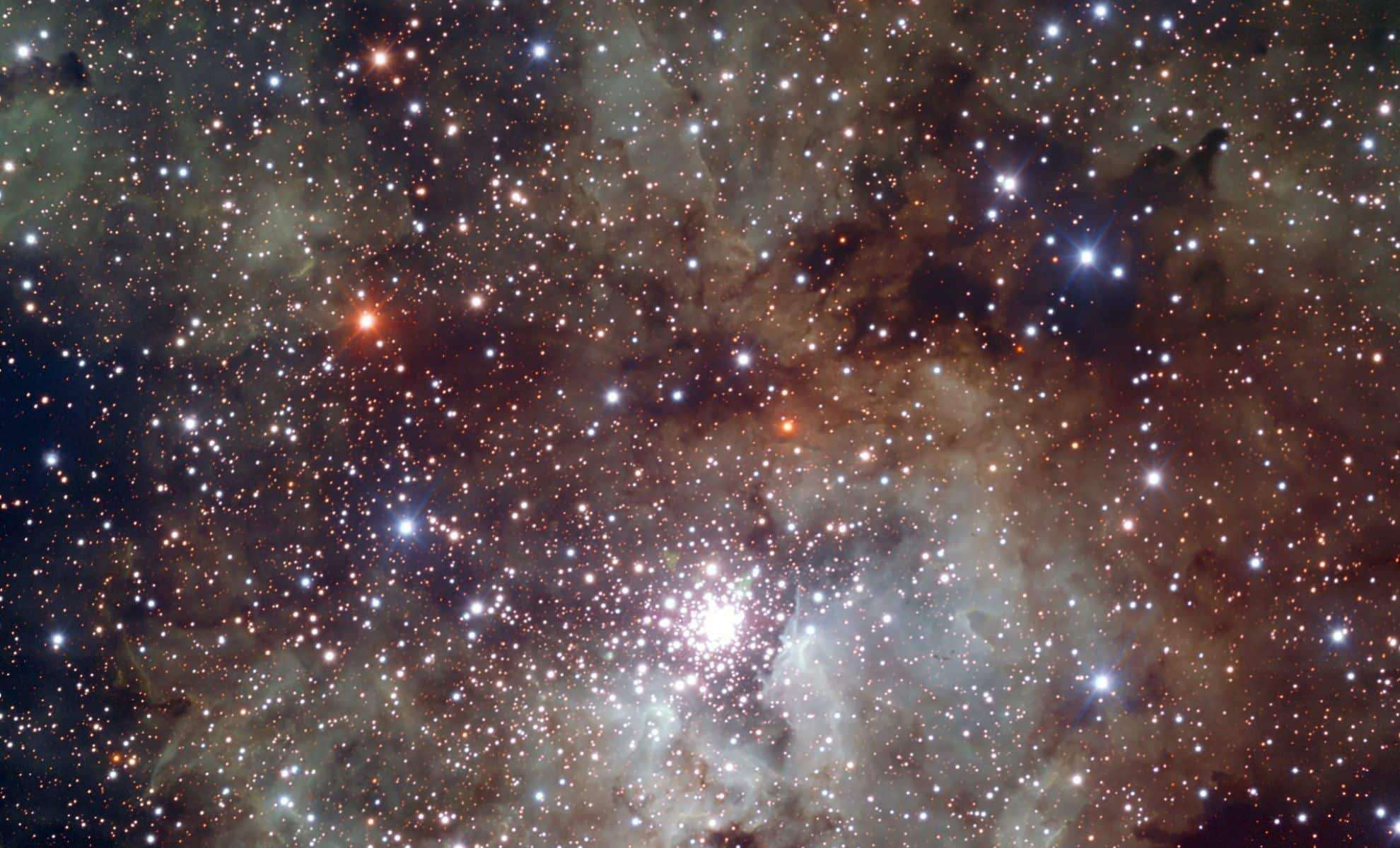
New studies have offered astronomers groundbreaking insights into some of the largest stars residing within our Milky Way galaxy, revealing important details about their makeup, life cycles, and final stages. Published in the Astrophysical Journal, this research examined pairs of stars locked in close orbit around each other. Such binary systems provide a unique chance to determine stellar masses through direct measurements rather than relying only on theoretical estimates. Utilizing advanced spectroscopic techniques combined with comprehensive observational efforts, scientists have refined mass calculations that could significantly influence our perception of the upper boundaries of stellar weight in our galaxy.
Unlocking Stellar Properties Through Binary Star Systems
Binary stars, especially massive binary pairs, act as invaluable scientific tools in astrophysics. Measuring the mass of isolated massive stars often depends on assumptions about brightness, chemical makeup, and spin. In contrast, two stars orbiting each other exert gravitational forces that cause measurable shifts in their light, known as Doppler shifts. Tracking these shifts enables researchers to accurately determine their masses.
“For the most massive stars, astronomers usually have to rely on models that aren’t very well-constrained to ‘weigh’ the star. But this study focused on a special type of binary system where we can get a more fundamental measurement of its mass,” explains Sarah Bodansky from Carleton College. This approach reduces uncertainties common in single-star modeling, offering deeper insight into the true physical characteristics of these stellar giants.

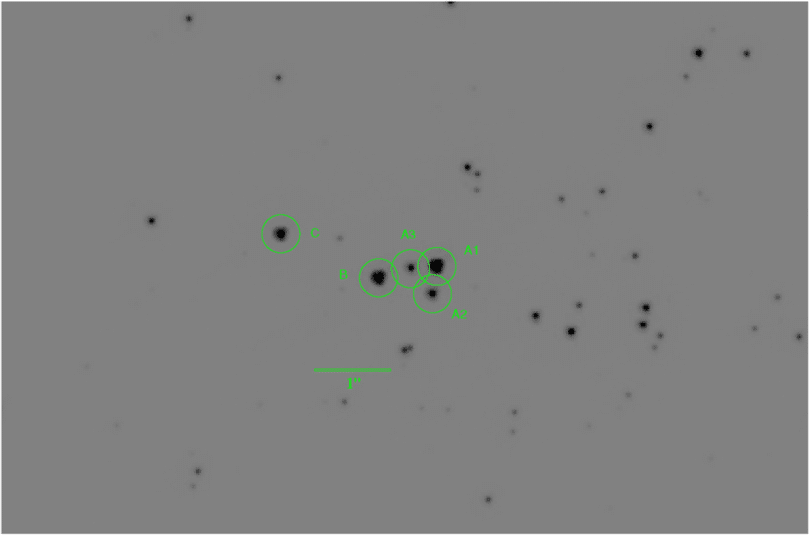
Utilizing Spectral Data to Gauge stellar Mass
Central to this investigation was comprehensive spectral analysis. Multiple observations across the stars’ orbital cycles helped identify subtle variations in their spectrum lines, indicating how fast they move toward or away from Earth. These velocity measurements, when carefully interpreted, provide reliable mass estimations.
“Sarah’s work made it possible to move this project forward. She noticed something that everyone had missed: some of the spectral features doubled when the stars had their greatest motions towards and away from us. Without this discovery, the project would have languished,” remarked Dr. Phil Massey from Lowell Observatory. This key observation confirmed orbital dynamics and enabled the team to derive mass estimates with unprecedented accuracy.
What These Masses Mean For Star Evolution
Precise calculations of stellar mass are essential for understanding how stars evolve, lead to supernovae, and form black holes. Stars heavier than roughly 50 to 60 times the Sun’s mass burn through their fuel rapidly and often conclude their lives as black holes or neutron stars. Previously, uncertainties in mass limited comprehension of their role in galactic processes.
These new results reveal that certain massive binaries are significantly heftier than once assumed, challenging existing theories related to mass shedding, rotation rates, and internal star mixing. This information is pivotal for anticipating supernova phenomena, enriching our knowledge of cosmic chemical distribution, and understanding gravitational wave events from colliding massive stars.
Advancing Stellar Weight Measurement Techniques
This breakthrough underscores the value of cutting-edge spectroscopy coupled with detailed, sustained observational campaigns. Such methods allow astronomers to overcome traditional obstacles and study even the most colossal objects within our cosmic neighborhood.
Collaboration between observers and theorists exemplifies a productive path forward, ensuring that knowledge about stellar mass, development, and destinies becomes more precise and impactful. With ongoing advances in instrumentation, measuring the most massive and distant stars in the universe will soon become routine, deepening our understanding of the universe’s fundamental forces.
- Categories:
- News




0 comments
Sign in to Comment