
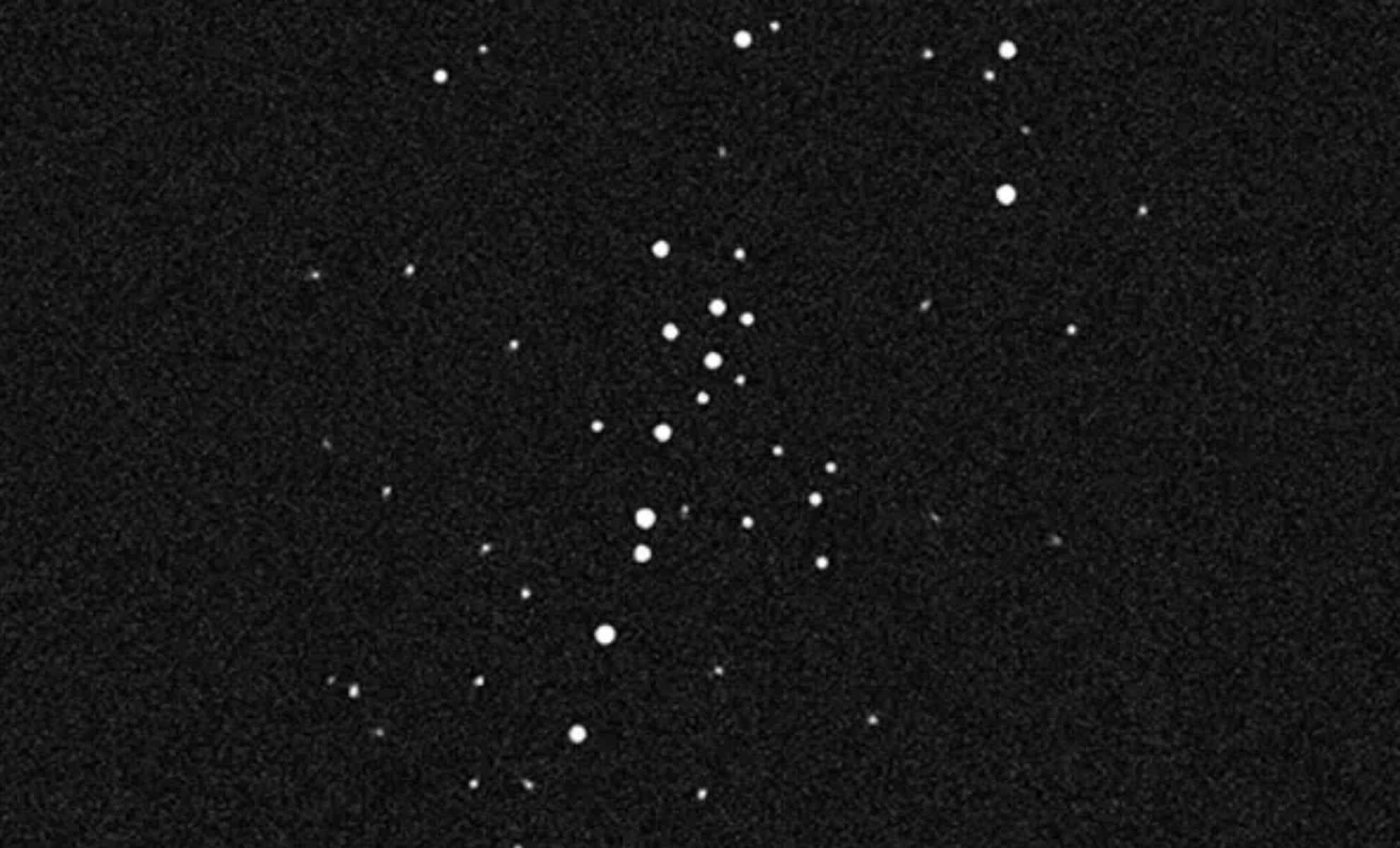
A recent publication in the Astrophysical Journal Letters presents a fresh perspective on Ursa Major III (UMa3/U1), the faintest satellite known to orbit our galaxy. Traditionally thought to be a dwarf galaxy rich in dark matter due to its extraordinary mass-to-light ratio and faint nature, this object is now believed to be a tightly knit star cluster, stabilized primarily by a core comprising black holes and neutron stars. This reinterpretation, supported by cutting-edge simulations and observational evidence, marks a significant advancement in understanding the Milky Way’s satellite population.
Decoding the Mystery of Ursa Major III
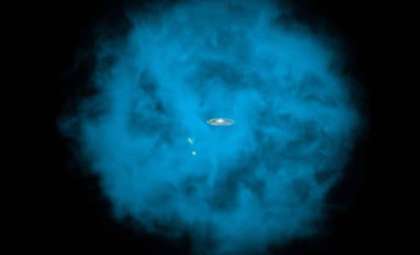
Situated over 30,000 light-years from Earth, Ursa Major III is a dim celestial body that circles the Milky Way. With only about 60 stars visible, its ghost-like appearance initially led astronomers to categorize it as a dark matter-heavy dwarf galaxy. Such galaxies are known for their modest size but substantial dark matter presence, which is detectable only through gravitational effects. The object’s unusual mass-to-light value reinforced this assumption, implying a hidden mass far exceeding what its visible stars could account for.
A research team from the University of Bonn, Germany, have now challenged this long-held view. Using sophisticated computer models combined with detailed analysis of Ursa Major III’s orbit and chemical makeup, they propose that it is instead a star cluster that has evolved due to prolonged tidal interactions with the Milky Way.

Impact of Galactic Tides on Ursa Major III's Evolution
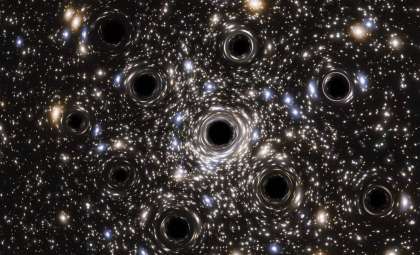
According to the new research, the faintness and distinct structure of Ursa Major III result from billions of years of gravitational stripping by our galaxy. These forces have removed a significant portion of its outer stars, leaving behind a dense central remnant. Co-author Hosein Haghi from the University of Bonn refers to this phenomenon as the creation of “dark star clusters.” In his own words, “Dark star clusters form when gravitational interactions with the Milky Way over billions of years remove the outer stars from a star cluster.” Ursa Major III appears to be a prime example of this process, retaining a core composed predominantly of compact stellar remnants.
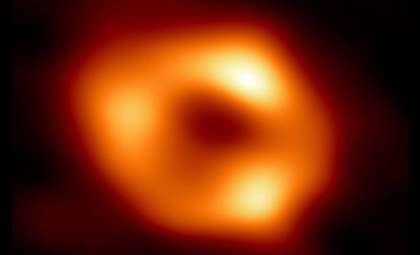
This core, filled with black holes and neutron stars, emits no visible light but exerts sufficient gravitational pull to keep the remaining stars bound together. This fact likely led to earlier misconceptions that the cluster was dominated by dark matter. The gravitational influence of these compact objects mimics the expected effect of dark matter in the galaxy’s satellite system.
The Influence of Black Holes and Neutron Stars at Ursa Major III’s Heart
A standout aspect of this discovery is how a dense cluster of black holes and neutron stars can maintain the overall gravitational stability of Ursa Major III. These remnants are the result of massive stars that exploded as supernovae, leaving behind compact cores with intense gravity that distorts space-time. Simulations by the team indicate that this black hole and neutron star population has enough combined mass to hold the cluster’s stars in place.
This insight also resolves the debate over the unusually high mass-to-light ratio, previously attributed to dark matter. Instead, the study suggests that the gravitational forces arise from these dense, invisible stellar remnants rather than mysterious dark matter particles. This implies that Ursa Major III’s unusual properties may be a natural outcome of the long-term gravitational sculpting of star clusters by their host galaxy.
Reevaluating Our Understanding of Satellite Systems
The ramifications of this finding extend well beyond Ursa Major III alone. It sheds light on the broader formation and transformation processes of satellite galaxies and star clusters both within the Milky Way and in other galaxies. Previously, many faint satellites with high mass-to-light ratios were assumed to harbor significant dark matter. Ursa Major III’s case now suggests that some of these satellites might actually be “dark star clusters”—the compact remnants of larger star groups stripped by the tidal forces of their parent galaxies.
Co-author Pavel Kroupa from the University of Bonn highlights the significance of this work, stating, “Our work shows for the first time that these objects are most likely normal star clusters.” This paradigm shift could reshape perspectives on galaxy formation and the role of gravitational interactions in the evolution of satellite systems. Studying Ursa Major III opens up promising new directions for exploring the complex interplay between star clusters, black holes, neutron stars, and dark matter within galactic ecosystems.
- Categories:
- News





0 comments
Sign in to Comment