
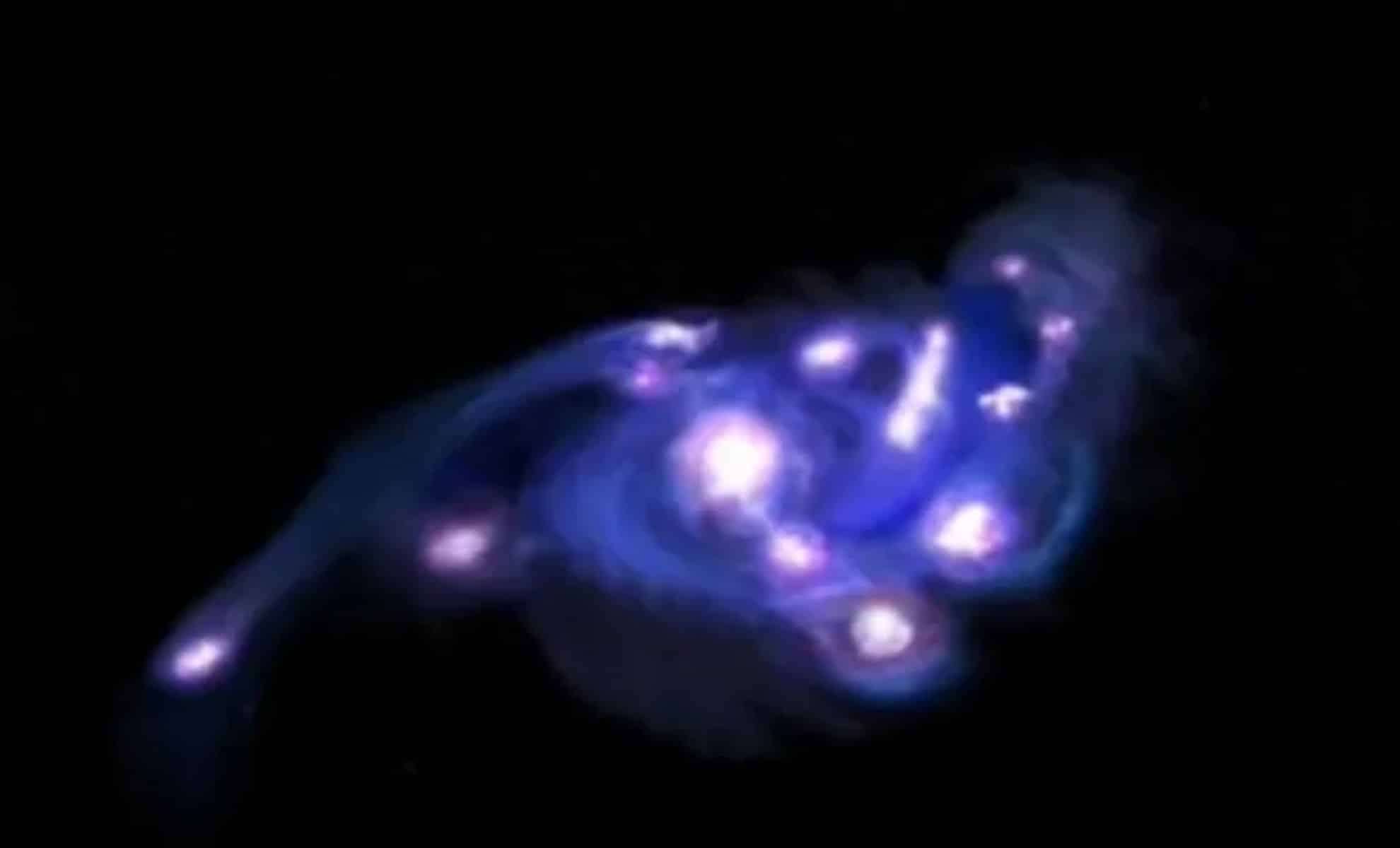
In a remarkable stride forward in cosmic research, a new study published in Nature Astronomy reveals the intricate inner workings of an ancient galaxy magnified by one of the most powerful gravitational lensing events recorded. Led by Seiji Fujimoto, this investigation takes advantage of the natural amplification caused by gravitational lensing to capture distant galaxies with exceptional resolution. Leveraging data from a suite of state-of-the-art telescopes, the research sheds fresh light on galaxy formation during the universe’s earliest epochs.
Gravitational Lensing: Peering Back in Cosmic Time
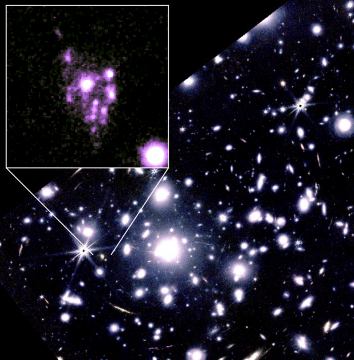
Gravitational lensing happens when a massive celestial body—such as a galaxy or black hole—is positioned between Earth and a remote galaxy, bending and intensifying the galaxy’s emitted light. Acting like a natural cosmic lens, this phenomenon lets astronomers scrutinize galaxies billions of light-years away with remarkable accuracy. Fujimoto, the principal investigator, notes, “This object is recognized as one of the most intensely gravitationally lensed galaxies discovered to date.” The lensing effect bypasses current instrumental limits, allowing the team to detail the galaxy’s structure as never before.
By amplifying light from galaxies formed in the universe’s infancy, gravitational lensing provides a powerful tool to explore early cosmic structures. The chance to analyze such highly magnified galaxies unlocks new opportunities to understand the origins and development of galactic systems when the cosmos was in its formative stages.

Cutting-Edge Telescopes Capturing Galactic Details
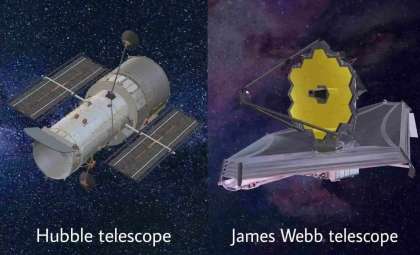
Maximizing the benefits of gravitational lensing demands the use of premier observational facilities like the Hubble Space Telescope and the Atacama Large Millimeter/submillimeter Array (ALMA). Through combined efforts, Fujimoto’s group achieved unprecedented resolution in probing the distant galaxy’s internal composition. “This extraordinary gravitational magnification, alongside data from leading telescopes worldwide, enabled us to investigate the galaxy’s internal properties with unmatched sensitivity and clarity,” Fujimoto stated.
Such detailed examination of a faraway galaxy reveals critical aspects of its formation and structural evolution. Merging gravitational lensing with sophisticated instrumentation permits discovery of individual stellar elements and a deeper understanding of galaxy dynamics during the universe’s earliest chapters.
Unlocking the Inner Complexity of Early Galaxies
An extraordinary highlight from this study lies in the discovery of the early galaxy’s internal structure. Contrary to traditional galaxy formation theories which envisioned smooth stellar and gaseous distributions, findings from Fujimoto’s team reveal a different picture. “Our data demonstrate that the young light in some early galaxies is dominated by several compact, massive clumps rather than a uniform stellar spread,” said Mike Boylan-Kolchin, co-author and astronomy professor at UT Austin.
This challenges established models, proposing that primordial galaxies were more fragmented and turbulent than previously believed. The presence of dense star-forming clumps likely played a crucial role in building the early galactic framework and influencing their subsequent evolution.
New Perspectives on Galaxy Assembly in the Early Universe
Identifying these dense stellar clumps offers key insights into how galaxies grew during the universe’s first few billion years. The observations imply that galaxy formation was a dynamic, intricate process involving multiple star-forming regions within a single galaxy. This raises significant questions about the mechanisms driving star birth and galactic assembly in these early times.
The discovery also underscores the continuing promise of gravitational lensing in unveiling the secrets of distant galaxies. As observational methods advance and more powerful telescopes come online, further exploration of remote cosmic objects will enrich our comprehension of galactic birth, evolution, and large-scale interactions through cosmic history.
Clumpy Star Formation: A Crucial Factor in Cosmic Evolution
The detection of irregular star formation sites within early galaxies offers profound implications for how galaxies transitioned over billions of years. It suggests that star-forming activity in the early cosmos was far more chaotic and clumped together than the relatively ordered processes seen in nearby galaxies today. Over time, these clumps likely merged or evolved into well-organized galactic structures.
Studying these dense stellar regions will be essential for reconstructing a comprehensive narrative of galaxy growth and interaction throughout cosmic time. Future research focused on these clumpy formations promises to deepen our understanding of the forces shaping the galaxies we observe in the present epoch.
- Categories:
- News



0 comments
Sign in to Comment