
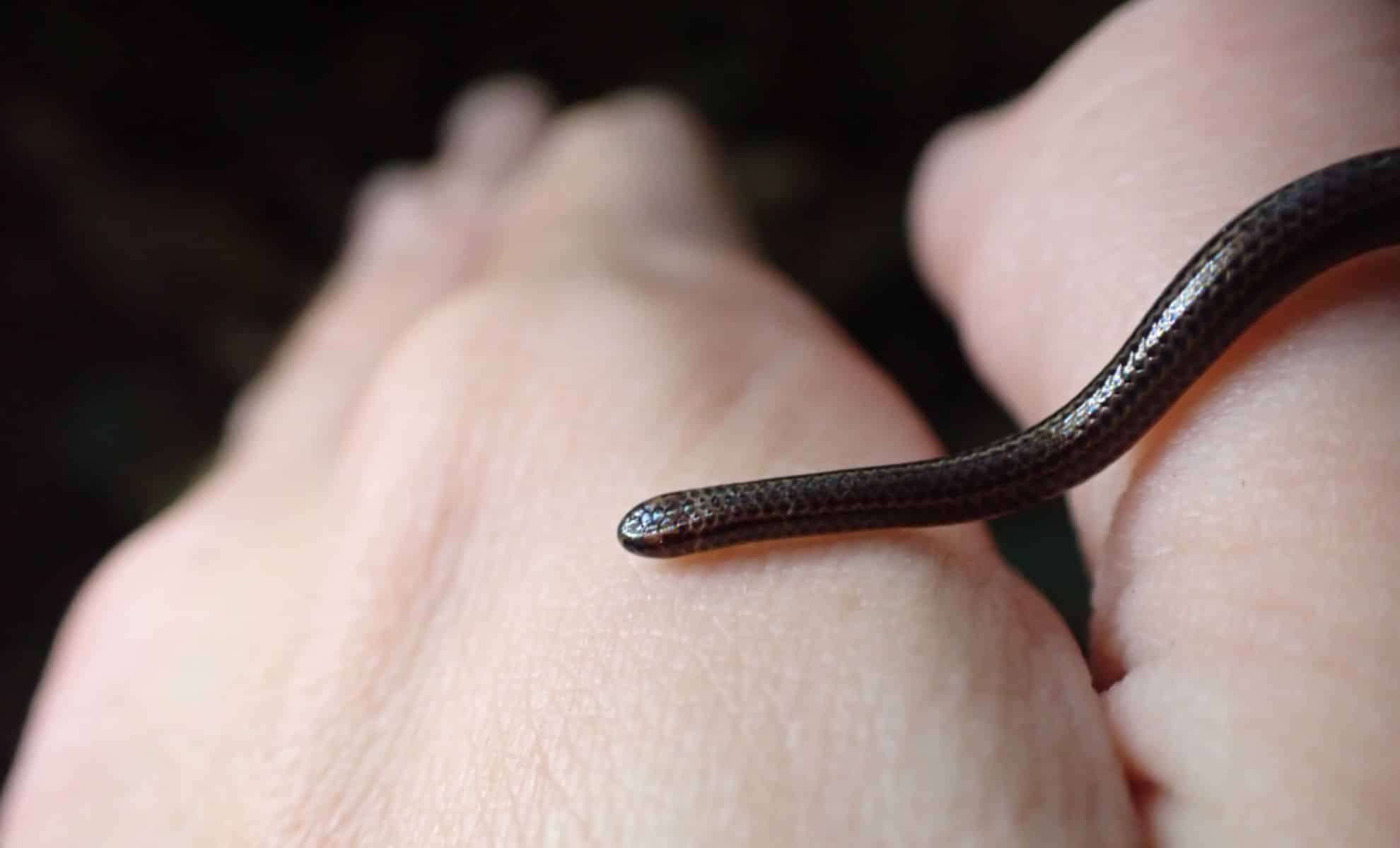
After being missing from scientific observation for 20 years, the elusive Barbados threadsnake has resurfaced, captivating researchers worldwide. Recognized as the tiniest snake species, it measures a mere 9 to 10 centimeters (roughly 3 to 4 inches), comparable in size to a typical paperclip.
An Inconspicuous Yet Significant Species
The Barbados threadsnake (Tetracheilostoma carlae) remained largely unknown, with the last verified encounters occurring decades ago. It features on the extensive list of over 4,800 missing species compiled by Re:wild’s Search for Lost Species.
Its recent rediscovery happened beneath a stone in Barbados, due to persistent efforts by the Ministry of the Environment and Beautification, which conducted a year-long search as part of the Conserving Barbados’ Endemic Reptiles (CBER) initiative.

Detecting this minuscule snake proves challenging, not only because of its size but also its resemblance to the Brahminy blind snake, an invasive species recently introduced on the island. Differentiating the two requires close examination with magnification tools. Its tiny stature largely explains why it remained hidden from scientific view for so long.
Surviving Inside Termite Colonies: A Clever Adaptation
The Barbados threadsnake’s remarkable survival strategy goes beyond its elusive nature. This minute serpent inhabits termite nests and secretes chemicals that shield it from termite attacks.
“We know they eat ants and termites; they live in termite’s nests and release secretions that basically trick termites into not attacking them – that’s pretty cool,” explained Justin Springer, Caribbean Program Officer at Re:wild, in an interview with IFLScience. Insights into the snake’s feeding habits and ecological niche reveal just how much remains to be uncovered about this extraordinary species.
A Living Link to an Ancient Era
The Barbados threadsnake is part of an ancient lineage called Scolecophidians, among the earliest branches of snakes. Fossil evidence indicates that this group dates back to the Cretaceous period, likely originating even earlier during the Jurassic. Its presence in the Caribbean island suggests historical rafting from mainland Americas when the ancient supercontinent Gondwana fragmented.
This long evolutionary history adds significant intrigue to its rediscovery. Ongoing studies seek to understand its environment, population dynamics, and role within the ecosystem. However, its diminutive size poses difficulties for researchers aiming to study the species without causing harm, complicating conservation efforts.
As scientific investigations continue, experts stress the critical need to safeguard this species and others like it. “There’s still a lot left to discover and learn about the Barbados threadsnake, which also makes them intriguing and encourages us to protect them,” added Springer.
The return of the Barbados threadsnake after two decades highlights how even the smallest creatures play vital roles in biodiversity, paving the way for groundbreaking research and conservation efforts.
- Categories:
- News









0 comments
Sign in to Comment