
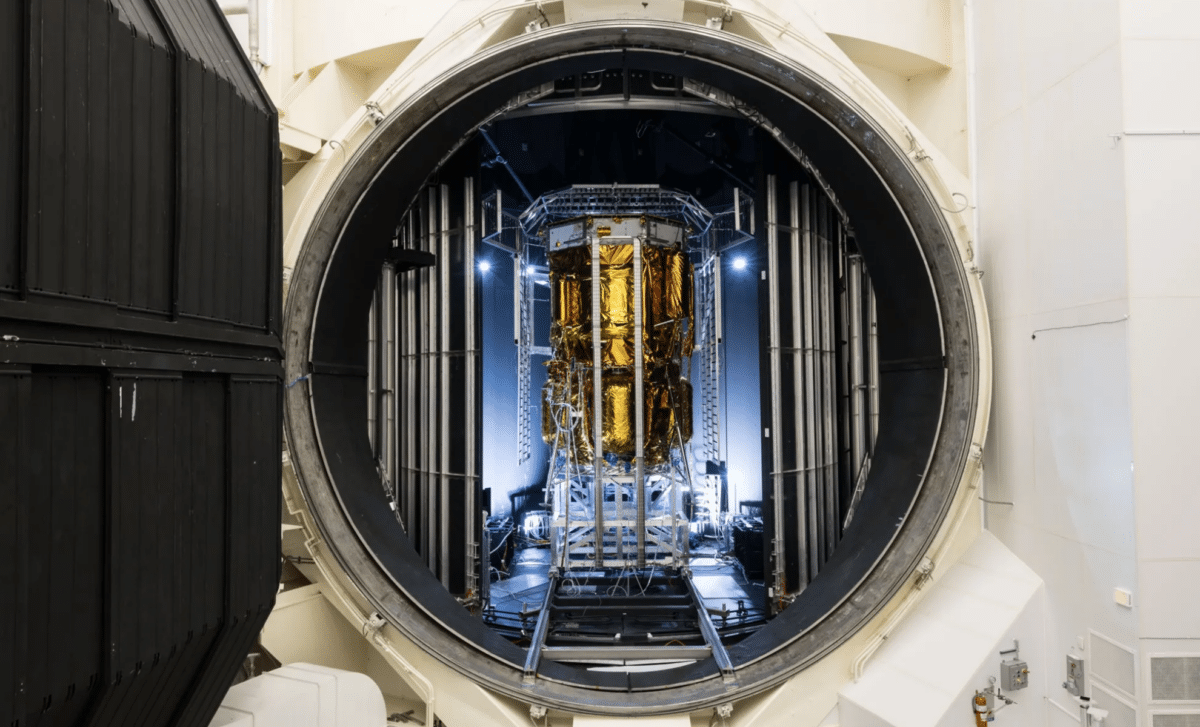
Blue Origin’s Blue Moon Mark 1 (MK1) lunar lander has triumphantly passed environmental assessments inside NASA’s Thermal Vacuum Chamber A, marking a pivotal step forward for the Artemis program and upcoming commercial lunar exploration endeavors.
Rigorous Evaluation in NASA’s Largest Vacuum Facility
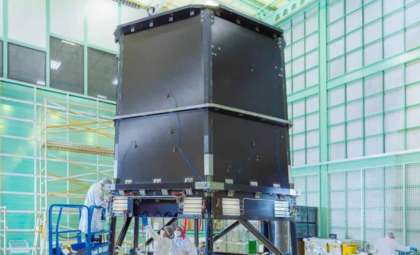
At the Johnson Space Center in Houston, the MK1 lander, also referred to as Endurance, underwent extreme testing conditions designed to simulate space’s vast emptiness and the Moon’s extreme temperature fluctuations. Thermal Vacuum Chamber A, one of the largest of its kind worldwide, recreated the airless lunar environment, challenging the lander’s systems to perform flawlessly under mission-mimicking scenarios.
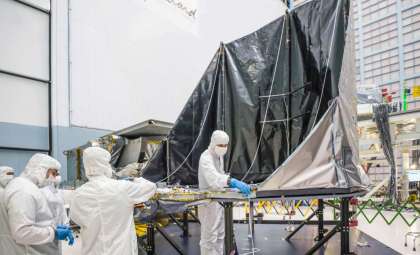
The testing focused on assessing structural integrity, thermal endurance, and system reliability exposed to the harshness of deep-space conditions. By imitating the hostile lunar setting on Earth, Blue Origin in partnership with NASA engineers pinpointed vulnerabilities early on and enhanced system functionality prior to launch. This stage is more than standard procedure; it’s a defining measure of the spacecraft’s mission readiness.

This collaboration illustrates a new model of space exploration. Operating under a reimbursable Space Act Agreement, NASA granted access to its testing facilities while Blue Origin led the rigorous test campaign, demonstrating a fusion of public resources and private innovation that is shaping the future of lunar exploration.
Endurance’s Role: Mastering Autonomous Precision and Cryogenic Propulsion
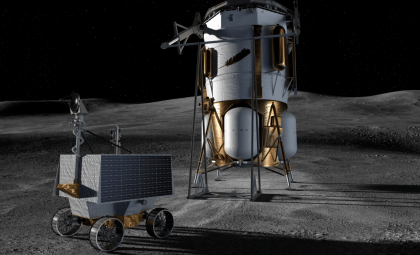
The Blue Moon MK1 may not transport astronauts, but it plays a crucial part in pioneering technologies for future crewed missions. This uncrewed cargo spacecraft aims to showcase advanced capabilities in precision touchdown, cryogenic propulsion, and sophisticated autonomous guidance, navigation, and control systems. These features are essential for navigating the Moon’s rugged south Pole, where challenging terrain and variable lighting prevail.
Achieving pinpoint landing accuracy is vital as upcoming missions must touch down within narrowly defined regions near key scientific or infrastructure sites. The MK1’s cutting-edge systems provide real-time descent adjustments to maintain precision despite environmental uncertainties.
Another critical focus is the advancement of cryogenic propulsion, involving the management of supercooled propellants. Overcoming engineering hurdles like fuel boil-off and containment is necessary for more extended missions and enhanced lander capabilities.
Autonomous operations are equally indispensable. Given communication delays between Earth and the Moon, the lander must rapidly respond to terrain data and independently steer its descent. The MK1’s onboard intelligence supports such autonomous decision-making, a requirement for future human lunar landings.
NASA’s Scientific Mission Supported by CLPS Program
The MK1 mission extends beyond engineering, transporting research payloads through NASA’s Commercial Lunar Payload Services (CLPS) initiative. This program collaborates with U.S. companies to deploy instruments that deepen lunar knowledge while advancing commercial lunar infrastructure.
One such payload is the Stereo Cameras for Lunar Plume-Surface Studies, which capture detailed visuals of how the lander’s rocket plume disturbs the lunar surface upon landing. Insights gleaned from this data are critical for safeguarding future lunar bases and technology against dust-related damage.
Another important payload is the Laser Retroreflective Array, designed to improve navigation by reflecting laser beams from orbiting satellites. This straightforward but vital tool sharpens positional accuracy essential for both robotic and astronaut explorations on the Moon.
- Categories:
- News






0 comments
Sign in to Comment