

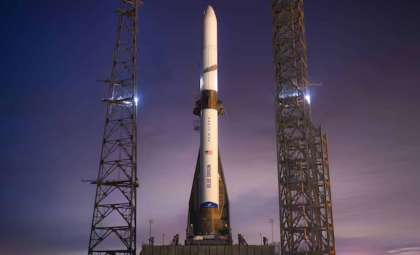
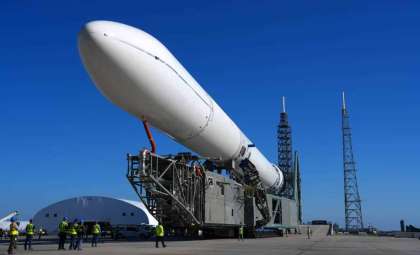
Blue Origin is gearing up for a pivotal moment in space exploration as its powerful New Glenn rocket prepares for its second launch, carrying out an unprecedented commercial mission beyond Earth’s orbit. As reported by Phys.org on July 18, 2025, this launch will deploy NASA’s ESCAPADE satellites to Mars, marking New Glenn’s debut interplanetary voyage and the inaugural orbital science mission dedicated to investigating Mars’ magnetosphere. After facing postponements in 2024 due to readiness concerns leading NASA to delay its payload, the vehicle now stands ready for liftoff from Cape Canaveral’s LC-36 with sights set on the Red Planet.
New Glenn’s Upcoming Launch Targets Martian Orbit
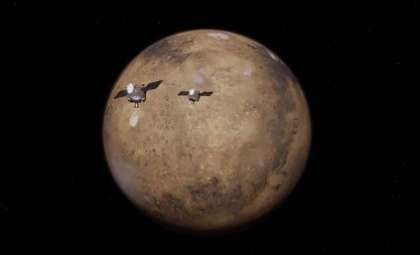
Blue Origin is preparing to send its New Glenn launch vehicle into space for the second time, breaking new ground by pushing into deep space territory. The mission, known as NG-2, will transport NASA’s ESCAPADE (Escape and Plasma Acceleration and Dynamics Explorers) twin spacecraft designed to study the interaction between solar winds and Mars’ magnetic field. Although initially scheduled for October 2024, the launch was postponed to ensure the rocket’s readiness, with all systems now confirmed operational.
Blue Origin CEO Dave Limp shared his excitement on social networking platforms: “This mission is a major milestone for New Glenn and Martian research. ESCAPADE is not only New Glenn’s first leap beyond Earth orbit; it’s also the first multi-satellite orbital science mission focused on Mars’ magnetosphere. We’re also aiming to successfully recover the booster for the first time upon landing. Mars, here we come.” The booster recovery attempt will target the drone ship “Jaclyn,” named in honor of Jeff Bezos’ mother, building on lessons from the previous launch’s unsuccessful catch. Reusability is central to New Glenn’s design philosophy, aiming for up to 25 flights per booster—a strategy akin to that of SpaceX’s Falcon 9, a direct competitor in the market.

Unraveling Mars’ Magnetic Mystery with ESCAPADE
The ESCAPADE mission marks a transformative step forward for NASA and its commercial collaborators. Developed by Rocket Lab, the mission’s two spacecraft are equipped to chart the Martian magnetosphere, a dynamic region where solar wind encounters the planet’s magnetic environment. Insights gained here are expected to shed light on how Mars’ atmosphere has changed over time, which may inform theories about the planet’s historical capacity to support life and its potential colonization future.
Nicky Fox, NASA’s associate administrator for science, emphasized the mission’s critical nature: “Studying Mars’ atmosphere is essential as we extend human presence deeper into the solar system. To protect astronauts and technology from space weather hazards, ESCAPADE’s safe launch and mission success are vital. We eagerly anticipate its journey to Mars.” Understanding the space weather environment around Mars is crucial for ensuring long-term crewed missions and designing spacecraft with adequate radiation shielding.
A Milestone in Commercial Interplanetary Travel
For Blue Origin, the NG-2 launch goes beyond a routine flight—it represents a demonstration of advanced capabilities. A successful mission will enhance Blue Origin’s role in NASA’s Artemis initiative, where the company is responsible for creating Blue Moon lunar landers, including a system intended for Artemis V human landings. This launch also holds strategic weight for U.S. Space Force certification; with at least two successful orbital missions required before a rocket is cleared for national defense tasks, New Glenn is making steady progress toward this milestone.
Extensive investment underpins this effort, with production centralized at Rocket Park on Merritt Island, close to the Kennedy Space Center, while pre-launch operations are conducted at Launch Complex 36, a historic facility linked to lunar missions from the 1960s. Blue Origin’s $1 billion commitment to this site signals its dedication to strong Florida-based launch operations and its direct challenge to competitors like SpaceX and United Launch Alliance (ULA).
New Glenn: Power, Size, and Vision
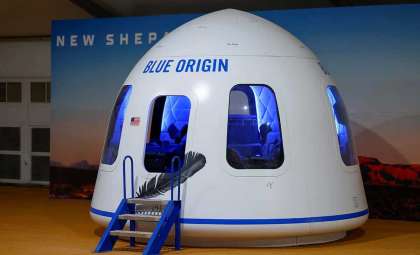
Standing at a towering 321 feet, New Glenn eclipses Blue Origin’s earlier New Shepard suborbital rocket. Powered by seven BE-4 engines, it generates an impressive 3.85 million pounds of thrust, outmatching ULA’s Atlas V and delivering more than twice the thrust of SpaceX’s Falcon 9. On top of its strength, it boasts a spacious 23-foot-diameter payload fairing — the largest among commercial launch vehicles — offering ample room for cargo.
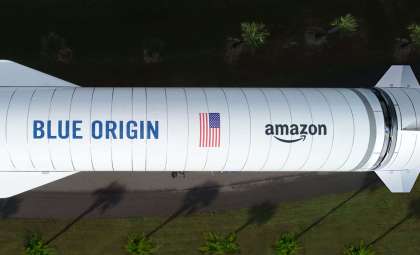
These specifications reveal Blue Origin’s intent to secure a leading position in the heavy-lift rocket sector. Alongside government contracts, New Glenn is slated to serve commercial ventures such as Amazon’s Project Kuiper, which has already reserved at least a dozen launches to deploy an internet satellite network aimed at competing with Starlink.
- Categories:
- News








0 comments
Sign in to Comment