
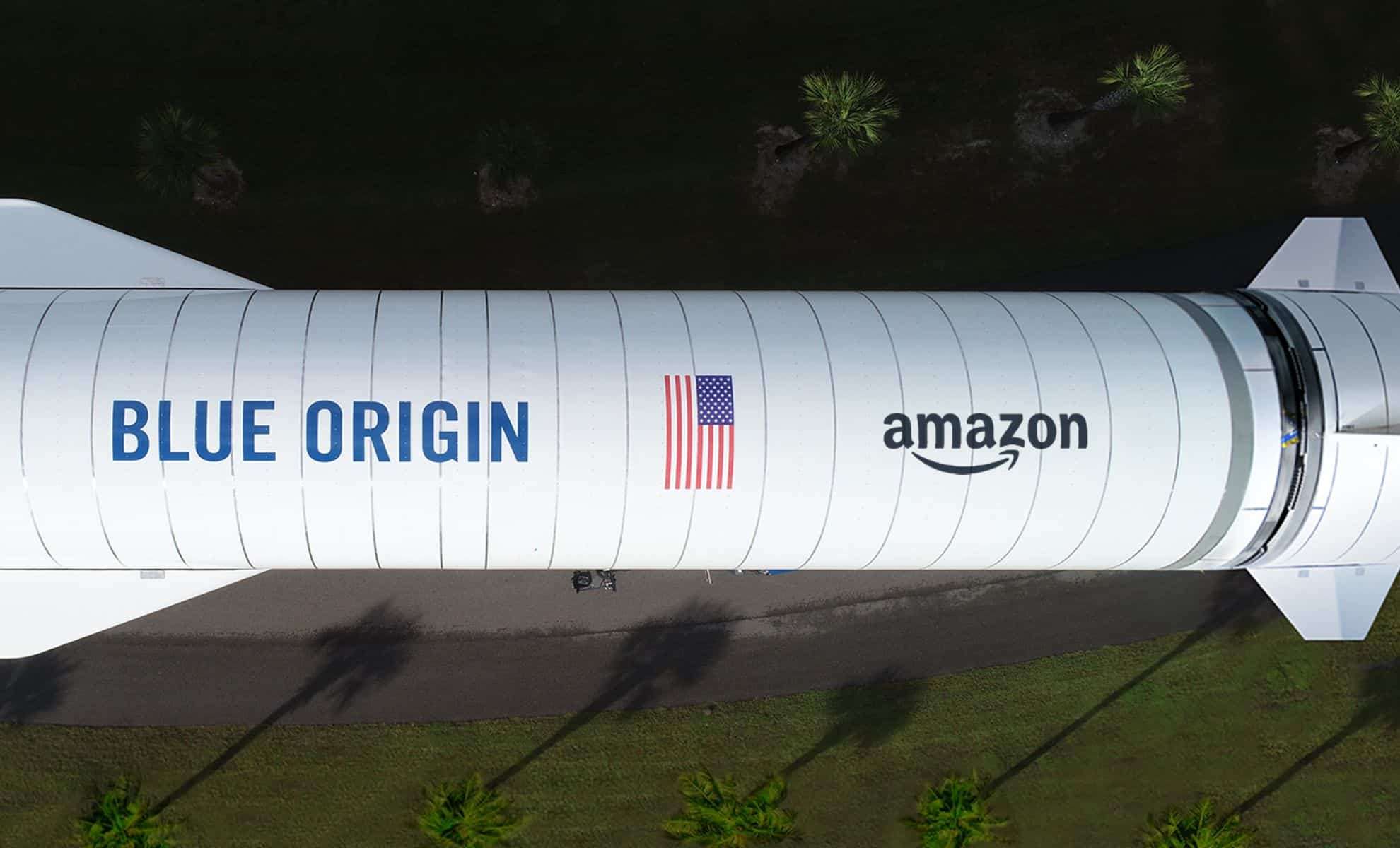
Blue Origin, the aerospace company founded by Jeff Bezos, has encountered another major setback with its New Glenn heavy-lift rocket. After showing signs of progress last year, the launch schedule has been pushed back once more. The expected second launch, initially slated for early spring, is now postponed until at least late August, putting Blue Origin’s ambitious goal of completing eight launches in 2025 at risk.
This delay not only affects Blue Origin’s timeline but also endangers Amazon’s Project Kuiper, which depends on New Glenn to deploy its satellite internet constellation.
New Glenn: A Vital Component for Amazon’s Satellite Network
Gizmodo reports that New Glenn, developed to rival SpaceX’s rockets, has encountered numerous challenges. While the inaugural flight in January achieved partial success by delivering the second stage to the target orbit, the booster’s descent ended in failure after an attempted controlled landing ended in an explosion.

A subsequent review directed by the Federal Aviation Administration (FAA) uncovered multiple technical problems needing resolution before the next flight. Blue Origin CEO Dave Limp announced the next launch won't happen before August 15, but insiders suggest a September launch is increasingly probable.
These delays have significant implications for Amazon’s Project Kuiper, which seeks to launch 3,200 satellites to provide global internet coverage and compete with SpaceX’s Starlink constellation.
Amazon is facing a critical deadline from the Federal Communications Commission (FCC), which mandates launching at least 50% of the satellites by 2026 to retain operational rights. With New Glenn’s continual postponements, timely compliance is under threat, placing Amazon’s license in jeopardy.
The Battle for Satellite Supremacy with SpaceX
SpaceX’s Starlink has established a commanding position in satellite internet, boasting over 7,000 operational satellites since its inception. In contrast, Blue Origin's New Glenn remains under development, struggling to solidify its role as the main launch vehicle for Amazon’s satellite objectives. Until now, Amazon has relied on alternative launchers like United Launch Alliance’s Atlas V, which delivered the first set of Kuiper satellites in April. Completing Kuiper’s full constellation requires 83 launches, many of which are intended to utilize New Glenn, meaning further delays significantly impact Amazon's rollout timeline.
As Blue Origin’s CEO Dave Limp stated in a 2022 The Washington Post interview, “heavy launch capacity is still pretty constrained, and I think it will be for the coming years.” This highlights the essential role New Glenn plays in Amazon’s larger satellite deployment strategy. Without dependable heavy-lift support, Amazon may face serious difficulties achieving its mission.
Risk of Continued Delays and Limited Alternatives
Additional complications arise from a narrow pool of suitable launch vehicles able to carry Kuiper satellites into orbit. The New Glenn rocket faced over a year of development before its debut, and missing initial deadlines risks pushing Amazon’s ambitious internet project further back. Further uncertainty was introduced after a malfunction occurred during a Vulcan Centaur rocket launch in October 2024. This event sparked doubts about other launchers Amazon might rely on, leaving New Glenn's success even more critical.
As the FCC’s 2026 mandate approaches, pressure intensifies on Amazon to launch half its satellite fleet to maintain its operating license. If delays continue to mount, Amazon could be forced to reapply for its license, pushing back Project Kuiper’s deployment timeline and reinforcing SpaceX’s lead in the broadband satellite market.
- Categories:
- News









0 comments
Sign in to Comment