
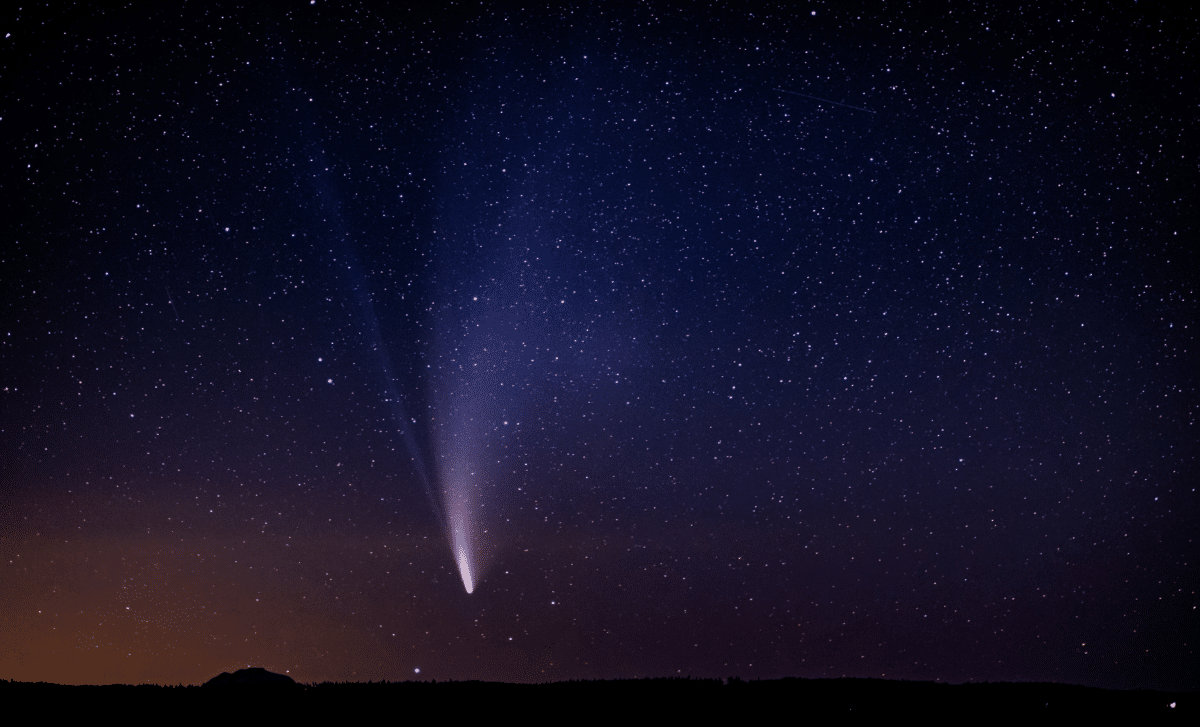
On the evening of March 12, 2026, a newly identified asteroid named 2026 EG1 will make a remarkably close approach to Earth. Detected only a few days prior, this space rock is expected to come within approximately 197,466 miles, closer than the distance to the Moon. This event provides an exciting chance to study the dynamic behavior of near-Earth objects.
Insights into the Close Flyby of Asteroid 2026 EG1
The asteroid 2026 EG1, with an estimated diameter ranging from 32 to 72 feet, was first observed on March 8, 2026. It is among the most recent additions to NASA’s extensive catalog of near-Earth asteroids. Following an elliptical orbit around the Sun that lasts about 655 days, this asteroid periodically approaches Earth’s vicinity more closely than many other objects. Per Space.com, the asteroid will reach its nearest point at 11:27 p.m. EDT on March 12, zooming past at a speed of 21,513 miles per hour (34,621 kilometers per hour) over the southern hemisphere, all at a safe distance.
While the proximity of this sizable object might cause concern, specialists affirm there is zero threat to Earth or the Moon from this encounter. Instead, it offers astronomers a valuable window to collect data regarding asteroid composition and trajectory. The asteroid’s passage will be brief, taking only a few hours before it continues its elliptical journey around the Sun.

Why There Is No Danger from Asteroid 2026 EG1
Though the asteroid's approach is relatively close—about 197,466 miles—it remains at a safe remove. This distance is closer than the Moon’s average distance of roughly 238,855 miles, yet well within a safe zone defined by NASA's monitoring protocols.
NASA’s Center for Near-Earth Object Studies (CNEOS) has been tracking asteroids like this for decades. Despite an increasing tally of near-Earth objects, experts do not foresee any substantial asteroid impact capable of significant harm in the next century. Continued advancements, such as those from the Vera Rubin Observatory, enhance scientists’ ability to track and forecast asteroid movements more precisely than ever before.
Surveying the Expanding Catalog of Near-Earth Asteroids
The importance of NASA’s monitoring programs has never been greater. Presently, over 41,000 asteroids that approach Earth are cataloged, with many more discoveries anticipated. The Vera Rubin Observatory alone has identified upwards of 2,000 previously unknown solar system objects. With better data on size, velocity, and orbits, researchers improve their evaluation of potential impact scenarios, supporting the development of improved planetary defense methods.
Astronomers employ sophisticated telescopes and technology to observe these asteroids from vast distances. Tracking trajectories allows experts to estimate future positions and assess risk levels. This steady increase in discoveries underscores the need for ongoing international cooperation to mitigate impact threats.
Advancing Strategies for Planetary Protection
Beyond observation, NASA and global space agencies are working on methods to divert possible hazardous asteroids. Part of these efforts includes simulated asteroid impact drills aimed at sharpening global communication and coordination in case of a threat. These exercises prepare governments and space agencies to respond effectively if a potentially dangerous asteroid were detected.
Moreover, NASA spearheads innovative missions focused on mastering asteroid deflection technologies. While an imminent collision threat remains improbable, these technologies could prove essential for protecting Earth from future hazards, solidifying the importance of preparedness in planetary defense.
- Categories:
- News







0 comments
Sign in to Comment