
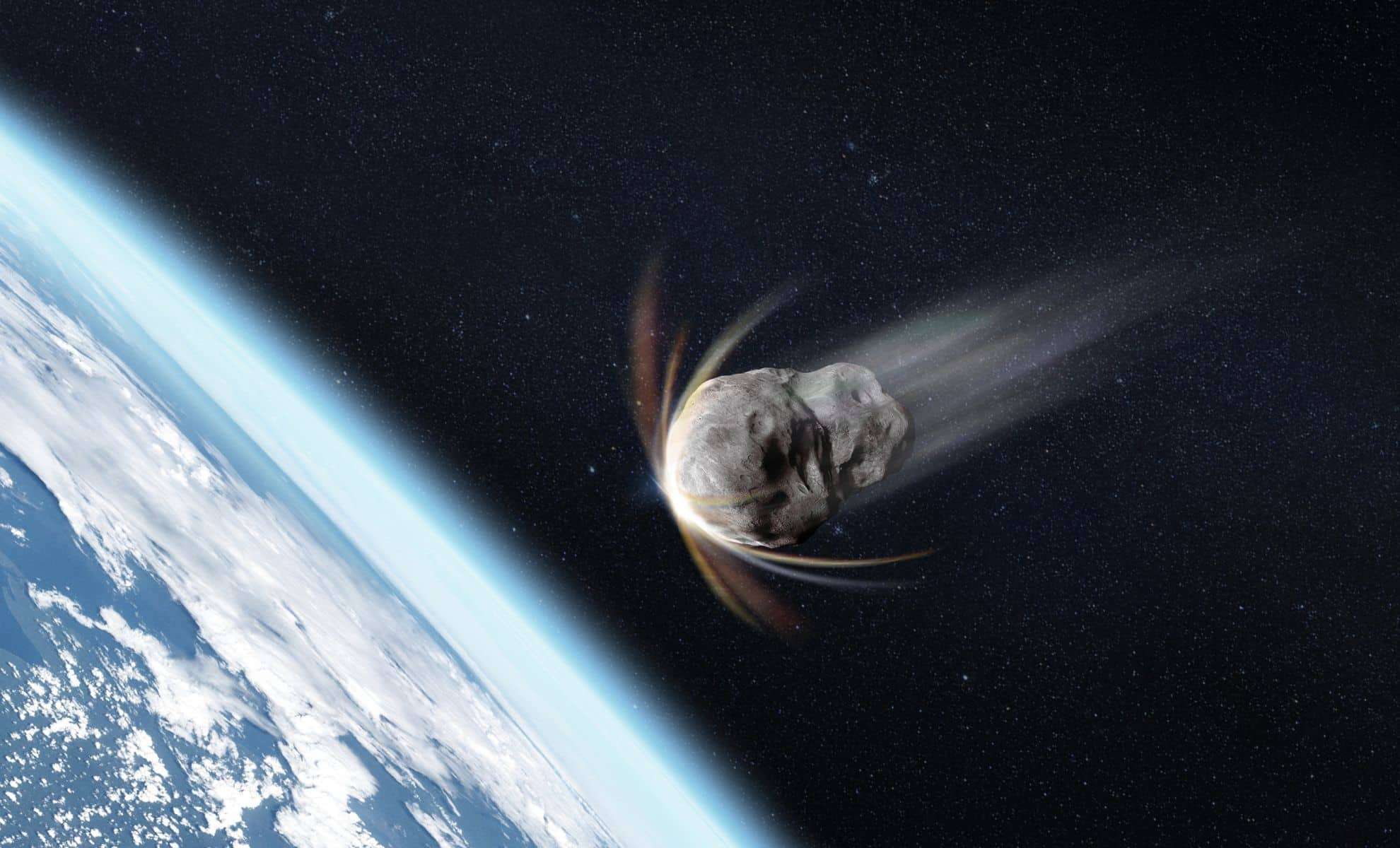
On April 13, 2029, the asteroid known as Apophis will make an exceptionally close approach to our planet, visible to the unaided eye by billions across the globe. This will mark the first recorded instance of a sizable near-Earth asteroid appearing without the aid of telescopes. Scientists are calling this an extraordinary, millennial-scale natural experiment. The announcement was made at the Europlanet Science Congress in Helsinki and covered by Live Science.
The Journey of Apophis: From Alarm to Scientific Prospect
Discovered in 2004, asteroid 99942 Apophis initially raised concerns due to a calculated 2.7% chance of striking Earth in 2029. This risk leveled it at the highest point yet on the Torino Scale for near-Earth objects, categorizing it as a serious threat.
Continued radar observations over the years have greatly enhanced knowledge of Apophis’ trajectory. By 2021, astronomers confidently ruled out any impact risks for at least the next hundred years. MIT planetary scientist Richard Binzel summed it up: “Apophis will safely pass the Earth.”

Still, a recent paper highlights a remote possibility—less than one in a billion—that an unknown asteroid could alter Apophis’ orbit. Researchers anticipate needing another few years to conclusively eliminate even this negligible chance.
Earth’s Pull Will Reshape Apophis
While Earth will remain unaffected, the close encounter is expected to significantly transform Apophis itself. The asteroid’s trajectory will bring it within roughly 18,600 miles (30,000 kilometers) of the planet, which is closer than many geostationary satellites orbit. This presents scientists a unique opportunity to observe how Earth’s gravity can influence an asteroid’s structure and movement during such a close flyby.
Currently orbiting in an Aten-class path inside Earth’s orbit, Apophis is projected to shift into a broader Apollo-class orbit after the encounter. Its spin rate might also alter, potentially causing a tumbling motion, according to Binzel. “Earth won’t notice, but Apophis will,” he noted, highlighting the dynamics involved.
The event may even offer a chance to measure seismic activity on Apophis, a phenomenon so far only detected on the Moon and Mars during decades of space exploration.
Space Agencies Prepare For A Rare Scientific Opportunity
NASA is gearing up to capitalize on the event with its OSIRIS-REx mission, recently completed after collecting samples from the asteroid Bennu. The spacecraft has been redirected to rendezvous with Apophis under the new mission name OSIRIS-APEX. It aims to arrive before the close approach to study surface features, rotation, and any changes the asteroid undergoes.
The European Space Agency is developing a complementary project named RAMSES (Rapid Apophis Mission for Space Safety). If approved at the upcoming ESA Ministerial Council, RAMSES could launch in early 2028 and reach Apophis by February 2029.
Monica Lazzarin, a physics professor at the University of Padua, states RAMSES will survey Apophis from as close as five kilometers, looking for dust emissions, tracking orbit changes, and possibly deploying a cubesat to land on the asteroid to monitor internal vibrations.
Vital Insights for Planetary Defense
Despite posing no current danger, Apophis plays an important role in advancing planetary defense research. It belongs to a group of near-Earth asteroids that could pose risks in the future, so understanding their behavior is critical.
Observing how Earth's gravity influences Apophis’ shape, spin, and orbit will help refine predictive models essential for any future asteroid deflection efforts. Tom Statler from NASA headquarters emphasized: “Apophis is not a planetary defense emergency. It is an opportunity, and an unprecedented one.” He further reassured that asteroids should be regarded as subjects of study rather than fear.
- Categories:
- News








0 comments
Sign in to Comment