
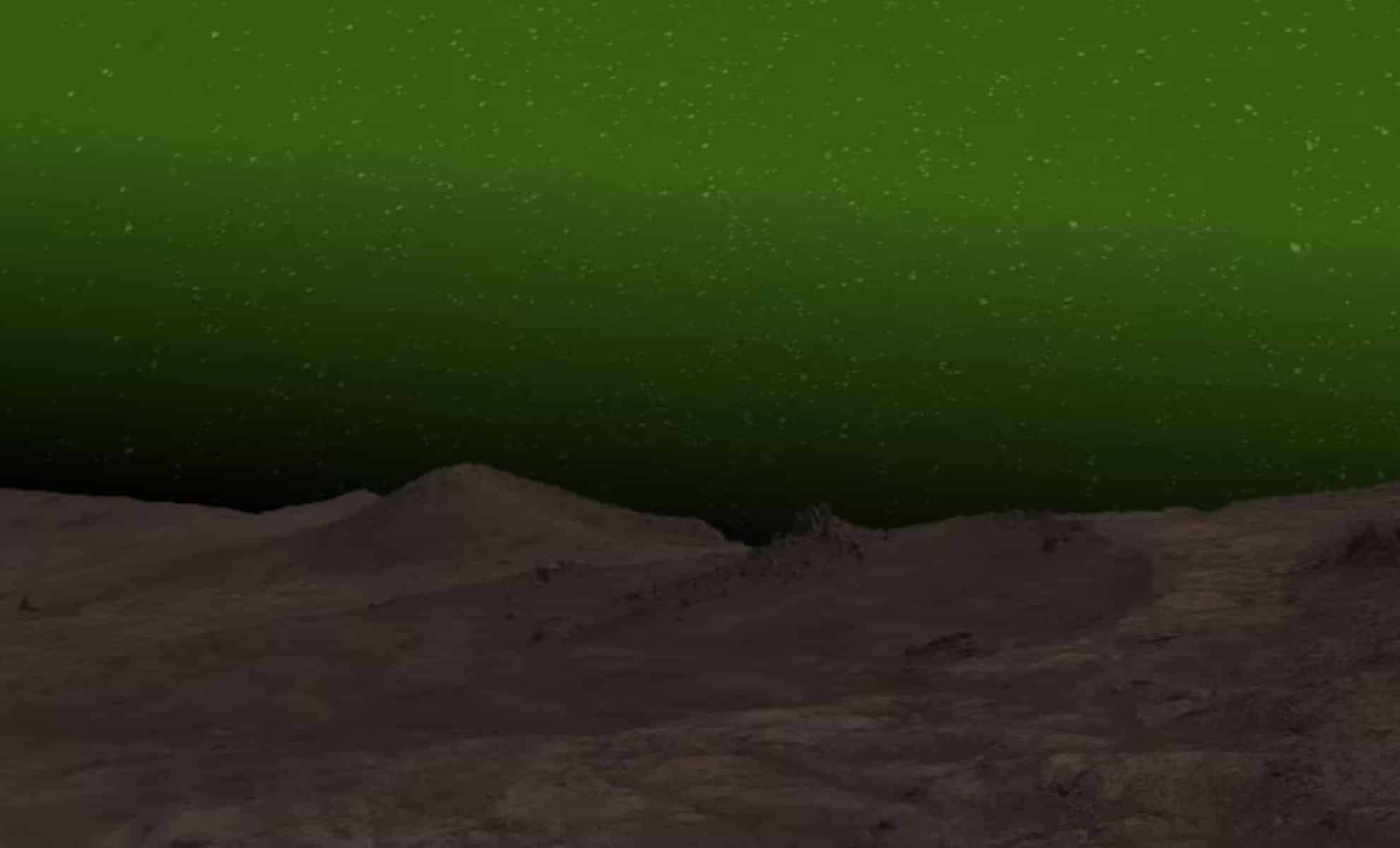
On March 18, 2024, NASA’s Perseverance rover documented a historic event: the first visible aurora observed directly from Mars’ surface. This groundbreaking discovery, detailed in a study published on May 14, 2025, in Science Advances, represents the first confirmed human-eye-visible aurora outside Earth.
Unexpected Light Phenomena Illuminate Mars
Auroras are vibrant light displays near Earth’s poles, caused by solar wind particles interacting with a planet’s magnetic field and atmosphere. On Mars, even though the process is similar, the outcome differs because the planet lacks a comprehensive magnetic field. Instead of being limited to polar locations, Martian auroras can occur planet-wide. These emissions are typically weaker and more spread out, having been previously observed only in ultraviolet wavelengths by orbital instruments.
How Perseverance Detected Mars’ Green Aurora
The Perseverance rover, positioned near the equator in Jezero Crater, captured this phenomenon on a night marked by intense solar activity. On March 18, 2024, NASA researchers predicted a coronal mass ejection (CME) from the Sun, which could excite auroral displays. Utilizing cameras optimized for low-light conditions, the rover recorded a faint but clear green glow drifting across the Martian horizon.

When set against reference images of typical Martian nights, this subtle light proves unmistakable, confirming the first-ever visual detection of a Mars aurora from its surface.
A Milestone in Planetary Aurora Observation
While auroras have been detected on multiple planets — including Jupiter, Saturn, Uranus, Neptune, and Mercury — these were always observed from orbiting satellites. Before this event, no aurora had been directly witnessed from the surface of another planet. The Perseverance image is therefore the first ground-level extraterrestrial auroral sighting, potentially visible to the naked human eye. Roger Wiens, a planetary scientist at Purdue University, suggested the light would appear as “a faint blue light.”
Insights into Mars’ Magnetic Landscape
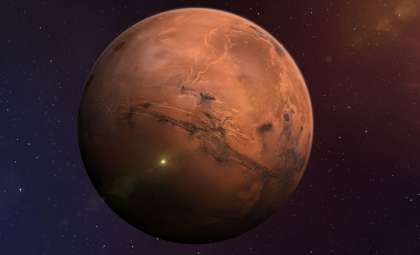
Mars lost its overarching magnetic shield billions of years ago, but lingering pockets of crustal magnetism remain. These magnetic hotspots guide auroral activity across the planet. Unlike Earth’s global magnetic funneling auroras to the poles, Martian light shows can erupt nearly anywhere depending on these localized fields. The southern hemisphere, with its most robust magnetic anomalies, might host more intense auroras in future studies. Lead author Elise Knutsen from the University of Oslo remarked, “This exciting discovery opens up new possibilities for auroral research and confirms that auroras could be visible to future astronauts on Mars’ surface.”
- Categories:
- News






0 comments
Sign in to Comment