
For nearly 100 years, a foundational chemistry principle has quietly influenced laboratories and educational settings worldwide. Established in the early 1900s, it has become a standard guiding how organic molecules are conceptualized and represented.
This long-held belief placed strict limits on what types of molecular structures chemists believed could exist, often discouraging attempts to challenge the rule due to its seemingly inviolable chemical logic.
Now, pioneering studies led by a team at the University of California, Los Angeles, detailed in Science, are calling for a reassessment. Their findings reveal that molecules once deemed too unstable to isolate may indeed form transiently, thereby stretching the rule’s perceived boundaries.

Breaking New Ground on Molecular Strain
At UCLA, under the guidance of Professor Neil Garg, scientists have successfully created anti-Bredt olefins, molecules featuring a double bond at a bridgehead position—previously considered too strained to exist. This challenges Bredt’s rule, which stemmed from 1924 work by German chemist Julius Bredt that barred such structures in small ring systems.
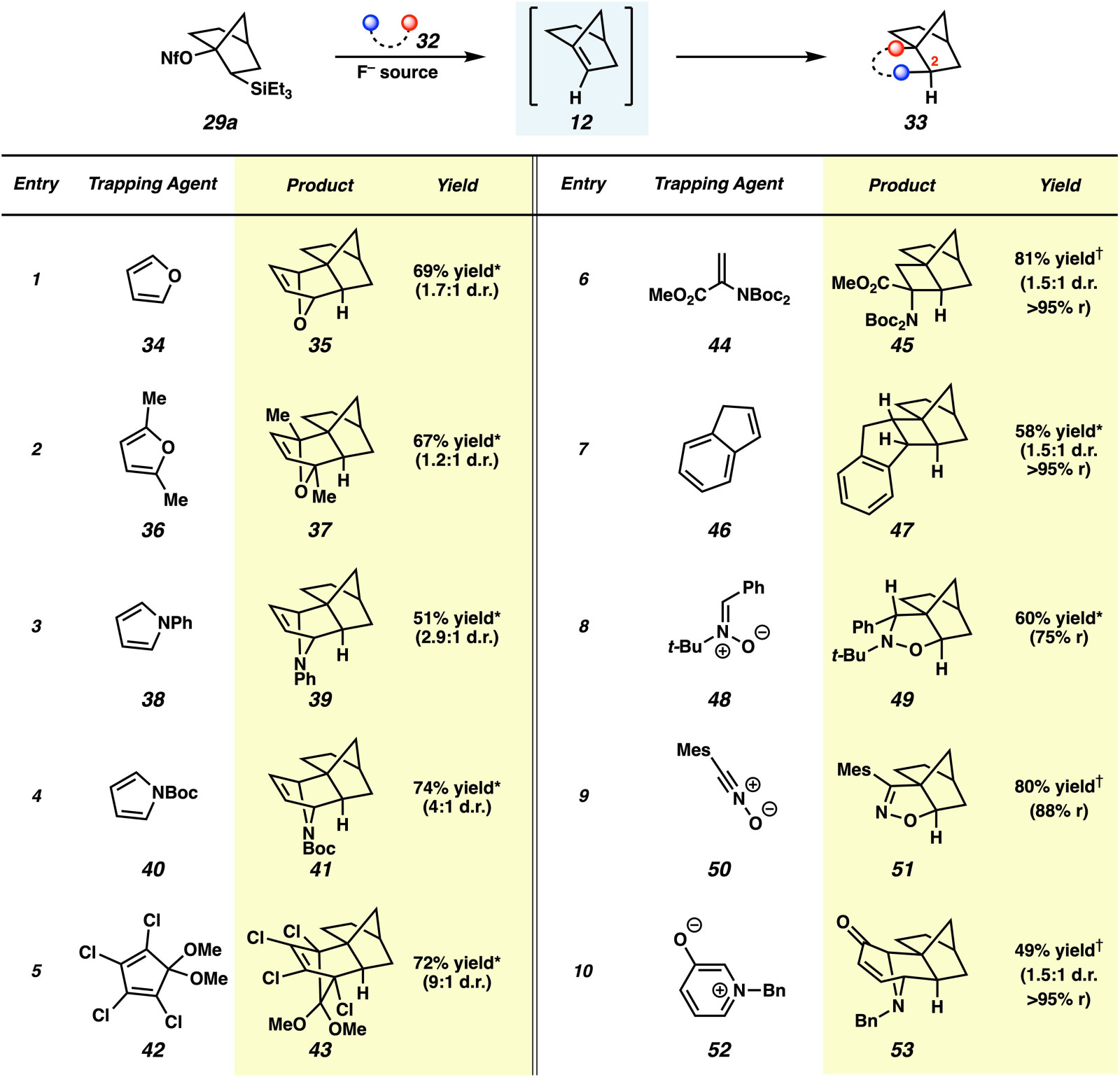
Employing a carefully orchestrated multi-step chemical process, the research team circumvented isolating the highly unstable intermediate. They induced a rapid fluoride ion-triggered reaction that briefly formed the forbidden double bond, allowing it to be captured immediately by another molecule and yielding a stable compound. This outcome depended on the ephemeral presence of the anti-Bredt olefin.
While they could not directly observe these fleeting intermediates, multiple chemical analyses indicated their formation. In one revealing experiment, a chiral precursor retained its stereochemistry through the reaction, a result only explainable by passing through the proposed anti-Bredt structure.
Supporting computational models mirrored experimental data, confirming conditions under which these high-strain intermediates can exist and be harnessed in synthesis.
“Chemists have avoided exploring anti-Bredt olefins because they assumed it was impossible,” Garg commented in an Earth.com article. “Our work reveals that, despite longstanding beliefs, these compounds can be formed and leveraged to create valuable chemical products.”
The Enduring Influence of Bredt’s Rule
Bredt’s rule, a fundamental idea in structural organic chemistry, originated from investigations into strain within bridged bicyclic rings. It posits that double bonds cannot form at a bridgehead atom in small ring systems due to extreme energy penalties.
For generations, it has served as a strict guideline excluding the viability of such molecules. Based on both theoretical reasoning and the absence of empirical examples, molecules violating the rule were largely considered theoretical artefacts, as explored in the historical background of Bredt’s work.
The UCLA research does not declare the rule invalid universally but rather exposes scenarios where exceptions arise in dynamic systems that transiently produce and consume these otherwise unstable species. This reinterprets the rule as a useful heuristic rather than an absolute law.
Earth.com aptly noted, “This isn’t a small tweak; it’s akin to discovering that dividing by zero can work under very narrow conditions.”
Practically, this discovery unlocks fresh avenues for working with strained ring compounds and inspires chemists to rethink other seemingly rigid synthetic constraints by applying similar strategies.
Advancing Drug Design and Molecular Frameworks
Creating molecules with three-dimensional architectures is crucial for drug development, where shape dictates how well compounds bind to biological targets. Many current drugs are planar or symmetrical, limiting their interaction potential with complex proteins, enzymes, or receptors.
“The pharmaceutical industry is eager to develop reactions that build three-dimensional molecules like ours because they expand the toolbox for new therapeutics,” Garg explained in the Earth.com interview.
These novel frameworks impart spatial complexity that can enhance biological interactions. As medicinal chemists strive to “escape flatland” strategies highlighted in drug research literature, such molecular shapes provide exciting paths forward.
Beyond medicine, these molecular designs may impact advanced materials, catalysis, and functional polymers, where molecular geometry and transient stability significantly affect performance. Engineering systems to transiently stabilize reactive intermediates could improve precision and control in industrial processes.
Transforming the Teaching of Chemical Principles
This study carries significant implications for how chemical rules are perceived and conveyed. Many learners receive rules like Bredt’s as absolute limits, but the UCLA findings suggest teaching them as adaptable models.
Garg emphasized, “We should avoid rigid rules—or if they exist, always frame them as guidelines. Strict rules can stifle innovation when chemists assume some challenges are impossible.”
The research is sparking wider interest, with laboratories across the US and Europe adapting the new reaction process for diverse molecules. Meanwhile, materials scientists are exploring its application to construct reactive species within semiconductors, bioactive substances, and high-performance coating materials.
- Categories:
- Science













0 comments
Sign in to Comment