
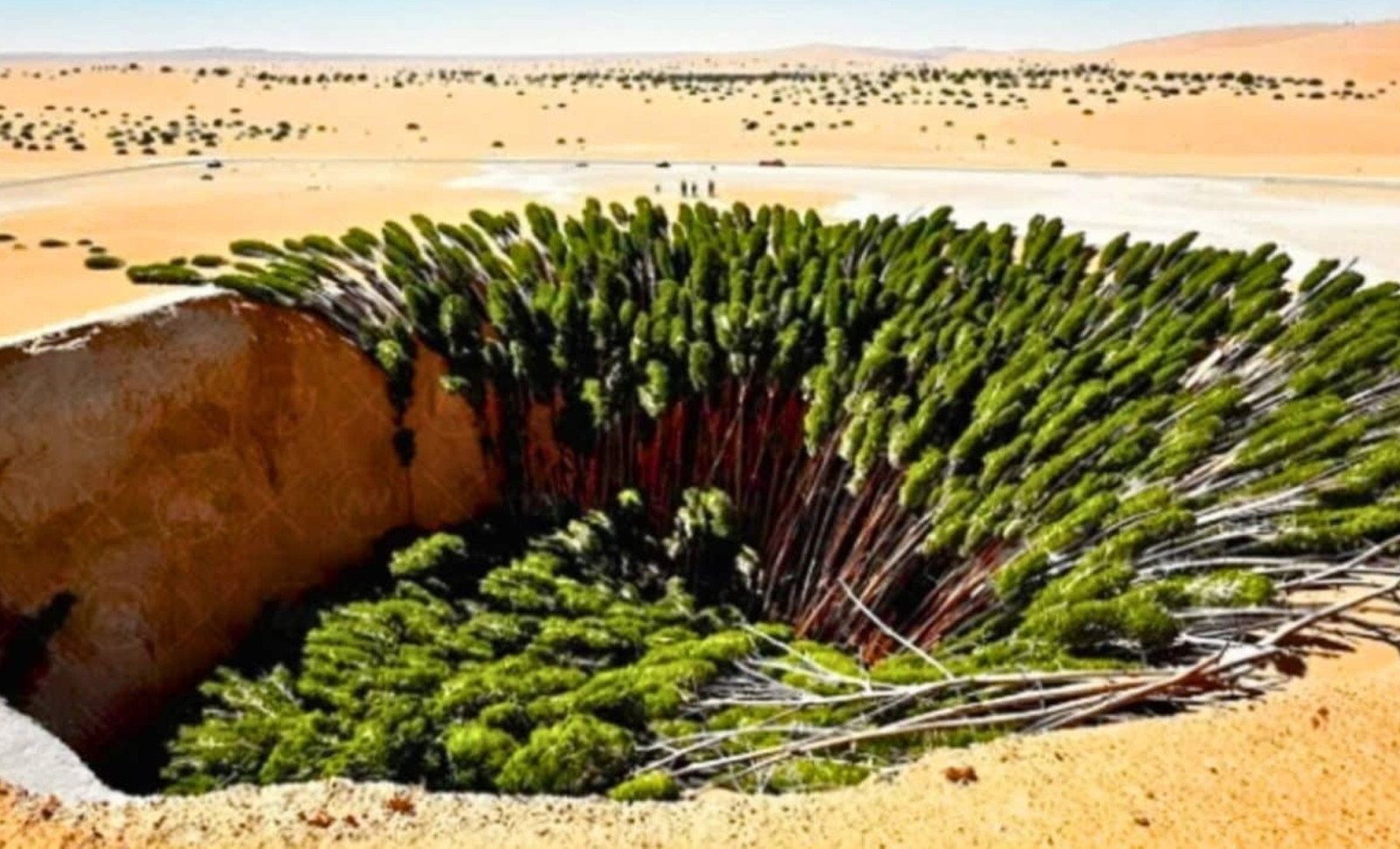
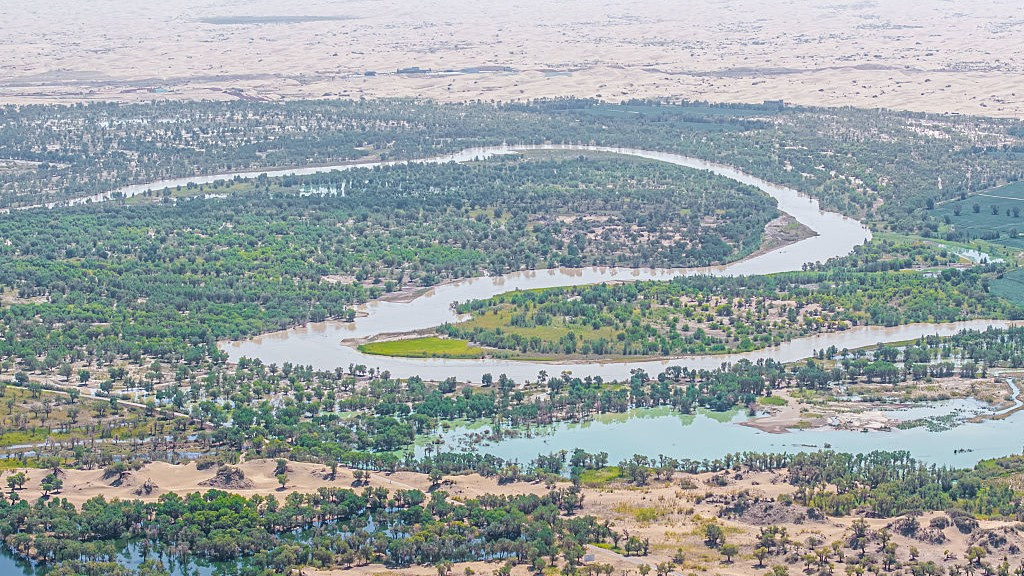
On November 28, 2024, workers finished planting the final 100 meters of trees along the southern edge of the Taklamakan Desert. According to Chinese official reports, this last segment completed a continuous 3,046-kilometer green belt circling the desert in Xinjiang, marking decades of gradual afforestation efforts now seamlessly connected.
The green belt was primarily designed to curb sand dune migration threatening roads, agricultural areas, and communities, while also reducing dust storms that extend far beyond the desert basin. This necessity has long been evident to local populations where advancing sand consumes grazing lands and freshly exposed soil.
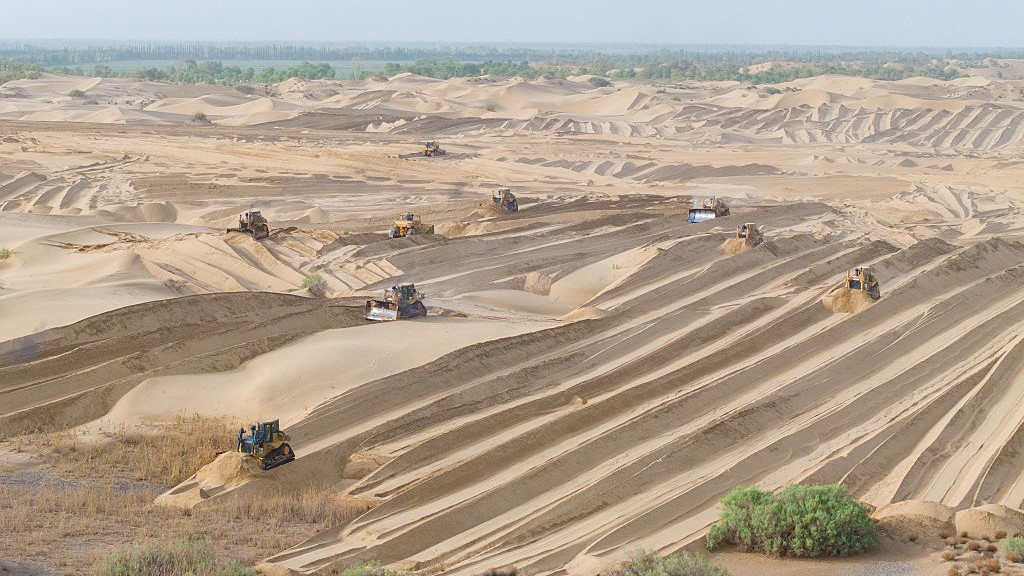
This undertaking is a significant part of China’s Three-North Shelterbelt Program, launched in 1978 and popularly known as the Great Green Wall. The Taklamakan green perimeter has become one of the most notable elements of the program, partly because it delineates a harsh environment where natural boundaries are otherwise indistinct.

Continual Maintenance Against Shifting Sands
Finalizing the belt did not halt desert expansion. Maintaining an established tree line in an environment dominated by shifting dunes requires ongoing restoration, particularly where sand movement is rapid and water resources are scarce.
As reported by People’s Daily, the green belt reached 2,761 km by late 2023, with 285 km remaining in what officials termed its “most difficult stretch.” This final segment was the most prone to damage and took multiple attempts over several years to complete.
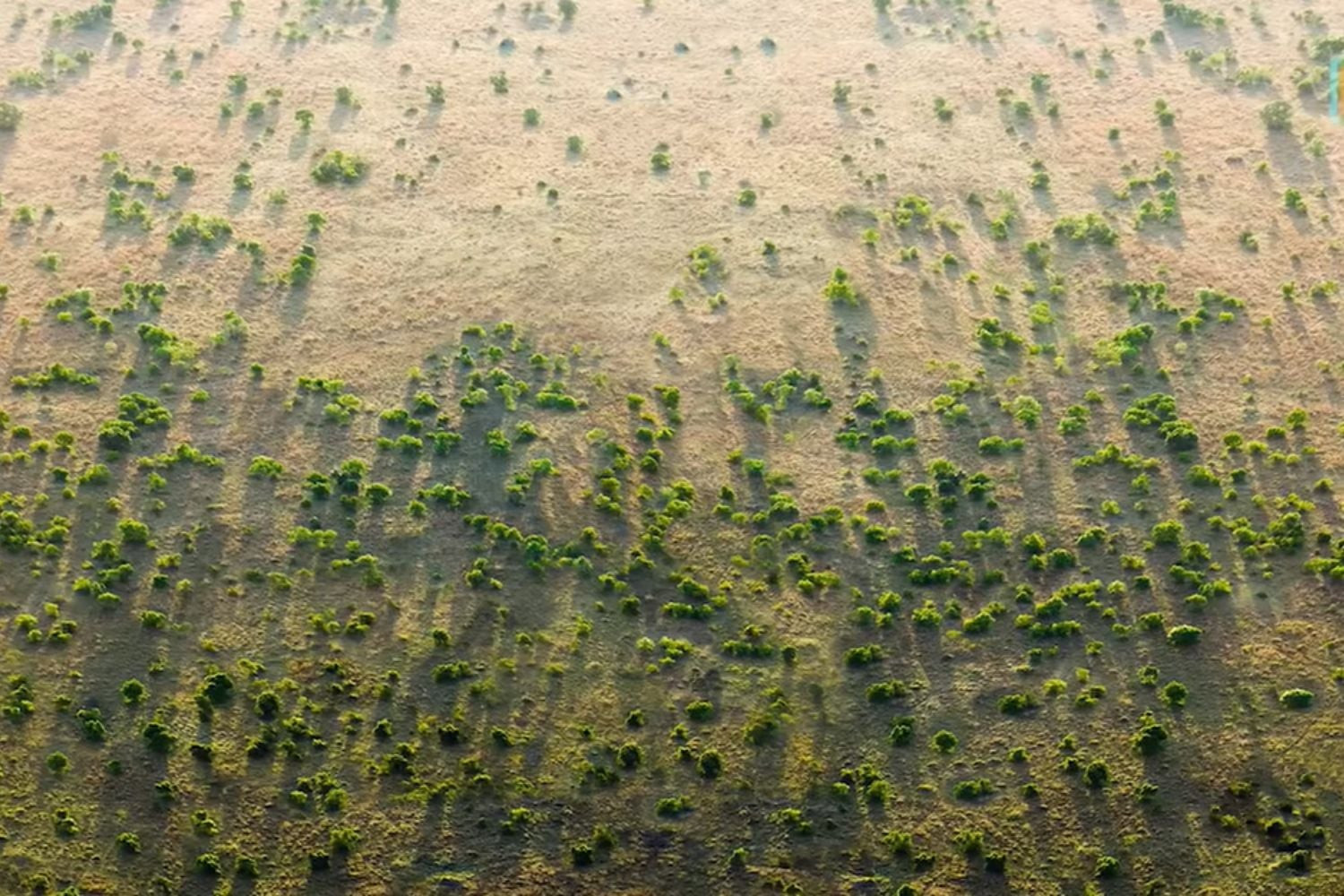
Dialogue Earth highlighted the ecological value of a continuous green boundary, calling it an “ecological shield” safeguarding China’s vast desert. This accomplishment is a component of a larger, sustained approach to sand fixation across northern China, rather than an isolated initiative.
Satellite Monitoring Reveals Vegetation Changes Along the Desert’s Border
Once the tree ring was sealed, scientists analyzed decades of satellite data to observe subtle shifts in plant coverage and vegetative activity, even when the terrain beneath looks barren at ground level.
A pivotal study published in PNAS examined 25 years of remote sensing and carbon cycle data, focusing on vegetation that remains thriving mainly along the desert’s perimeter, not its interior.
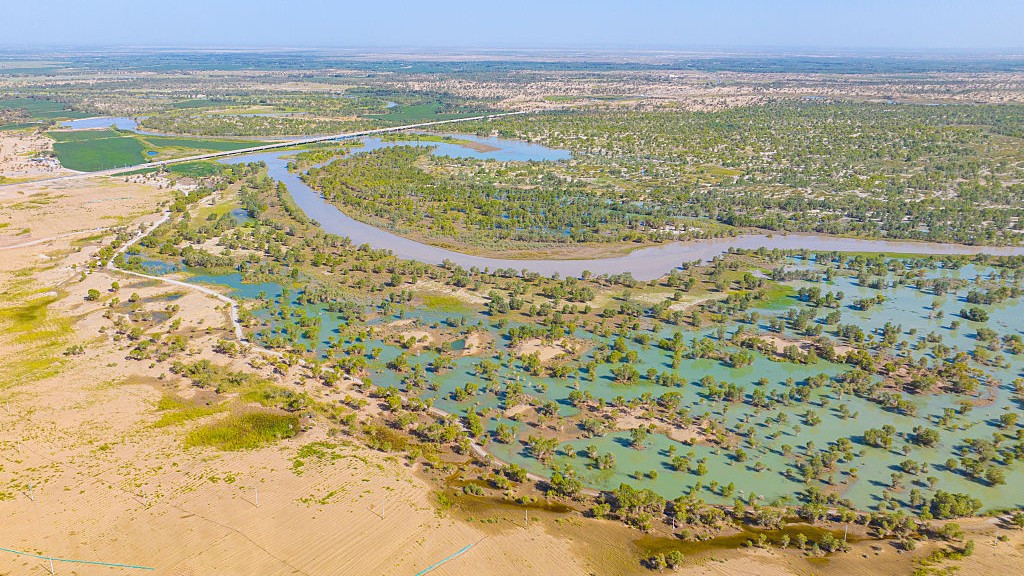
The research emphasized seasonal changes rather than simple before-and-after comparisons. Though biologically dormant much of the year, the Taklamakan experiences a brief wet season from July to September, when average rainfall reaches about 16 millimeters monthly, roughly two-and-a-half times the dry season’s precipitation.
During this short period, vegetation along the planted perimeter shows heightened photosynthetic activity and increased greenness, precisely where afforestation efforts have been concentrated for years.
Carbon Sequestration Emerges Through Seasonal Vegetation Growth
The crucial insight was not that the desert was turning lush but that its planted edges act as a managed carbon sink in the wet months.
The study documented an increasing net absorption of atmospheric CO2, measured as net ecosystem exchange, which quantifies whether an ecosystem uptakes more carbon than it emits. This reveals that the forested margins change carbon dynamics regionally during periods when plants are active.
In a Live Science interview, co-author Yuk L. Yung summarized: “We found, for the first time, that human-led intervention can effectively enhance carbon sequestration in even the most extreme arid landscapes, demonstrating the potential to transform a desert into a carbon sink and halt desertification.”
The report further noted carbon dioxide levels over the desert decreasing from 416 parts per million during dry months to 413 ppm in the wet season, aligning with peak vegetation activity on the periphery.
Yung was careful to specify that this transformation applies to the planted fringes, not the desert’s interior. “Based on the results of this study, the Taklamakan Desert, although only around its rim, represents the first successful model demonstrating the possibility of transforming a desert into a carbon sink,” he stated.
Ongoing Challenges of Water Supply in Desert Afforestation
This carbon absorption revelation brings attention to the second critical factor: water availability. Successful planting at the desert brink relies heavily on choosing suitable species, continuous upkeep, and often artificial water provision rather than rainfall alone.
Reuters reported China’s plans to continue expanding and revitalizing forested areas along the Taklamakan, including diverting floodwaters to restore poplar stands on the northern side and safeguard agricultural zones elsewhere. This water management strategy is crucial for plant survival in extreme dryness.
Scientists emphasize this complexity in public discussions. As summarized in ScienceAlert, atmospheric expert King-Fai Li warned against seeing desert afforestation as a single, comprehensive climate solution: “We’re not going to solve the climate crisis by planting trees in deserts alone.”
The Taklamakan initiative now represents a unique blend of environmental engineering and climate science. While originally designed to impede sand drift and protect infrastructure, it also demonstrates measurable seasonal carbon absorption visible in satellite records. The project’s long-term success and applicability to other deserts hinge on managing water scarcity effectively to sustain this biological progress.
- Categories:
- News






0 comments
Sign in to Comment