
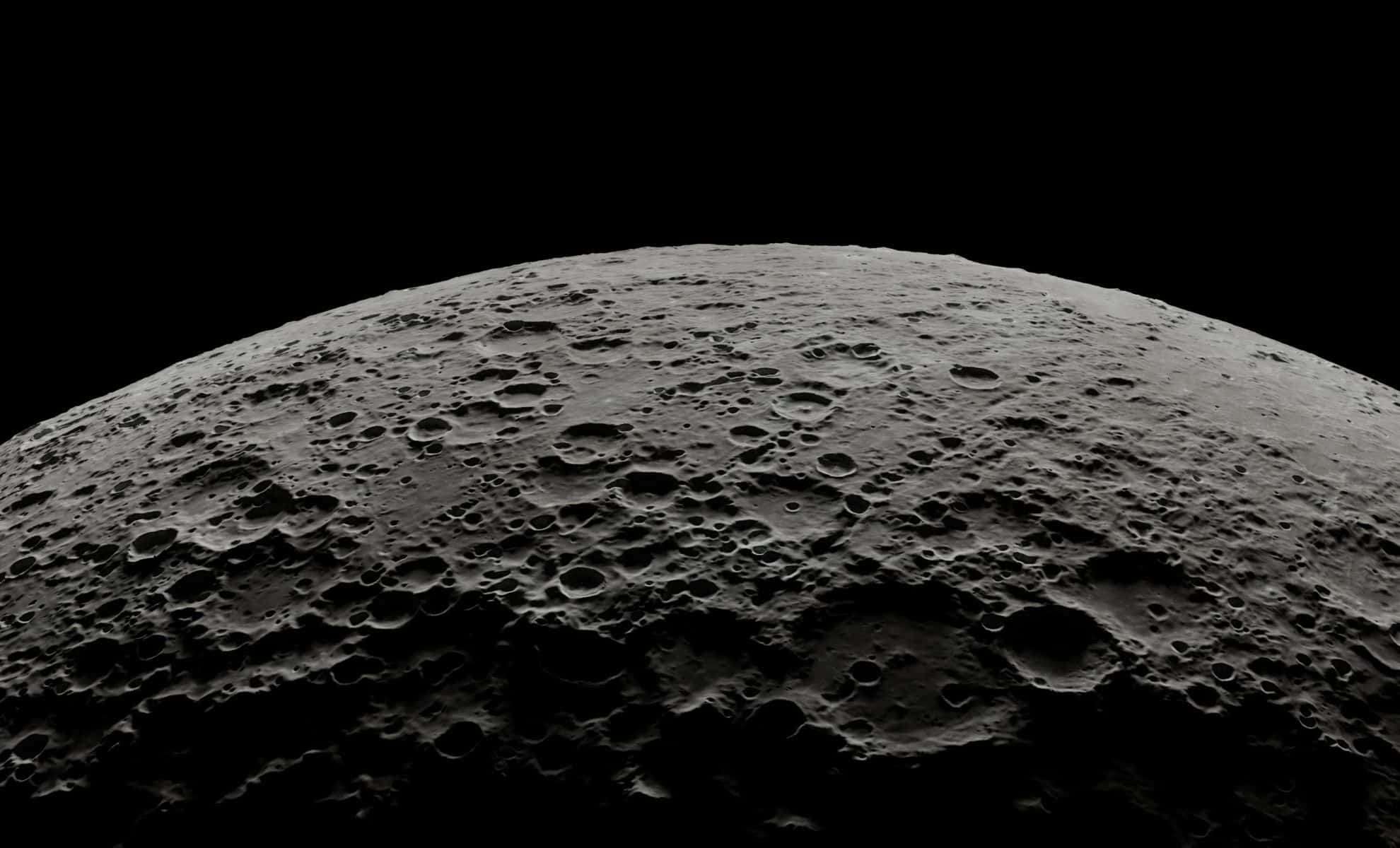
A recent paper published in Communications Earth & Environment reveals surprising insights into the Moon’s surface environment, overturning established ideas about its exosphere. Previous assumptions attributed the thin lunar exosphere mainly to interactions with solar wind and micrometeoroid impacts. New evidence, however, shows that micro-scale characteristics of the Moon’s surface—such as its texture and porosity—act as a protective barrier that limits solar wind erosion. These conclusions arise from analyses of lunar soil samples collected during the Apollo 16 mission, potentially transforming our knowledge of planetary atmospheres throughout the solar system.
The Moon’s Surface: An Unexpected Defender
Scientists have long been fascinated by the Moon’s exosphere, a barely-there atmosphere. Traditional views held that solar wind particles and small meteoroid impacts were chiefly responsible for sustaining this tenuous gas layer. Recent investigations by teams at TU Wien and the University of Bern present a contrasting viewpoint: the Moon’s surface features play a far more critical role in shielding it than was once appreciated.
The lunar regolith, a fine layer of soil and dust blanketing the Moon, is far from uniform or compact. Instead, it is microscopically rough and full of pores. When charged particles from the solar wind, such as hydrogen and helium ions, collide with this surface, they often become trapped in tiny crevices or strike at angles that drastically lessen their ability to erode the soil. These effects combine to reduce the process known as solar wind sputtering, the ejection of atoms and molecules from the lunar surface.

Experimental work with Apollo 16 samples simulating solar wind environments revealed sputter yields were as much as ten times lower than prior estimates. This finding carries significant implications for interpreting how the Moon’s exosphere develops and maintains itself.
Shifting Perspectives on Lunar Atmosphere Formation
Historically, researchers have relied on terrestrial lab simulations with mineral stand-ins to model the solar wind’s influence on the lunar surface. These approaches underestimated the impact of the Moon’s genuine surface texture. Published in Communications Earth & Environment, the current study highlights how the surface’s porosity and unevenness substantially reduce solar wind erosion.
The research pinpointed a direct link between the roughness and porosity of the regolith and a diminished sputtering rate, affecting how much material escapes from the Moon into the surrounding space. Notably, this protective characteristic holds true over most regions of the lunar surface, regardless of the Sun’s position or lunar latitude.
This breakthrough helps resolve discrepancies between theoretical lunar atmosphere models and data obtained from spacecraft missions. It also shifts the dominant explanation for the exosphere’s origin toward continuous micrometeoroid impacts, rather than solar wind sputtering, marking a profound advance in planetary science.
Implications for Airless Worlds and Space Exploration
Grasping how solar wind interacts with surfaces lacking atmospheres is crucial beyond lunar science. With NASA’s Artemis program aiming for long-term human presence on the Moon, this new understanding of the surface’s shielding effect may be integral to protecting astronauts from solar radiation—vital for sustaining lunar bases.
Moreover, these insights have relevance for other airless bodies like Mercury, which lacks a significant atmosphere. The European Space Agency’s BepiColombo journey to Mercury stands to benefit, enabling more accurate modeling of solar wind interactions on that planet.
Overall, these findings deepen knowledge of space weathering on airless planetary surfaces, crucial for predicting how such worlds evolve and interact with solar wind and environmental forces over time.
- Categories:
- News







0 comments
Sign in to Comment