
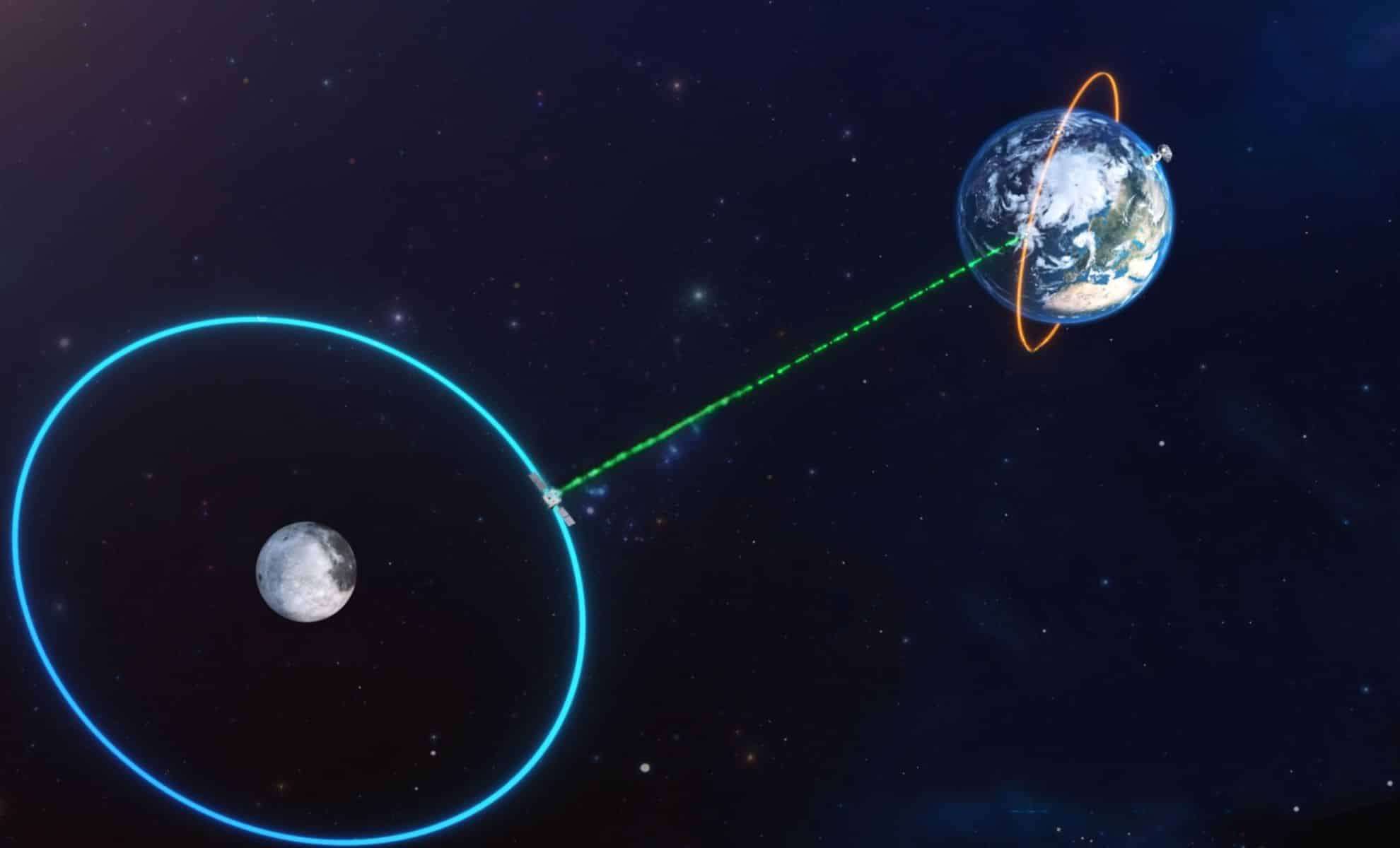
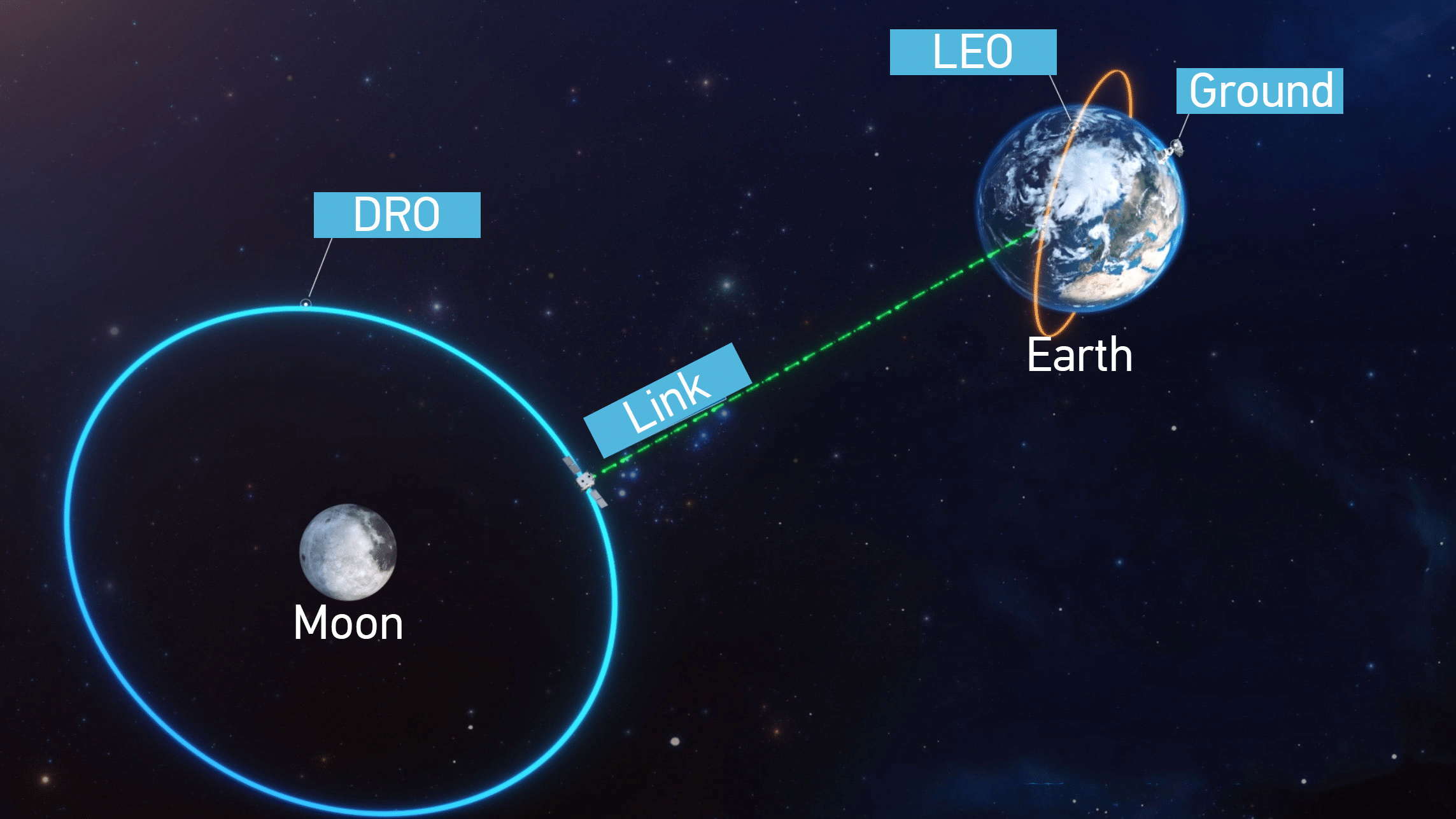
In March 2024, China deployed two satellites, DRO-A and DRO-B, with the goal of establishing them in a distant retrograde orbit around the Moon. These satellites were intended to enhance navigation and tracking for spacecraft operating within the Earth-Moon environment. However, a malfunction with the Yuanzheng-1S upper rocket stage disrupted the mission, leaving the satellites trapped in an unintended orbit. Reports from China Global Television Network (CGTN) highlighted the critical situation, which threatened the satellites’ survival. Undeterred, engineers at China’s Technology and Engineering Center for Space Utilization (CSU) devised a groundbreaking solution using a gravity slingshot technique involving Earth, the Moon, and the Sun. This strategy allowed the team to redirect the satellites into their designated orbit, completing a challenging 123-day recovery operation.
Launch Complications and Initial Orbit Deviation
China’s Long March-2C rocket initially delivered the satellites successfully, with the first two stages operating nominally. Unfortunately, the failure of the Yuanzheng-1S upper stage altered the satellites’ trajectory, preventing them from reaching the planned lunar orbit. Instead, both DRO-A and DRO-B entered a much closer orbit around Earth, jeopardizing the mission’s objectives. Losing communication with the satellites intensified the crisis for the CSU team. Zhang Hao, part of the CSU group, expressed the gravity of the situation: “If the satellites were destroyed, that would have been a waste of the years of effort that we put in and the money invested in the mission. It would also be a mental blow to the team.” The potential loss posed not only financial ramifications but also a significant halt to China’s space exploration ambitions.
Innovative Gravity Assist Plan to Recover the Satellites
Rather than conceding defeat, CSU launched a sophisticated recovery effort. The team split into two groups operating simultaneously: one unit managed the satellites’ thruster systems to reduce their unintended spin, while the other, led by Zhang Hao, focused on mapping the optimal trajectory to restore the satellites’ intended orbit. The complex recovery calculations had to account for limited sunlight exposure, which hampered the satellites’ power systems. To overcome this, engineers developed a method that harnessed the gravitational pulls of Earth, the Moon, and the Sun as an energy-efficient alternative. This maneuver, known as a gravity slingshot, propelled the satellites toward the correct orbit without heavy fuel reliance. As Hao described, “We divided into two teams. One team remotely controls the satellites’ thrusters to slow down the spinning. The other team, my team, calculated the best route to move the satellites back on track.”

Endurance and Success of the 123-Day Recovery Operation
Executing the gravity assist technique demanded considerable patience, spanning 123 days during which the satellites gradually leveraged gravitational influences to adjust their course. Although this method extended mission duration, the team prioritized energy conservation over speed. CSU researcher Mao Xinyuan stated, “If you don’t want to consume much energy, you must replace it with something else. We chose to consume more time in order to save energy.” By mid-July 2024, the satellites reached their target orbit. Preparations then commenced to separate them, allowing them to operate alongside a third satellite, DRO-L, previously stationed in low Earth orbit to aid navigation efforts. This successful intervention underscored a remarkable feat in space mission problem-solving and navigation development.
Advancing Space Navigation Through Enhanced Satellite Networks
Now positioned correctly, DRO-A and DRO-B play vital roles within a broader system designed to improve spacecraft localization in the Earth-Moon space. These satellites function as “lighthouses in space,” facilitating quicker and more precise spacecraft tracking. As noted by Mao, “They will act as lighthouses in space.” Before the DRO satellites were operational, identifying a spacecraft’s position could take over two days when relying solely on terrestrial tracking stations. The new network reduces this time dramatically to just three hours, marking a significant leap forward in mission efficiency. This advancement is crucial as space exploration pushes further into the solar system and the demand for reliable navigation infrastructure grows.
- Categories:
- News










0 comments
Sign in to Comment