
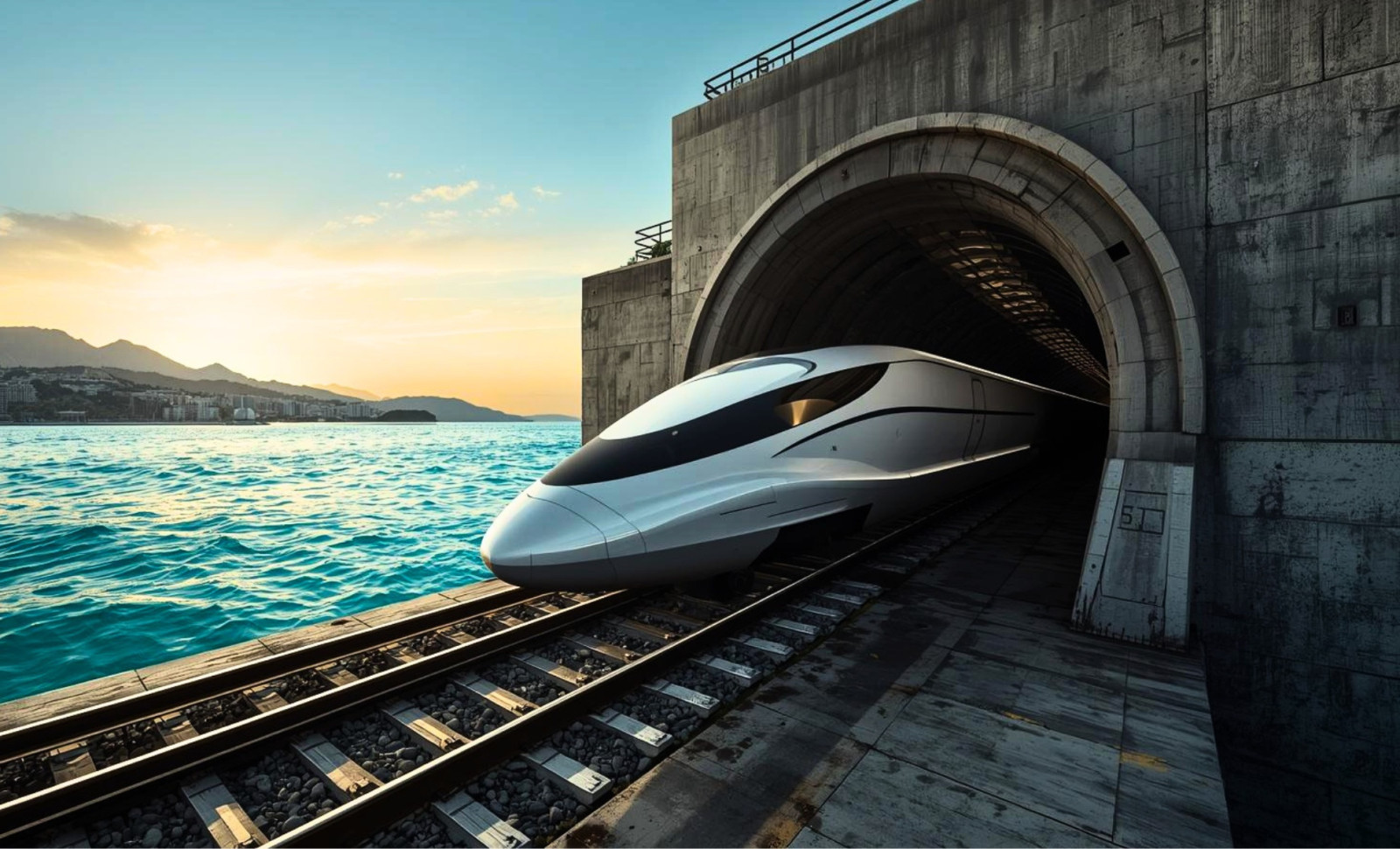
China is moving forward with an ambitious plan to build a 120-kilometer underwater rail tunnel beneath the Bohai Strait, aiming to connect the coastal cities of Dalian and Yantai in just 40 minutes. This groundbreaking infrastructure would enable trains to travel at speeds exceeding 250 kilometers per hour, drastically cutting current transit times.
The tunnel, designed as a fixed rail link, will connect Liaoning and Shandong provinces, forming a continuous passage beneath the sea. This venture is shaping up to be one of China’s most significant transportation projects, enhancing the northern high-speed rail network that spans the country’s coastal zones.
According to reports from Futura-Sciences, researchers are meticulously examining the seabed’s geological characteristics, including fault lines and optimal tunnel routes. The crossing measures about 120 kilometers at its widest point between the Liaodong and Shandong peninsulas.

Establishing a Seamless Rail Connection Under the Bohai Strait
The proposed Bohai Strait Cross-Sea Channel will run from the Liaodong Peninsula near Dalian to the Shandong Peninsula close to Yantai. Stretching roughly 120 kilometers, the tunnel would outdistance the Channel Tunnel linking the UK and France, ranking among the world’s lengthiest underwater passages.
Unlike combined road and rail tunnels, this project focuses solely on rail transport. Both passenger and freight trains will use the dedicated underwater passage, linking to the national rail system and decreasing the dependency on ferry operations.
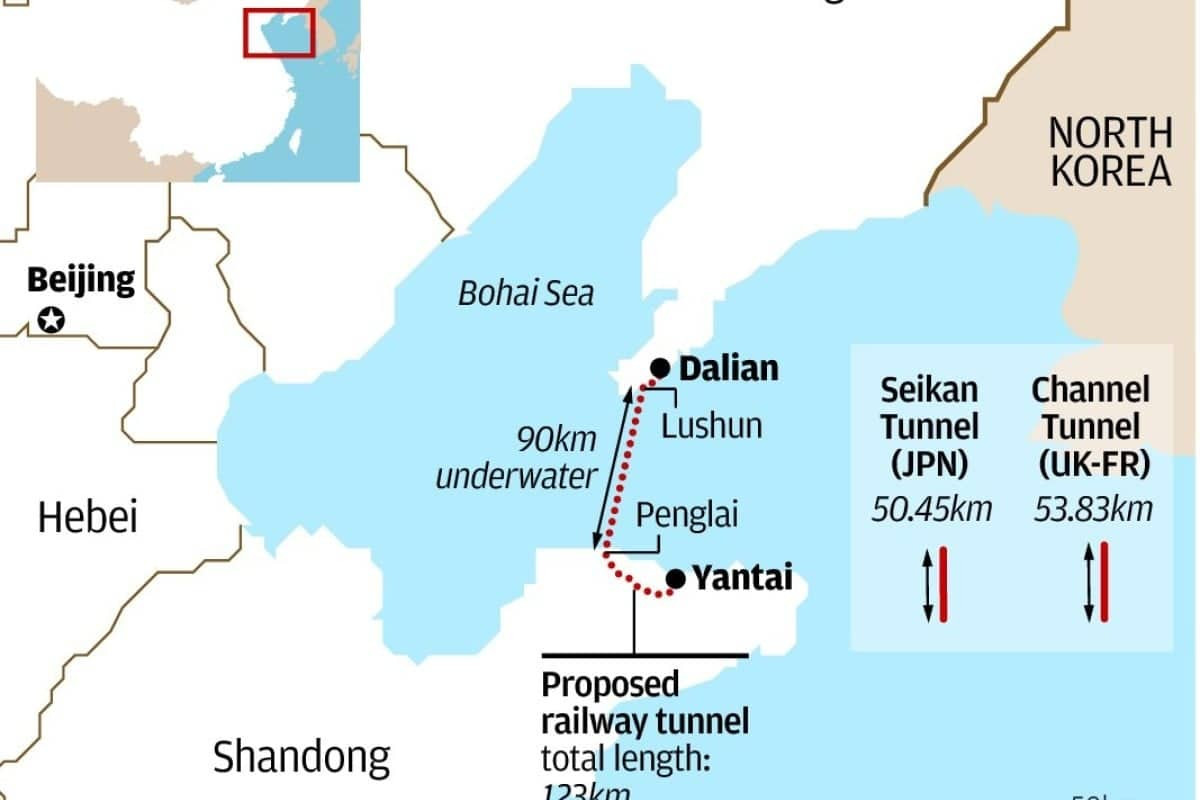
Plans include constructing artificial islands and vertical shafts to ensure proper ventilation, emergency access, and facilitate the building process. These features are essential for maintaining safe and effective tunnel operations once trains begin running beneath the sea.
Shortening the Journey Between Dalian and Yantai to Under an Hour
Currently, travel between Dalian and Yantai mainly depends on ferry services, which are often subject to delays caused by weather and sea conditions. The alternative land route involves a long detour around the Bohai Sea, extending travel time significantly.
The forthcoming rail link aims to cut this journey down to about 40 minutes. Operating at speeds over 250 kilometers per hour, the high-speed underwater train would transform a lengthy sea voyage into a convenient, rapid rail crossing.
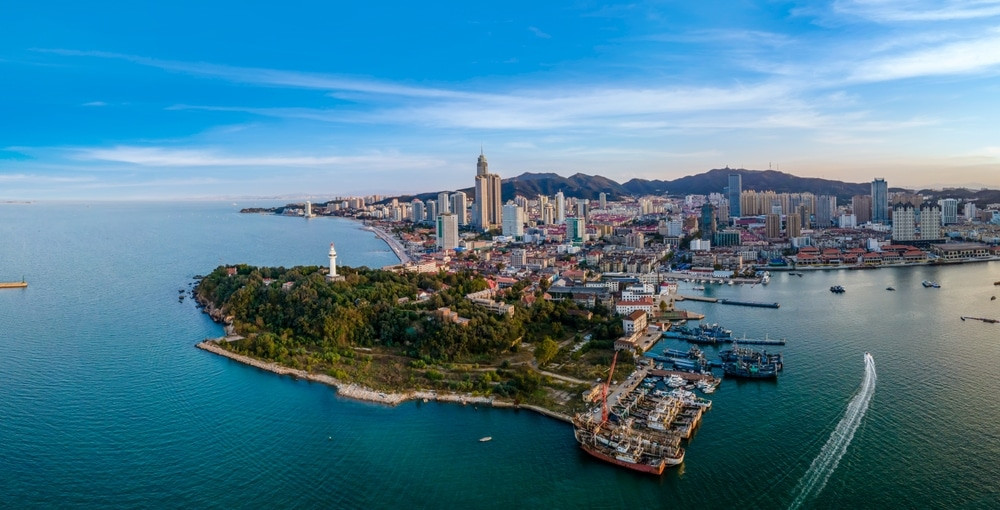
Dalian serves as a key industrial and shipping center in northeastern China, while Yantai is an important maritime economic hub in Shandong. This dedicated cross-sea tunnel would foster closer connectivity between these two vital coastal cities through the rail infrastructure rather than relying on ferry transit.
Engineering Challenges and Geological Factors
Building the Bohai Strait Cross-Sea Channel presents numerous geological and environmental hurdles. Studies, such as those published in Atlantis Press, have assessed seismic risks and the composition of seabed rock formations along potential routes.
The stratigraphy of the Bohai Strait floor includes fault zones and diverse rock layers. Constructing a tunnel of this scale necessitates cutting-edge engineering approaches, with ongoing structural monitoring vital to ensure safety throughout the operation.
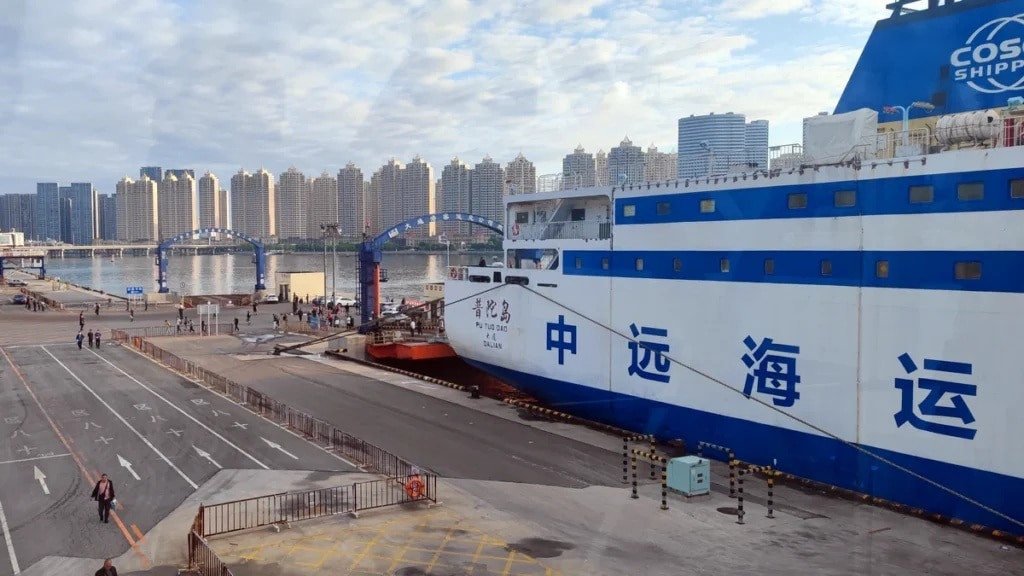
Key tunnel design elements include advanced ventilation and emergency evacuation systems. The planned artificial islands would act as crucial service hubs and safety points, supporting both the construction phase and future daily operation.
The area’s seasonal ice formation and heavy maritime traffic add further complexity. Above-water and subsea structures must be engineered to endure these environmental pressures while ensuring the safety of high-speed rail transit.
Strategic Infrastructure for Northern China’s Future
Regional development plans for the Bohai Rim economic zone highlight the Bohai Strait Cross-Sea Channel as a central project for enhancing transport integration. References on Baidu Baike outline the project’s extensive planning history and its significance in China’s infrastructure agenda.
While gaining renewed focus, the project remains in the feasibility analysis stage. Ongoing studies continue to explore ideal route alignment, environmental impacts, financing models, and projected costs, which have been estimated to reach multiple hundreds of billions of yuan. No official construction date has yet been revealed.
Once completed, the Bohai Strait Cross-Sea Channel would rank among the world’s longest rail tunnels, forging a direct subsurface link between Dalian and Yantai, and shrinking a lengthy sea voyage into a swift 40-minute train ride.
- Categories:
- News










0 comments
Sign in to Comment