
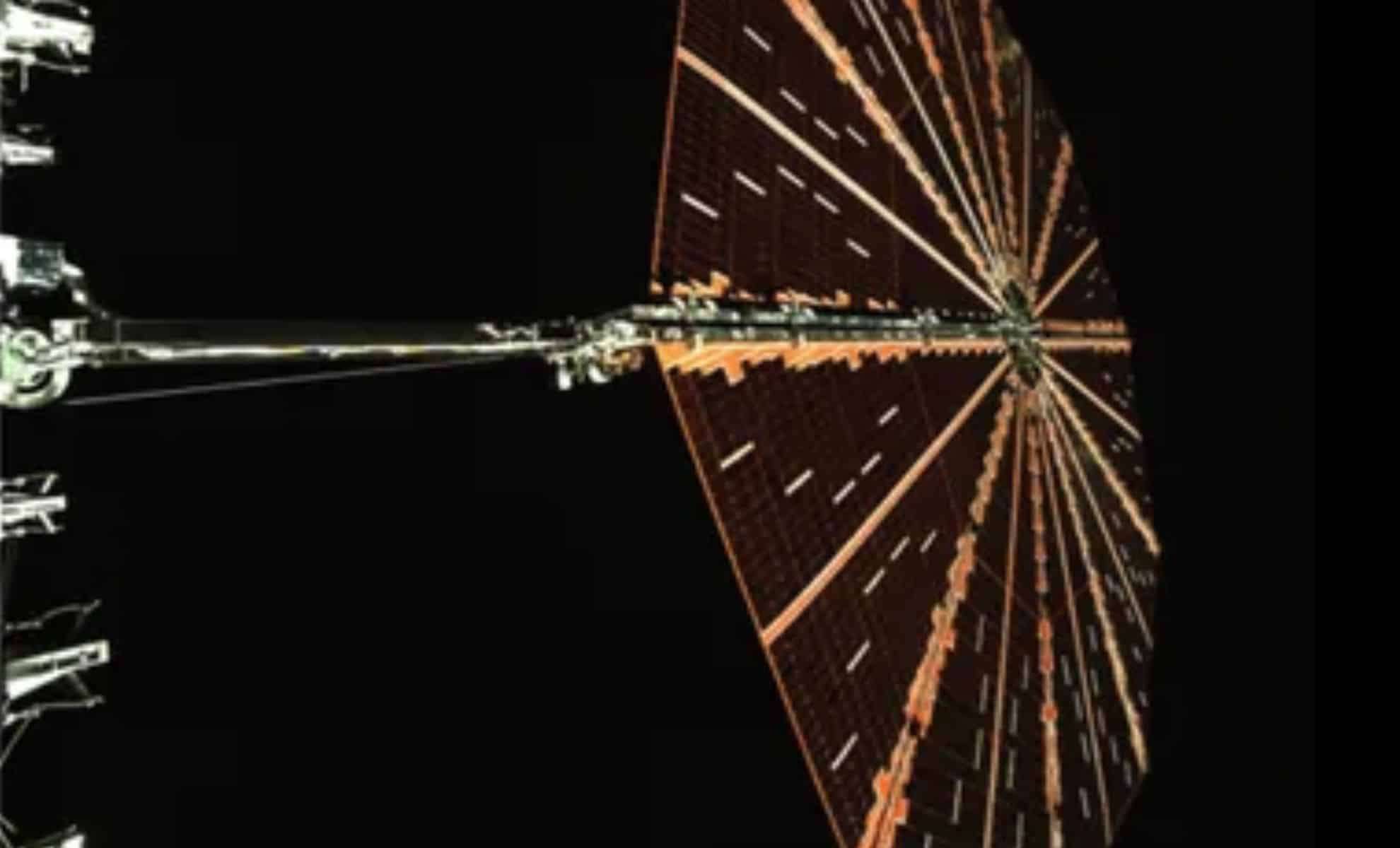
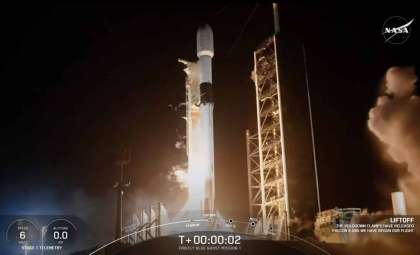
China’s space program has reached a crucial milestone as the Tianwen 2 spacecraft has successfully transmitted its inaugural image from space, advancing its mission to explore the intriguing asteroid Kamo’oalewa. Launched on May 28, 2025, the mission is progressing smoothly, with the first photograph arriving on Earth on June 7, 2025. This image, capturing one of the spacecraft’s solar panels, offers the initial official visual confirmation of Tianwen 2’s functionality. According to the China National Space Administration (CNSA), this visual update highlights the spacecraft’s operational status and ongoing journey.
A Closer Look at Tianwen 2’s Ambitious Mission
The Tianwen 2 mission represents a key step in China’s expanding space exploration efforts, targeting detailed investigation of Kamo’oalewa, one of Earth’s unusual “quasi-moons.” Unlike true moons, these objects orbit near but not around Earth as its satellites. The origin and trajectory of Kamo’oalewa have long intrigued specialists, who suspect it could be a fragment ejected from the Moon by a massive ancient collision.
Carried into space by a Long March 3B rocket, the spacecraft is outfitted with advanced instruments to analyze the asteroid’s physical and chemical properties. Tianwen 2 will orbit Kamo’oalewa for several months, performing extensive surface studies before gathering samples to bring back to Earth by late 2027. This marks China’s inaugural mission dedicated exclusively to asteroid research, building on prior lunar exploration successes such as the Chang’e 5 mission.

The Intriguing Quasi-Moon Kamo’oalewa
Kamo’oalewa earns its “quasi-moon” status because it remains close to Earth but does not qualify as a satellite, following a distinctive horseshoe orbit approximately 9 million kilometers away. It traces a unique path that parallels Earth’s orbit, making it a compelling subject for study.
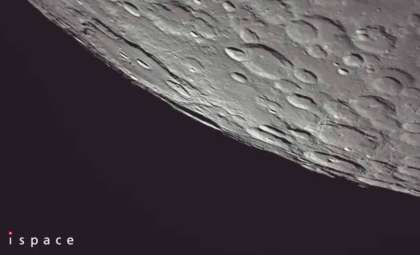
Researchers hypothesize that Kamo’oalewa could be a lunar fragment expelled during an ancient impact event billions of years ago. Exploring this asteroid could unlock vital information about the Moon’s composition and history, presenting an uncommon chance to study a Moon-like body without landing on the lunar surface.
Charting Tianwen 2’s Course Toward Kamo’oalewa
Following its launch, Tianwen 2 is en route to Kamo’oalewa, currently more than 3 million kilometers from Earth. The spacecraft will continue making navigational adjustments to fine-tune its approach over the coming months. The rendezvous with the asteroid is anticipated in July 2026, initiating in-depth observations and analysis.
During its stay, Tianwen 2 will conduct comprehensive surface investigations to determine the asteroid’s structure and composition, as well as its possible lunar connections. Once sufficient information is collected, the spacecraft will collect samples for return to Earth, offering a window into the early solar system and the processes shaping planetary formation.
Beyond the Quasi-Moon: Mission Extension to Comet 311P/PANSTARRS
Upon completing sample retrieval, Tianwen 2 will utilize Earth’s gravity in a gravitational assist maneuver to set course for comet 311P/PANSTARRS within the asteroid belt, with arrival expected around 2035. This segment of the mission is poised to provide unprecedented insights into comets, considered some of the most primordial objects in our solar system. Close study of the comet will enrich understanding of the origins of water and organic molecules on Earth.
This extended mission reflects China’s dedication to exploring the depths of space, demonstrating capability in managing prolonged, complex interplanetary missions examining both asteroids and comets. Tianwen 2 paves the way for future explorations poised to unravel the mysteries of our cosmic neighborhood.
China’s Growing Influence in Space Exploration
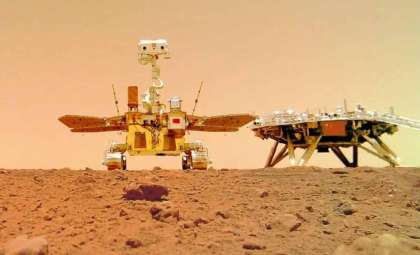
Tianwen 2 forms part of China’s ambitious roster of space missions. The country has made significant advances recently, with notable achievements including the Chang’e 5 mission’s successful lunar sample return in 2020 and the Chang’e 6 mission in 2024, which harvested material from the Moon’s far side. Furthermore, Tianwen 1 marked China’s first successful interplanetary mission by placing a rover on Mars in 2021.
The Tianwen 2 project underscores China’s expanding role in deep space exploration, focusing on both asteroids and comets. Data from this mission will contribute significantly to worldwide scientific efforts, offering fresh perspectives on the early solar system and the origins of life’s essential building blocks.
- Categories:
- News







0 comments
Sign in to Comment