
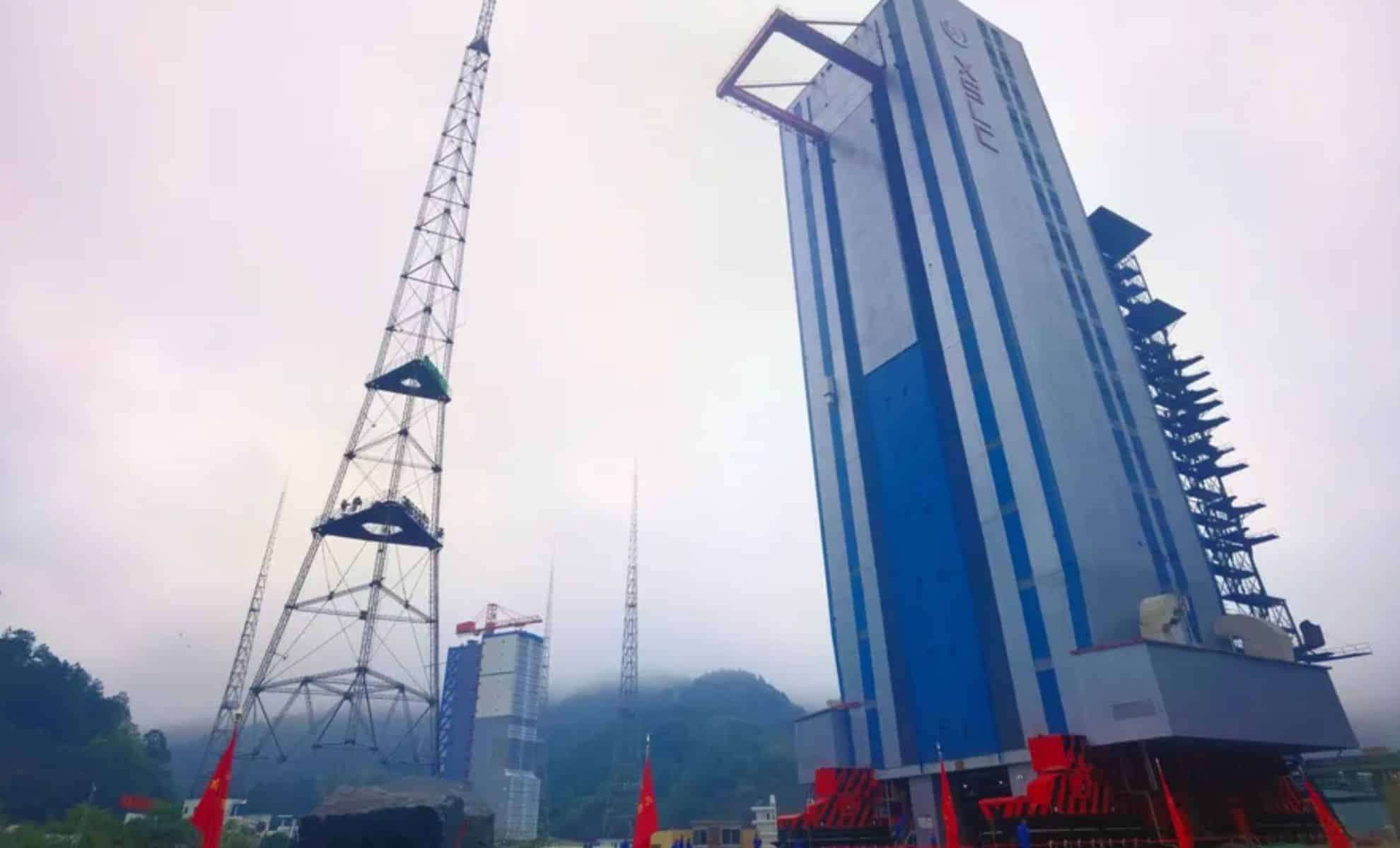
On May 28, China embarked on a significant milestone in planetary research by launching the Tianwen-2 mission from the Xichang Satellite Launch Center. This expedition aims to collect samples from a near-Earth asteroid before progressing to investigate a main-belt comet, employing a pioneering two-phase mission design. According to the China National Space Administration (CNSA) official announcement and reported by Space.com, the mission lifted off aboard a Long March 3B rocket, with plans to return asteroid samples to Earth by 2027, followed by a comet flyby around 2035 targeting 311P/PANSTARRS.
Exploring the Unique Earth Quasi-Satellite Kamo’oalewa
The initial focus of Tianwen-2 is the asteroid Kamo’oalewa (2016 HO3), a small celestial body with intriguing orbital features that make it a near-Earth quasi-satellite. Only a few dozen meters wide, this asteroid is suspected to be a lunar fragment blasted off by a massive impact event. Researchers anticipate the mission will uncover vital information about the formation and composition of such rare objects, potentially improving our understanding of the solar system’s history. Sampling methods will involve surface contact as well as a landing attempt on the asteroid’s rocky surface, depending on its topography and stability. The CNSA declared, “Preparations at Xichang Satellite Launch Center are progressing smoothly. The Long March 3B Y110 rocket is nearly fully fueled,” highlighting the culmination of extensive pre-launch activities.
Beyond Sample Return: Tianwen-2’s Dual-Phase Exploration Strategy
Unlike single-site missions, Tianwen-2 is structured to conduct a dual-phase exploration. After delivering the asteroid samples by 2027, the spacecraft will utilize an Earth gravity assist to redirect itself toward the active asteroid-comet hybrid 311P/PANSTARRS in the main asteroid belt. This multi-target mission not only expands scientific outcomes but also serves as a demonstration platform for advanced space mission technologies. The spacecraft is equipped with cameras, spectrometers, magnetic field sensors, and other scientific instruments to analyze dust, surface makeup, and volatile compounds crucial for unraveling the presence of water and organics in the early solar system environment.

A Closer Look at Tianwen-2’s Scientific Payload
The payload aboard Tianwen-2 comprises a wide array of instruments, making it one of the most sophisticated ensembles for Chinese deep-space exploration. These include charged and neutral particle detectors, an ejecta analyzer, radar systems, and a magnetometer. Collectively, these tools will map magnetic fields, detect minute dust particles, and probe the subsurface layers of both the asteroid and comet under varying space conditions. This versatile instrumentation is comparable to those used in NASA’s OSIRIS-REx and JAXA’s Hayabusa2 missions but enhanced by Tianwen-2’s comet encounter, enriching comparative analysis. The findings have the potential to influence strategies in planetary defense and guide future resource utilization and asteroid redirection endeavors.
The Enigmatic Comet 311P/PANSTARRS and Its Mixed Traits
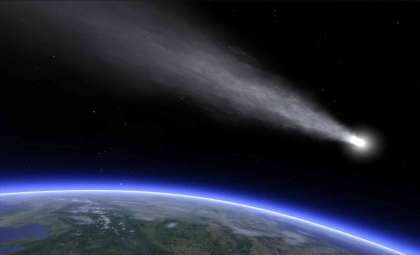
311P/PANSTARRS is notable for its ambiguous character, residing in the main asteroid belt but exhibiting comet-like phenomena including dust emissions and recurrent ejecta. Classified as an active asteroid, this rare type of celestial body blurs the line between asteroid and comet, offering clues on the evolutionary processes within the solar system. Tianwen-2 is set to conduct detailed orbital studies of this object starting around 2035, using high-definition imagery and compositional mapping. These observations aim to determine if the comet-like activity stems from internal volatile release, surface instability, or external impacts, potentially clarifying the origins of Earth’s water and volatile material distribution in the inner solar system.
China’s Vision for Expanding Frontiers in Space Science
Tianwen-2 plays a crucial role in China’s broader ambitions in interplanetary exploration. Building on the breakthrough Tianwen-1 Mars mission in 2020, which deployed an orbiter and rover, China plans more audacious missions ahead. The upcoming Tianwen-3 aims for a Mars sample return by late 2028, while Tianwen-4 targets exploration of the Jupiter system and possibly Uranus, marking a significant stride into the outer solar system. These missions underscore China’s rising prominence in space science, showcasing increasingly complex trajectories and multi-target sample returns that place the CNSA alongside global leaders like NASA and ESA.
- Categories:
- News






0 comments
Sign in to Comment