
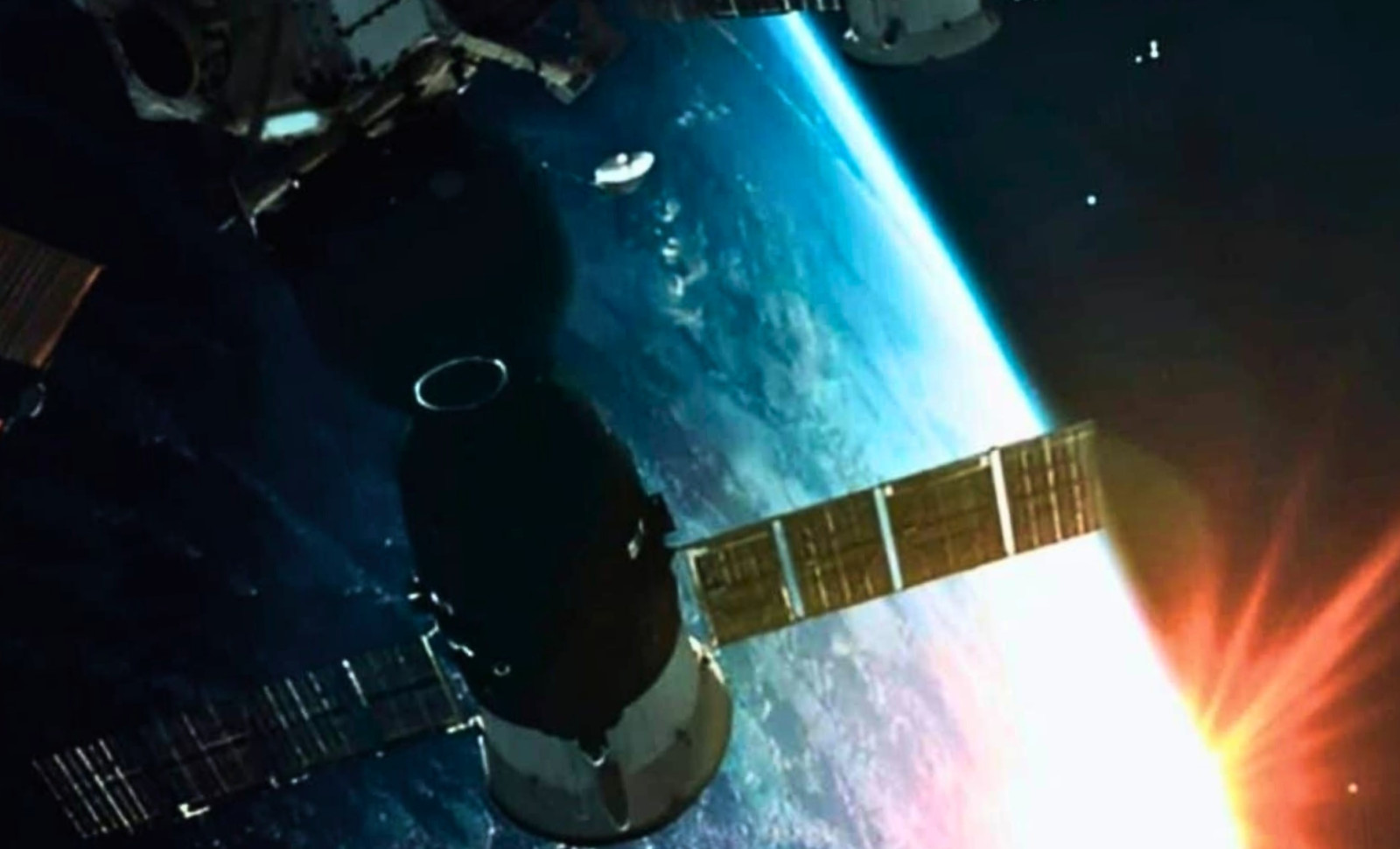
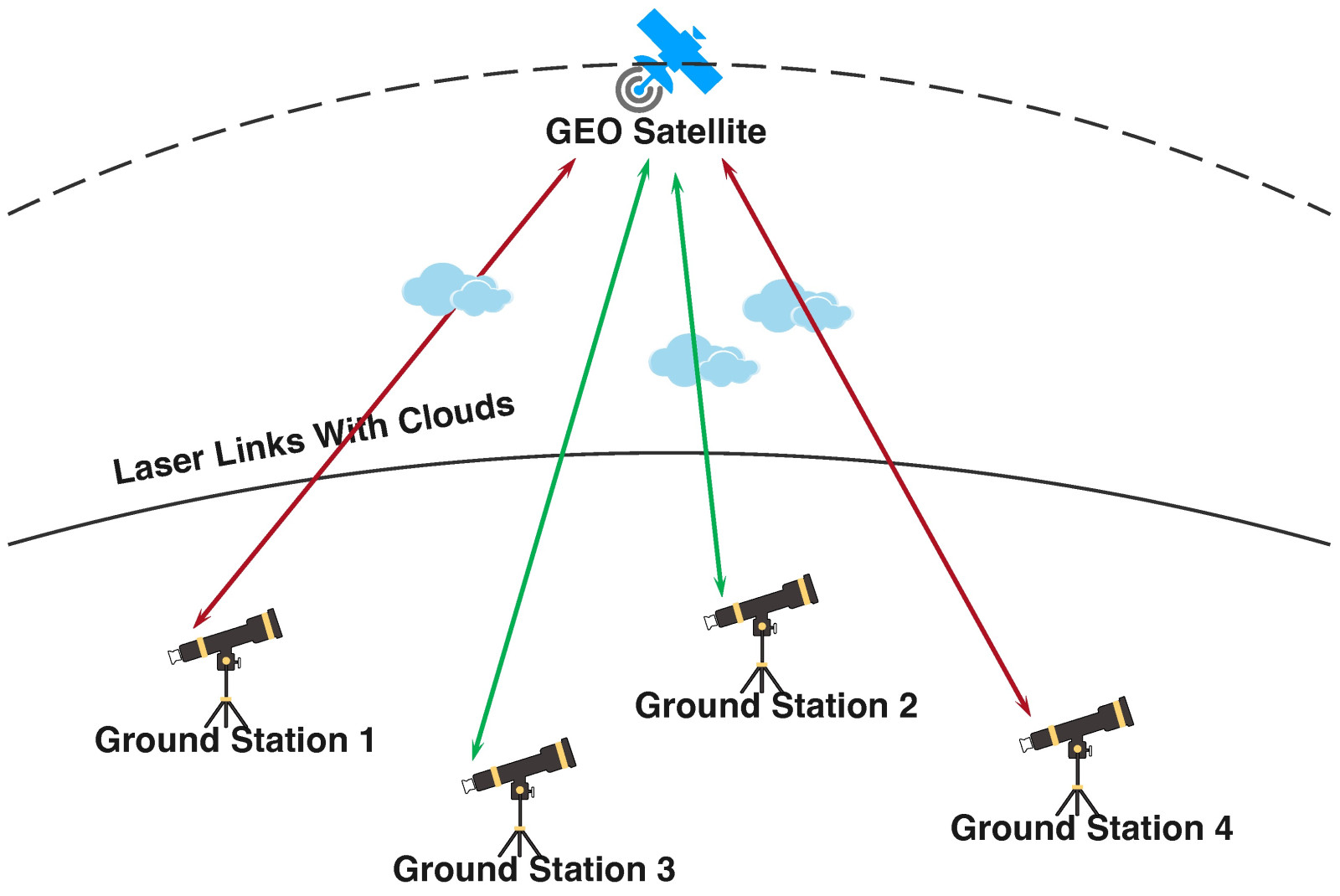
At Lijiang Observatory in southwest China, the received signal defied expectations of a simple, stable light beam. Originating from a satellite stationed in geostationary orbit nearly 36,000km above Earth, the laser transmission had to traverse turbulent atmospheric layers that scattered and distorted the light before reaching the ground. Instead of merely detecting a space-based signal, the challenge was to extract clear data from an already altered beam.
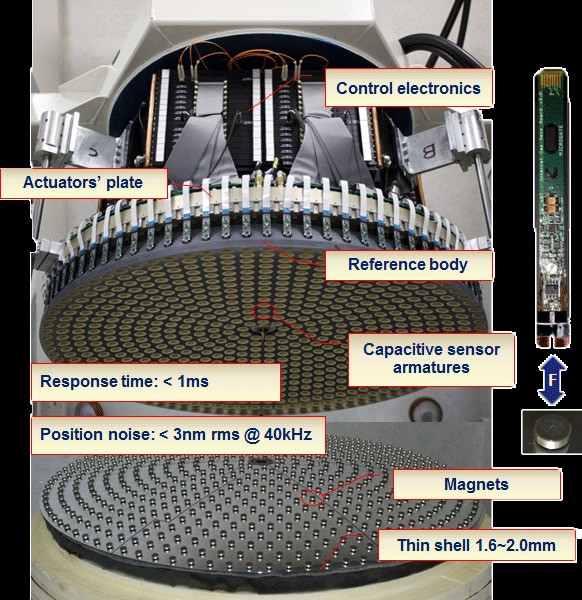
The experimental ground station at Lijiang utilized a 1.8-meter telescope paired with an adaptive optical system incorporating 357 micro-mirrors that dynamically compensated for atmospheric fluctuations. Unlike conventional setups where atmospheric interference is treated as a minor nuisance, this design focused entirely on neutralizing such disruptions.
The research, detailed in Acta Optica Sinica, was spearheaded by Wu Jian from Peking University of Posts and Telecommunications and Liu Chao of the Chinese Academy of Sciences. Their objective extended beyond establishing a laser connection from space—they sought a robust, high-bandwidth downlink capable of enduring the most challenging segment of transmission: the atmospheric turbulence near the receiver.

Impressive Data Rate With Minimal Laser Power
The team achieved a 1Gbps laser communication link from geostationary orbit using just a 2-watt laser transmitter. This performance surpassed the speed of Starlink by a factor of about five, despite the satellite's altitude being vastly greater than the low Earth orbit locations of SpaceX’s satellites. To put it simply, this rate could transfer a high-definition movie from Shanghai to Los Angeles in under five seconds.
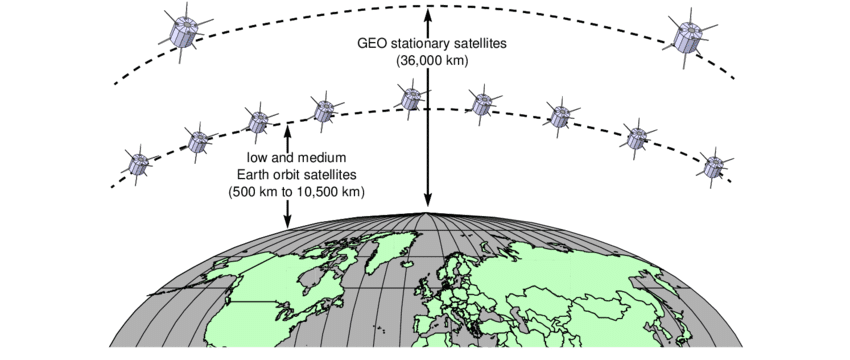
The stark difference highlighted the power of the demonstration. Unlike Starlink’s constellation, which operates at a few hundred kilometers altitude, this signal hailed from a station over 60 times farther away and still delivered gigabit speeds. Additionally, the 2-watt laser’s low power consumption resembled the brightness of a nightlight rather than that of traditional long-distance communication transmitters.
These combined factors demonstrated the potential for low-power optical links to achieve remarkable range and throughput when paired with advanced ground infrastructure tuned to navigate atmospheric interference.
Ground-Based Beam Reconstruction is Key to Success
The critical innovation was in processing the received signal. Prior approaches used either adaptive optics to correct wavefront distortions or mode diversity reception to gather dispersed parts of the signal. Unfortunately, neither was sufficient alone under strong atmospheric turbulence.
The Chinese researchers integrated both techniques. First, adaptive optics with 357 micro-mirrors continuously reshaped the incoming light. Then, the signal passed through a multi-plane light converter that split the beam into eight separate mode channels. The system selected the three channels with the strongest signals for final decoding.
This method acknowledged the distorted beam as a combination of multiple uneven components, making it manageable rather than futile. Instead of forcing the received beam back to an idealized shape, the system optimized its decoding by focusing on the strongest intact segments.
Described as AO-MDR synergy, this dual-stage reception not only increased data throughput but also enhanced signal reliability—raising the usable signal portion from 72% to 91.1%. Thus, the breakthrough represented a significant leap in signal integrity, not just a pure speed milestone.
High Altitude Adds to the Accomplishment
Geostationary satellites maintain fixed positions relative to Earth, offering operational stability but at the cost of far greater distance. Signals from such altitude must cross extensive space and then endure severely turbulent atmospheric layers near the surface.
This context magnifies the experiment’s importance. Unlike satellites orbiting low over Earth, the geostationary link had to survive a long journey and a harsh final atmospheric segment before delivering a clear gigabit-class signal. This success illustrates optical satellite communications’ potential given optimal ground station technology.
The system’s scale suggests it’s best suited for large, dedicated ground receivers rather than typical consumer terminals. This makes it ideal for high-capacity data hubs or relay stations that gather massive data streams and distribute them through terrestrial networks.
The Real Breakthrough Happened With Atmospheric Turbulence
The most difficult hurdle wasn’t outer space but the constantly shifting air above Lijiang. This turbulent atmosphere fragmented and dispersed the beam, threatening signal loss. The breakthrough lay in a receiver system that not only endured these distortions but effectively corrected for them.
The standout image is: a satellite locked 36,000km above Earth, its laser beam contorted by atmospheric chaos, landing on a ground station in Yunnan that intelligently separates the disrupted light into multiple channels, picking out the strongest three to faithfully reconstruct the data stream.
- Categories:
- News








0 comments
Sign in to Comment