
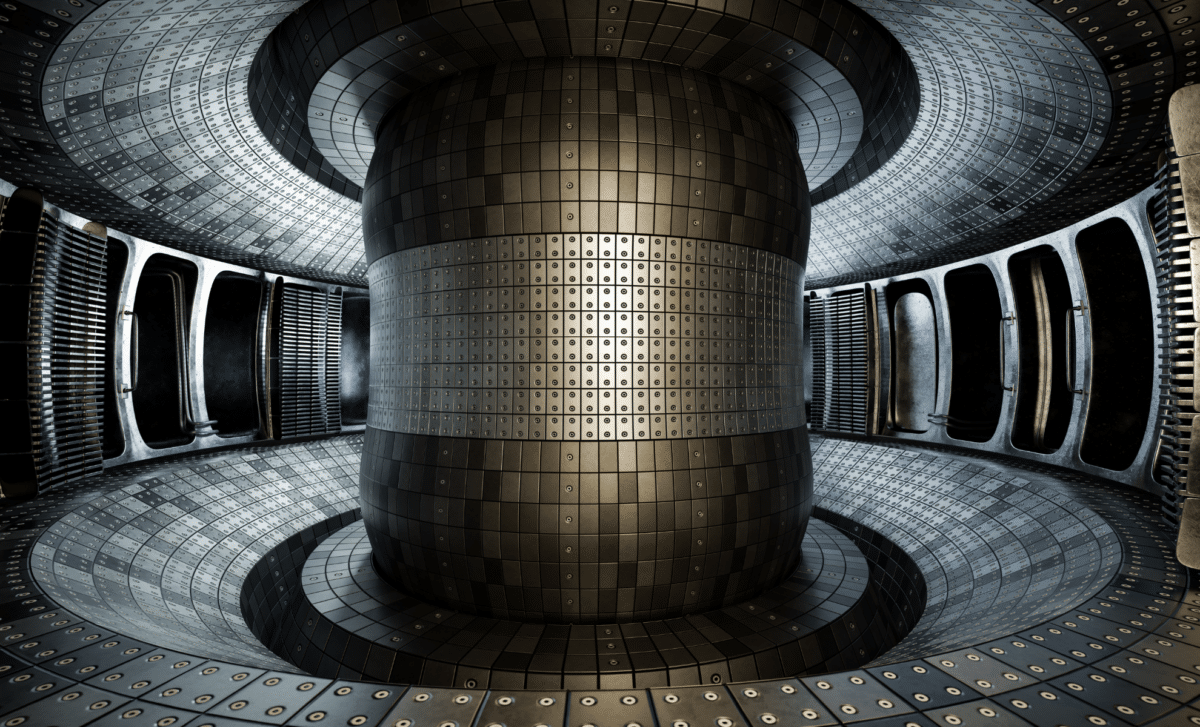
A recent theoretical investigation featured in the Journal of High Energy Physics proposes that fusion reactors, designed primarily to produce sustainable energy, might also unintentionally generate exotic particles potentially linked to dark matter. These particles, known as axions, are theorized not to emerge from the reactor’s intense plasma core but rather from the metal components encasing it.
The hypothesis, formulated by a team led by Professor Jure Zupan at the University of Cincinnati, offers a novel perspective for detecting elusive dark matter candidates using existing fusion technology.
Fusion Reactor Walls: Unexpected Sites for Particle Generation
Although fusion reactors are celebrated for their potential as clean energy sources, this research turns attention to an overlooked aspect: their metallic boundaries. The reactor walls may facilitate unique nuclear reactions that produce axions, which many physicists consider prime candidates for dark matter—the mysterious substance accounting for over 84% of the universe’s mass. The study explains how fast neutrons generated in fusion collisions frequently impact these walls, composed mainly of lithium and steel.

“Neutrons interact with material in the walls,” stated Professor Zupan, describing how these nuclear collisions could excite nuclei to release ultra-light particles like axions. Though detecting axions is challenging due to their weak interactions, their ability to traverse shielding suggests they might be observable outside the reactor. Confirming this phenomenon would allow fusion reactors to function as dual-purpose tools, delivering both energy and groundbreaking insights into fundamental physics.
Axions: Mysterious Particles with Cosmic Significance
Axions are among the most intriguing particles in current physics research. These extremely light, electrically neutral particles are hypothesized to interact weakly with ordinary matter, making them notoriously hard to detect. Most experimental efforts aim at detecting rare events where axions transform into photons or electrons, but no definitive observations have been made so far.
The new model, published in the Journal of High Energy Physics, reframes this search by suggesting fusion reactors could act as axion production sites, with their structural materials triggering these emissions. This approach is elegant: rather than constructing new dark matter detectors from scratch, existing fusion infrastructure might be combined with adjacent detectors to simultaneously advance energy production and dark matter research.
Neutron Interactions as Catalysts for Particle Creation
The core of this theory rests on the continual neutron onslaught inside fusion reactors. Helium nuclei remain confined, but neutrons are expelled at high speeds, colliding with the reactor’s lining. These impacts excite atomic nuclei, which then relax by possibly emitting axions.
A key aspect is tritium breeding: lithium atoms absorb neutrons, producing radioactive hydrogen isotopes. Along with this intended nuclear process, the captured neutrons induce excited nuclear states, offering a setting conducive to emitting subtle, lightweight particles. The theory further speculates that scattered neutrons, which don’t get absorbed, could lose energy via braking radiation capable of producing similar light particles.
If validated, the reactor’s metal construction would shift from passive containment to an active source of fundamental particles. Here, the materials play crucial roles within a hidden subatomic interaction network.
Detecting Axions: Practical Experimental Designs
The team proposes a feasible detection scheme involving a heavy water tank positioned roughly 10 meters away from the reactor. Axions interacting with deuterium nuclei in the tank could disintegrate them into free protons and neutrons, producing a distinctive signal. This signature differentiates axion events from other background phenomena such as solar neutrinos.
Researchers emphasize the advantage of comparing measurements recorded during operational and inactive reactor phases, enabling clear discrimination of axion-related events from noise. Although challenges remain, including incomplete nuclear reaction data for fusion materials, this framework paves the way for groundbreaking experimental pursuits.
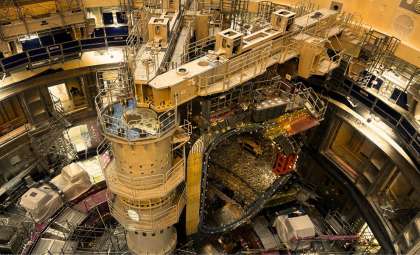
If confirmed, fusion projects like ITER in France, the world’s largest fusion facility, could simultaneously serve as cutting-edge dark matter observatories without altering their primary energy goals. As Professor Zupan’s group highlights, the neutron-rich conditions inherent to fusion reactors might quietly be unlocking one of physics’ most perplexing enigmas.
- Categories:
- Physics





0 comments
Sign in to Comment