
For years, the Baghdad Battery has been regarded as a mysterious artifact, often thought to serve a purpose unrelated to electricity. However, Alexander Bazes, an independent craftsman, recently demonstrated that this 2,000-year-old apparatus can indeed function as a battery.
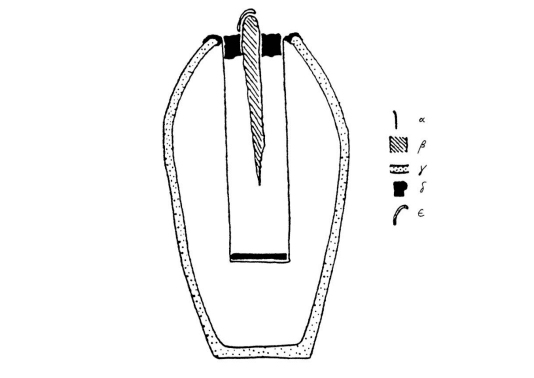
Unearthed near Baghdad in 1936, the Baghdad Battery is composed of a ceramic container housing a copper cylinder and an iron rod. Although its true use has long been debated, most scholars dismissed the idea of it being a power source—until now. While previous replication efforts failed, Bazes’ recent experiment revealed a crucial overlooked detail, reigniting curiosity about the ancient device.
Identifying the Key Element
Alexander Bazes pointed out that earlier tests, including the notable “Mythbusters” experiment, missed an important feature: the soldering sealing the top of the ceramic jar. According to him, the original artifact would have been completely sealed with solder, making it watertight. Without this, prior recreations failed to produce sufficient voltage and the device did not perform as a battery.

“I decided to approach my experiment instead from the perspective of looking at something crafted by a master,” he explained. “If this artifact had once truly functioned as a battery, then I assumed it probably would not have been the first device of its kind to have been made.”
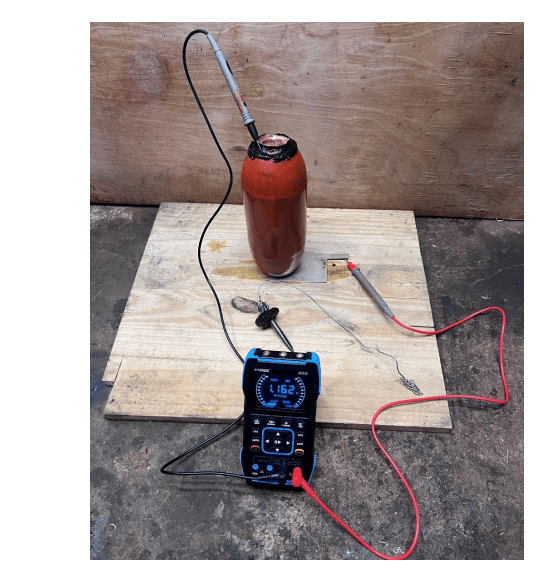
Detailed in a study published in Sino-Platonic Papers, Bazes’ reconstruction involved carefully applying solder around the copper cylinder, sealing it inside the ceramic vessel. The interior was then filled with an electrolyte such as saltwater or lemon juice, substances readily accessible to ancient civilizations. This adjustment led to a remarkable change: the jar generated a steady voltage exceeding 1.4 volts.
This output far surpasses the 0.4 volts achieved by the Mythbusters version, which was barely enough to power anything. Bazes noted that this voltage level could facilitate practical applications, potentially valuable to ancient metalworkers.
Possible Uses by Early Artisans
With the confirmation that the Baghdad Battery can function, it prompts speculation about ancient applications. Bazes proposes that the device might have been employed for techniques like electroplating or electrolysis, methods still in use today.
Electroplating, for example, was used historically to enhance metal durability or add decorative coatings. The concept that early craftsmen could harness electricity for such processes is intriguing. The nature of the electrolyte also plays a critical role. Bazes found that:
“If you put in electrolytes that were readily available 2,000 years ago, it ends up working as a much better battery than previously thought,” he stated. “You get a big boost in voltage, and the battery’s two terminals are now convenient to access. I find this recreation more believable, at least, as something an ancient craftsperson might have made.”
This design simplifies usage because the positive terminal is accessible on the outside, unlike earlier models where connections were cumbersome. This subtle yet practical refinement suggests the original creators considered functionality and efficiency.
- Categories:
- News











0 comments
Sign in to Comment