
Scientists at the Louisiana Universities Marine Consortium (LUMCON) recently uncovered a fascinating new species of "zombie worm" capable of rapidly consuming whole alligator bodies. Their research involved submerging three deceased alligators into the depths of the Gulf of Mexico to observe how deep-sea scavengers respond to an unusual food source. The findings revealed surprisingly swift and effective consumption methods by oceanic creatures.
Submerging Alligators to Study Deep-Sea Scavengers
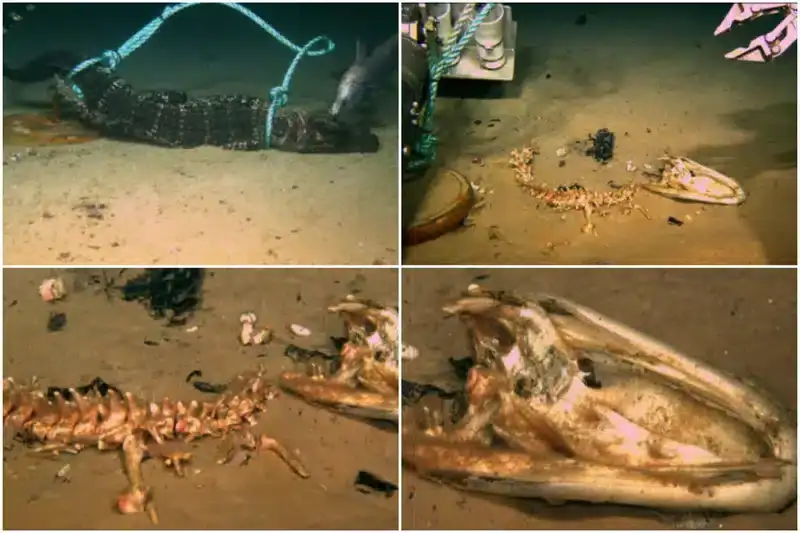
In 2019, the LUMCON team lowered three dead alligators to a depth of 6,560 feet (2,000 meters) beneath the Gulf’s surface, investigating scavenger interaction with reptilian remains. Initially, researchers predicted the alligators’ thick, rugged skin would deter scavengers and delay decomposition. This hypothesis was quickly disproved.
After only 24 hours, nine giant isopods (Bathynomus giganteus), each measuring about a foot long and resembling oversized pink woodlice, were observed voraciously feeding on one carcass. These creatures managed to penetrate the tough alligator hide and consumed soft tissues from within, astonishing scientists with their rapid adaptability to this challenging food source.

A Newly Discovered Bone-Eating Worm Species
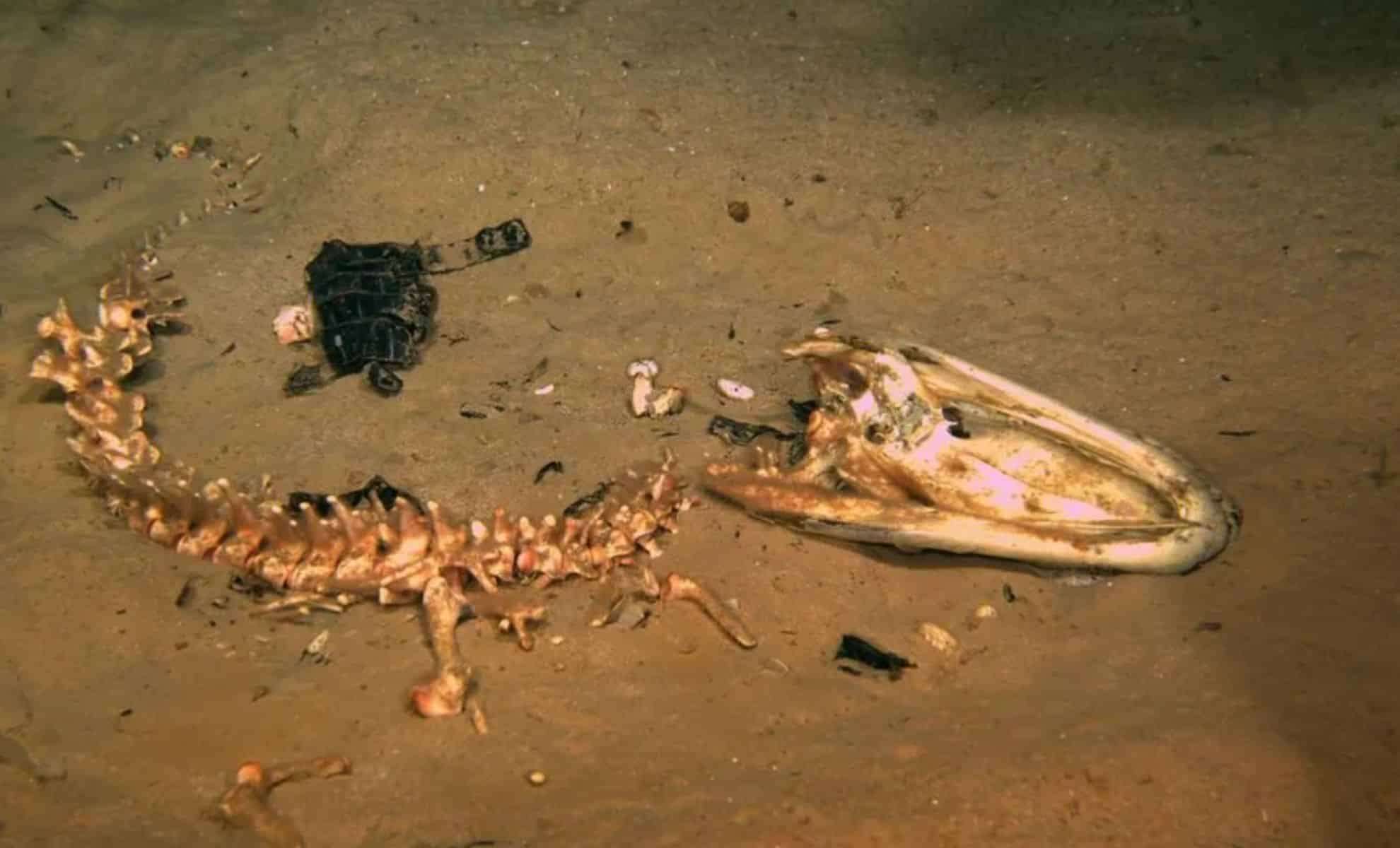
The second alligator, placed approximately 100 kilometers apart from the first, was almost entirely devoured in just 51 days, leaving only the skull, spine, and the anchor that weighed it down intact. Surrounding the skeleton, researchers discovered a novel species of bone-eating worm from the Osedax genus—commonly referred to as “zombie worms”—that specialize in boring into and consuming animal bones on the seafloor.
This newly found species had never before been recorded in the Gulf of Mexico. It shares close genetic ties with Osedax worms previously identified in Antarctica and California, suggesting it is an undescribed species. In their PLOS publication, the research team noted the species “will be named in due course,” underscoring the significance of this discovery.
The Enigmatic Fate of the Third Alligator
The last alligator’s fate was less straightforward. Within eight days, this carcass vanished completely. Initially, the scientists found no traceable remains, causing confusion. However, they later recovered the anchor, shackle, and rope nearby—about 8.3 meters away—leading to the theory that a massive scavenger dragged away the body.
Researchers proposed that a “large scavenger” was responsible, likely a large shark. The force needed to consume such a sizable reptile and displace its carcass suggested only a powerful predator could have orchestrated the disappearance. The deep ocean evidently harbors formidable creatures ready to take advantage once scavengers finish their work.
- Categories:
- News











0 comments
Sign in to Comment