
Emerging research proposes that dark matter—the unseen substance influencing galaxy formation—might have originated prior to the Big Bang itself. This perspective challenges the longstanding view that the Big Bang marked the ultimate beginning of the cosmos. The investigation, released in 2024 by physicists at the University of Texas at Austin, offers a novel framework to rethink the universe’s timeline.
Could the Big Bang Be Just One Phase in a Larger Cosmic History?
Traditionally, the Big Bang has been understood as the starting point of all existence—an explosive event spawning space, time, and matter. However, advances in the understanding of cosmic inflation—a period of accelerated expansion preceding the Big Bang—have prompted scientists to reconsider this stance.
According to the new theory, during this inflationary period, the universe’s conditions might have been extreme enough not only to affect subsequent cosmic evolution but also to create fundamental particles before the Big Bang occurred. Should this be confirmed, it implies the Big Bang marks a transformative moment rather than the absolute beginning.

Understanding the WIFI Framework
The model introduced by the researchers is named WIFI, standing for warm inflation via ultraviolet freeze-in. It provides a fresh explanation for how minimal interactions in the universe’s earliest phase could have produced dark matter.
Within this framework, dark matter is not a byproduct of the universe’s birth but could have existed earlier.
This notion upends past theories that presumed the tumultuous energy of inflation destroyed preexisting structures. Instead, WIFI posits dark matter not only persisted but possibly thrived through this era.
The Significance of Dark Matter
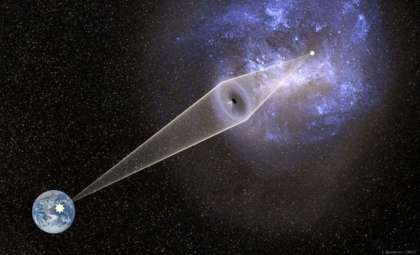
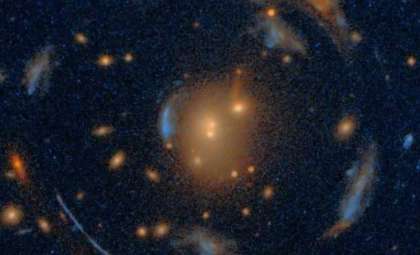
Though dark matter remains undetected by conventional means, it is thought to comprise around 80% of the universe’s matter. It neither emits nor refracts light, rendering it invisible, yet its gravitational influence shapes galaxies, bends light paths, and governs cosmic evolution over billions of years.
Until now, dark matter’s origins have been highly speculative, generally placed after the Big Bang within the universe’s energetic phases. The WIFI hypothesis challenges this paradigm.
If dark matter truly predates the Big Bang, it could offer vital insights into the universe’s earliest moments, preceding the conventional measure of time.
Beyond a Theory: Implications for Cosmology
This concept carries far-reaching consequences. If dark matter existed before the Big Bang, it opens the possibility of an even broader cosmic structure beyond our known universe.
Some models entertain the idea of multiple cosmic explosions or cycles. The possibility of a pre-Big Bang entity strengthens such scenarios.
This raises deeper philosophical questions about what ‘beginning’ means—is the Big Bang the origin, or simply a segment of an ongoing cosmic saga?
Pathways to Verification
So how do scientists plan to investigate this idea? Attention is focusing on the cosmic microwave background, the residual radiation from the Big Bang.
The minute details in this radiation might correlate with predictions made by the WIFI model. Such a match could provide indirect evidence that dark matter existed before time as we know it.
Upcoming particle physics experiments may also offer support or refutation of this hypothesis. If validated, it would revolutionize our understanding of the universe’s origins.
- Categories:
- Astronomy




0 comments
Sign in to Comment