
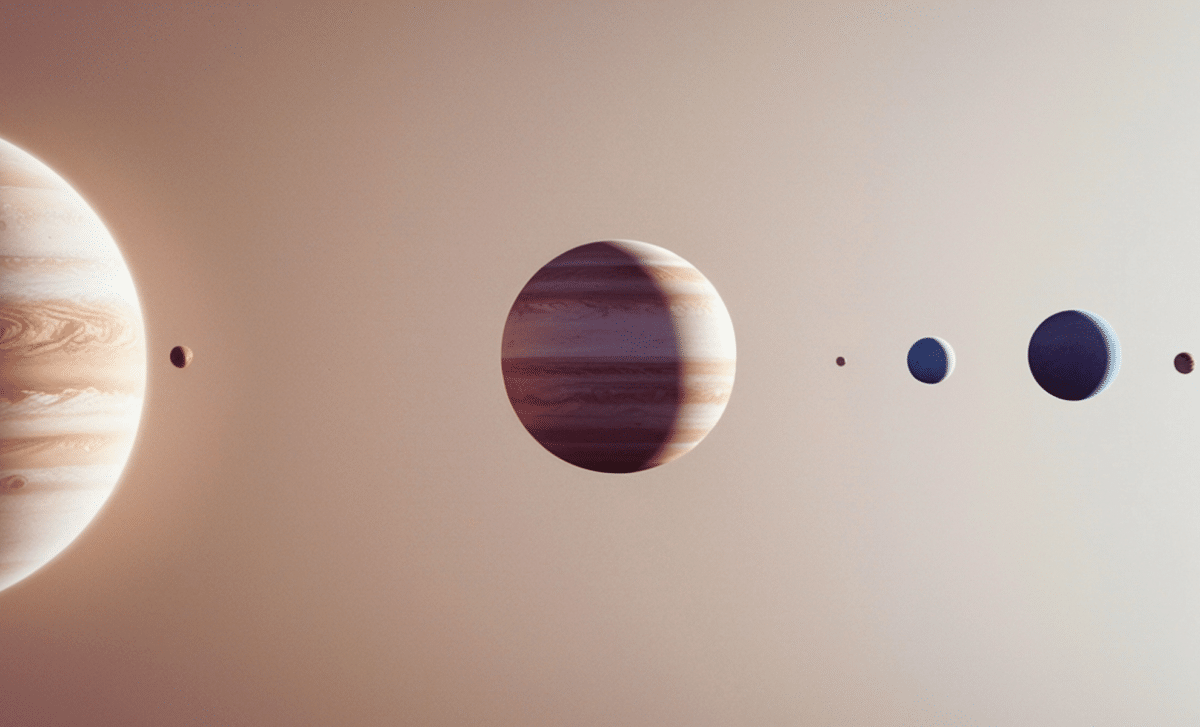
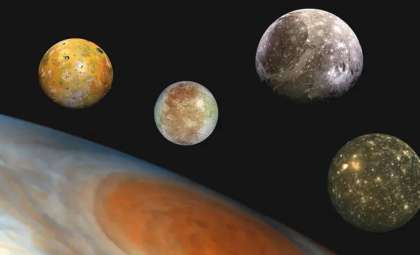
The Galilean satellites orbiting Jupiter — Europa, Ganymede, Callisto, and Io — have captivated researchers eager to learn about their capacity to support life. New studies propose that these moons may have formed containing not only water ice but also the crucial organic compounds that serve as the foundations for life.
Exploring the Possibility: Were Organic Molecules Present at the Birth of Jupiter’s Moons?
Jupiter’s Galilean moons are key targets in the quest to find extraterrestrial life. Recent findings published in The Planetary Science Journal and Monthly Notices of the Royal Astronomical Society indicate that complex organic molecules (COMs)—vital precursors to amino acids and nucleotides—may have been part of their icy make-up from the very beginning.
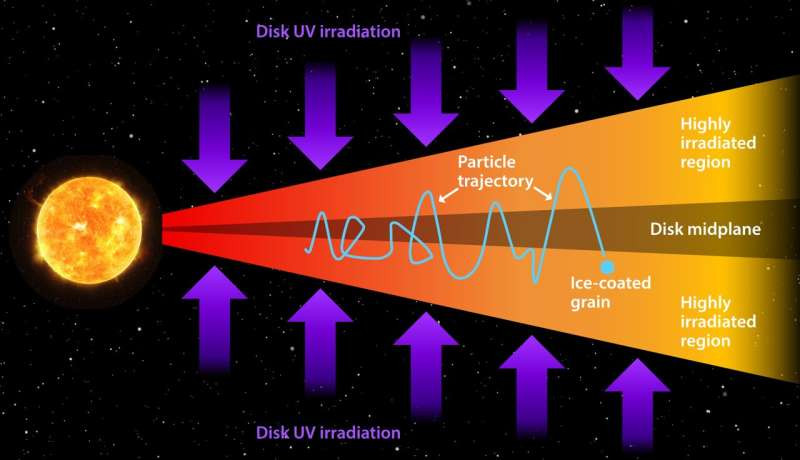
Lead researcher Dr. Olivier Mousis of the Southwest Research Institute (SwRI) highlighted their novel approach combining disk evolution models with particle transport simulations, allowing an accurate assessment of the radiation and temperature conditions experienced by icy grains during moon formation.

“By combining disk evolution with particle transport models, we could precisely quantify the radiation and thermal conditions the icy grains experienced,” said Dr. Mousis.
The study suggests these icy grains ferried important organic compounds from the surrounding protoplanetary disk, seeding the moons with life’s ingredients early in their development.
This discovery revises previous views of the Galilean moons’ chemical makeup and suggests that organic molecules may have been a foundational component of these worlds millions of years before their icy surfaces solidified.
Jupiter’s Circumplanetary Disk as a Crucible for Organic Chemistry
Jupiter’s circumplanetary disk was instrumental in creating its moons and may have also been a hotspot for synthesizing prebiotic molecules. The interdisciplinary team explored how organic compounds can arise under harsh disk conditions, demonstrating through advanced simulations that icy grains bearing various simple molecules like methanol and ammonia undergo complex chemical transformations fueled by ultraviolet radiation and mild heating in both the solar nebula and Jupiter’s local disk environment.
Dr. Mousis elaborated on the rigorous validation of their models:
“Then we directly compared our simulations with other laboratory experiments that produce COMs under realistic astrophysical conditions. The results showed that COM formation is possible in both the protosolar nebula environment and Jupiter’s circumplanetary disk.”
This insight firmly ties the emergence of prebiotic molecules to the very place where Jupiter’s moons assembled, suggesting these compounds were readily available for inclusion into the building blocks of the moons.
By tracing how these organic-rich grains moved through Jupiter’s disk, the group unraveled a likely pathway for embedding complex organics into the nascent moons, offering fresh perspectives on the origin of life-related chemistry within the Jovian system.
Accumulation of Prebiotic Ingredients During Moon Formation
This investigation reveals that Jupiter’s moons were probably never chemically blank slates at birth. Instead, considerable concentrations of organic molecules may have accreted with the moons as they formed, laying the groundwork for prebiotic chemical reactions to potentially develop later beneath their icy shells.
“Our findings suggest that Jupiter’s moons did not form as chemically pristine worlds,” said Dr. Mousis. “Instead, they may have accreted, or accumulated, a significant inventory of COMs at birth, providing a chemical foundation that could later interact with the liquid water in their interiors.”
The recognized presence of subsurface oceans on moons like Europa, Ganymede, and Callisto already raises hopes for habitability. The possibility that these moons also started with organic compounds essential for life greatly enhances their appeal as targets in the hunt for extraterrestrial biology.
Potential for Life on Europa, Ganymede, and Callisto
These results imply that the Galilean moons may have begun their existence with all the necessary components for life to develop. Should these organic molecules have coexisted with liquid water reservoirs and energy sources below their frozen exteriors, conditions could have favored biochemical processes. Europa, with its extensive ocean enveloping a rocky mantle, stands out as an especially promising site for life.
This research establishes a solid model for the formation and delivery of organic molecules, equipping scientists with vital insights to analyze future spacecraft data. Dr. Mousis emphasized:
“Establishing credible pathways for COMs formation and delivery provides scientists with a critical framework for interpreting upcoming measurements of Jupiter’s surface and subsurface chemistry.”
This framework will be instrumental in interpreting observations from NASA’s Europa Clipper and ESA’s JUICE missions, which aim to delve deeper into these moons’ compositions and habitability potentials.
Advancing Our Comprehension of Prebiotic Chemistry in Jupiter’s Realm
The study showcases the benefits of integrating experimental chemistry, astrophysical disk modeling, and particle transport theories to better grasp how habitable environments form. Their findings point to early incorporation of organics shaping the chemical makeup of Jupiter’s moons.
“By linking laboratory chemistry, disk physics and particle transport models, our work may highlight how habitable conditions are rooted in the earliest stages of planetary formation,” said Dr. Mousis.
This comprehensive approach enriches our understanding of how life-supporting conditions might develop on worlds beyond Earth while emphasizing the complexities of planetary formation and the myriad factors influencing habitability on distant moons.
- Categories:
- News









0 comments
Sign in to Comment