
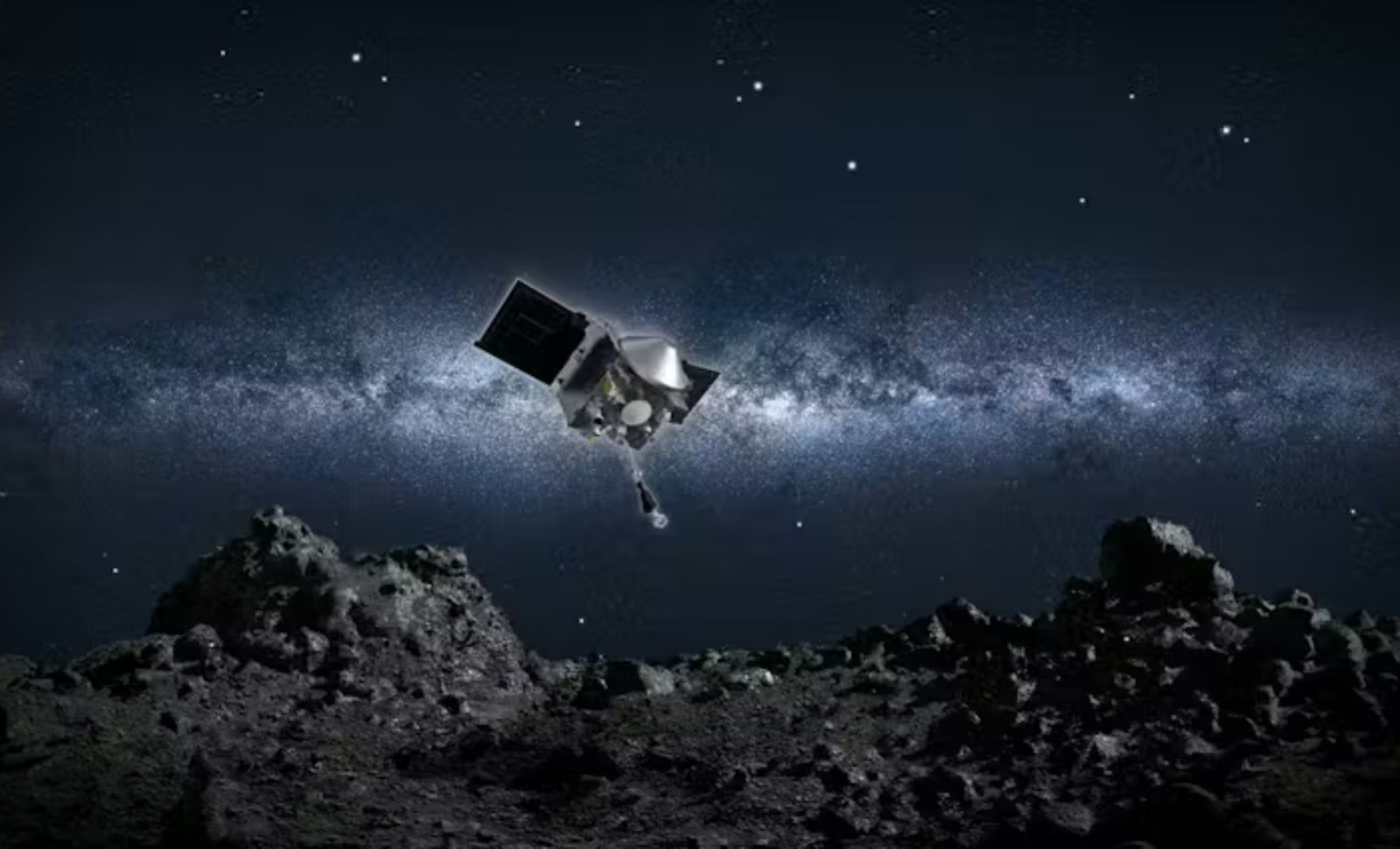
Investigations of material returned from asteroid Bennu reveal amino acids that appear to have formed in icy, radiation-rich environments rather than warm, aqueous ones. This groundbreaking finding, detailed in the Proceedings of the National Academy of Sciences, challenges established views on how life’s precursor molecules emerged.
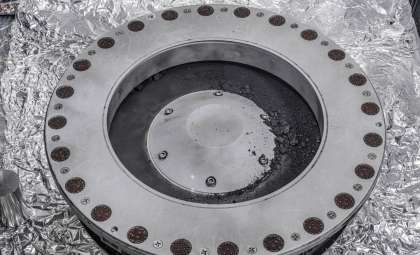
The insights come from samples brought to Earth in 2023 by NASA’s OSIRIS-REx mission. Prior studies had already confirmed the presence of amino acids within these 4.6-billion-year-old asteroid specimens.
For years, the widely accepted theory held that amino acids in meteorites originated via processes involving liquid water. However, research led by Penn State scientists now indicates that at least some of the amino acids in Bennu formed through chemical reactions occurring in frozen ice exposed to radiation during the early stages of the solar system.

Isotope Analysis Reveals Frozen Origins
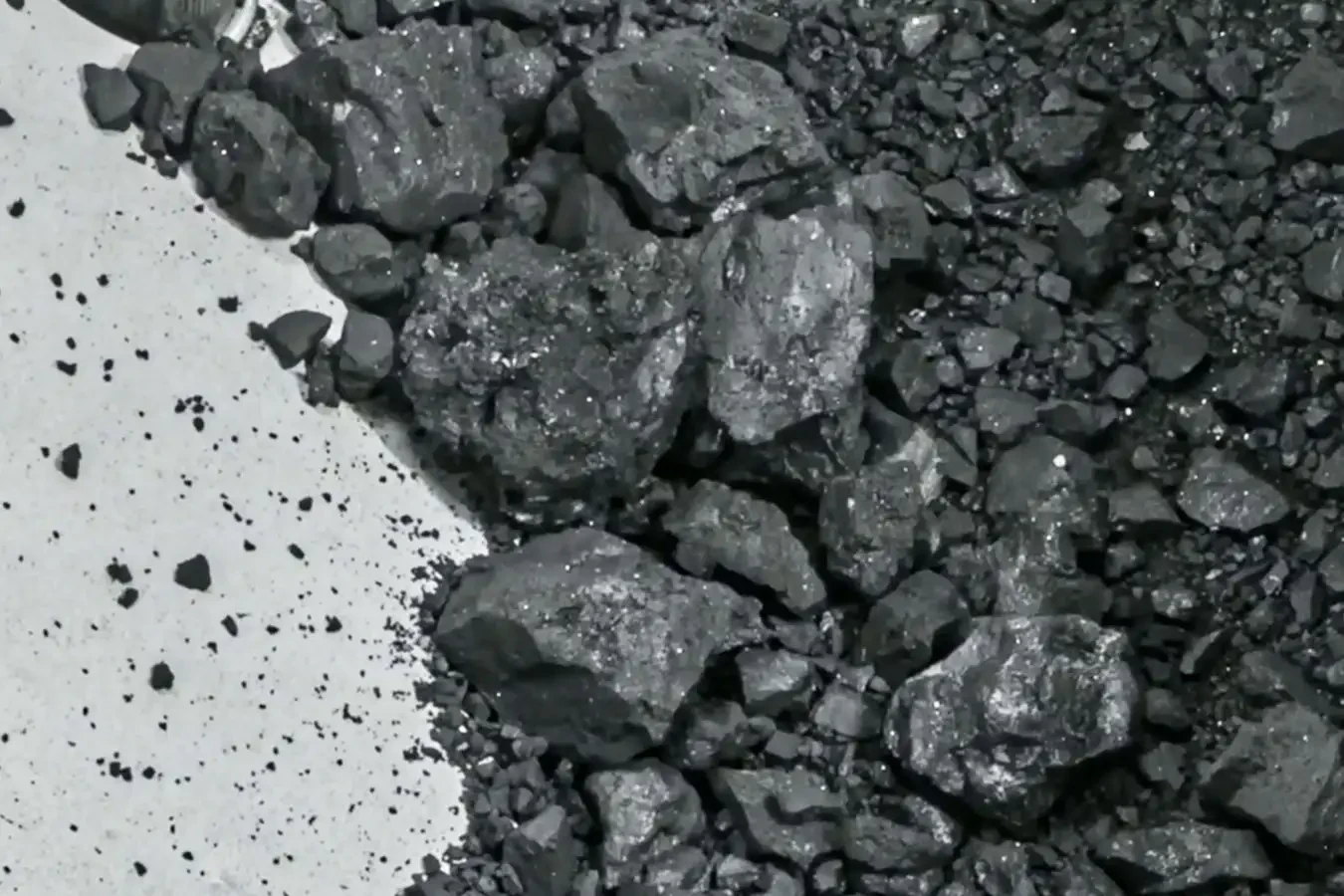
Utilizing sophisticated instruments, the research team examined a minute sample of Bennu's material, smaller than a teaspoon, capable of detecting subtle isotopic differences—variations in atomic mass that trace chemical histories.
As described in the recent publication, the focus was on glycine, the simplest amino acid and a vital component of proteins responsible for nearly all biological functions.
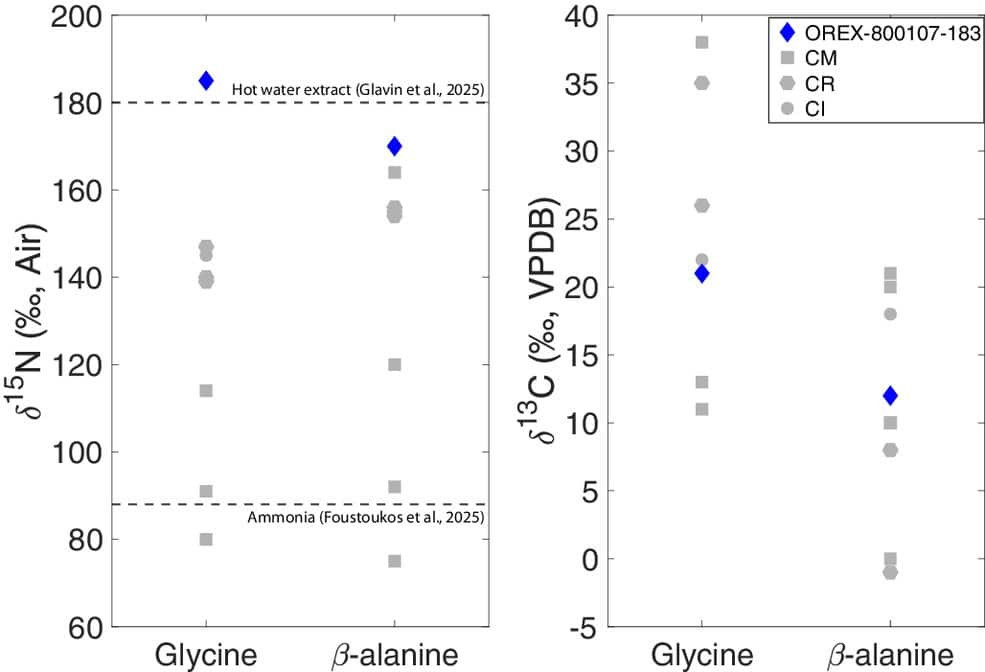
The isotopic evidence from Bennu’s glycine does not support formation through Strecker synthesis, which involves hydrogen cyanide, ammonia, aldehydes or ketones, and liquid water. Instead, results point to synthetic pathways occurring in frozen ices irradiated in the distant solar system.
“Our results flip the script on how we have typically thought amino acids formed in asteroids,” said Allison Baczynski, assistant research professor of geosciences at Penn State and co-lead author of the paper.
Comparing Bennu and Murchison Meteorites Reveals Distinct Origins
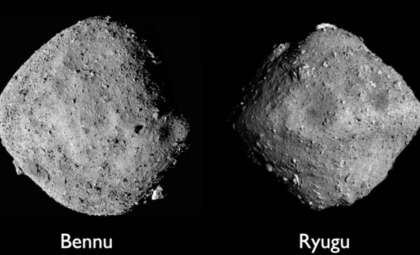
To deepen understanding of Bennu’s organic makeup, the scientists compared its amino acids with those from the Murchison meteorite, which fell in Australia in 1969 and is a benchmark for organic compounds in extraterrestrial rocks.
The Penn State team reported that Murchison’s amino acids exhibit isotopic traits typical of formation in environments with liquid water and moderate temperatures, conditions thought to be present on its parent body and early Earth. In contrast, Bennu’s samples display isotopic evidence indicative of a vastly different chemical environment.
“What’s a real surprise is that the amino acids in Bennu show a much different isotopic pattern than those in Murchison,” said Ophélie McIntosh, postdoctoral researcher in Penn State’s Department of Geosciences and co-lead author.
This clear contrast implies that Bennu and Murchison originated in chemically distinct zones of the primordial solar system.
Mirror-Image Molecules Present a New Enigma
The study also uncovered a puzzling variation in the isotopic composition of mirror-image forms of glutamic acid, another amino acid identified in Bennu’s samples.
Amino acids exist in two mirror-image versions, similar to left and right hands. Previously, scientists assumed these counterparts would share comparable isotopic signatures. However, Bennu’s glutamic acid forms show distinct nitrogen isotopic differences.
This finding adds complexity to the understanding of how life's molecular precursors assembled in space.
“We have more questions now than answers,” Baczynski said, noting that future studies of other meteorites will aim to determine whether Bennu and Murchison represent unique formation styles or part of a wider chemical variety.
- Categories:
- News





0 comments
Sign in to Comment