
A groundbreaking Nature publication has uncovered surprising evidence that liquid water once flowed inside the asteroid Ryugu. This revelation comes from microscopic samples gathered by JAXA’s Hayabusa2 mission, prompting researchers to reconsider early Solar System water dynamics.
Hidden Clues of Past Water Activity
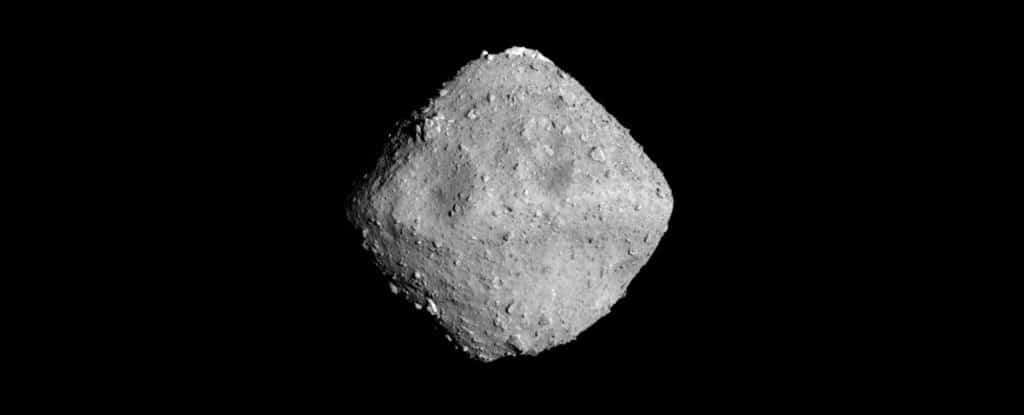
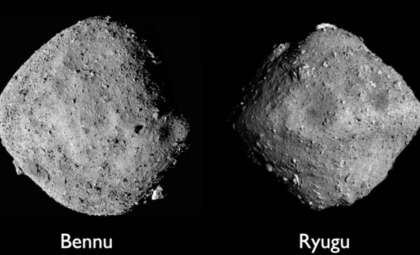
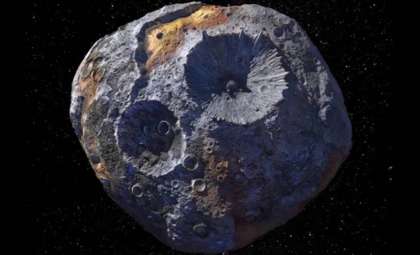
To the naked eye, Ryugu appears as a dry, spinning-top-shaped celestial body. However, its interior holds a chemical narrative that left scientists perplexed. Investigators at the University of Tokyo analyzed its material and discovered isotope signatures that defied expectations. The isotopes of Lutetium and Hafnium, typically used to date cosmic samples, suggested ages predating the formation of the Solar System itself.
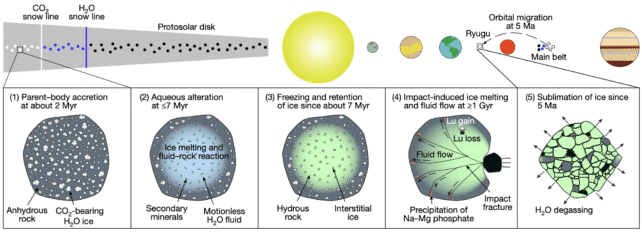
Lead researcher Tsuyoshi Iizuka explained, “this indicates the conventional dating method doesn’t apply to Ryugu samples.” The team deduced that this anomaly could only be explained if liquid water had once altered the isotopic composition, leaving behind signs of ancient fluid flow. Iizuka added, “the water remained present far longer than previously assumed.” This discovery sparks a new puzzle — what mechanism could have thawed long-frozen ice inside Ryugu’s parent asteroid?

A Surprising Geological Event
Scientists suggest that an impact event likely triggered this unexpected water activity. A collision with another space object may have fractured Ryugu’s parent body, releasing concealed ice reserves. The heat generated by this impact could have melted the ice, producing transient but meaningful flows of liquid water. The study also proposes that this collision contributed to the breakup of the parent asteroid, forming Ryugu.
Researchers expressed astonishment at the findings. As Iizuka remarked, “Ryugu holds an exceptionally well-preserved archive of water interaction, showing liquid movement within its rocks occurred much later than previously thought.” This challenges existing timelines for water presence in asteroids, extending the window in which these bodies could store life-essential water.
Implications for Earth’s Water Origins
The notion that asteroids like Ryugu safeguarded ice over billions of years implies they might have delivered significant water quantities to early Earth. This contradicts earlier beliefs that only minimal water trapped inside minerals contributed to our planet’s oceans. Instead, Carbon-rich Asteroids may have been much more hydrated, steadily supplying essential materials that influenced Earth’s ocean and atmosphere formation.
“The discovery that Ryugu-like bodies preserved ice for extended periods is extraordinary,” said Iizuka. “It indicates that Earth’s building blocks were far wetter than we had imagined.”
Next Steps in Investigation
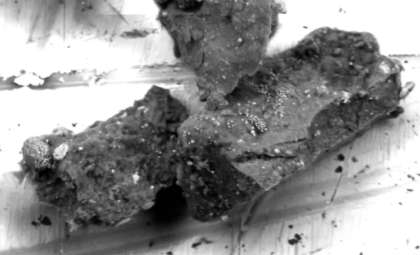
The Hayabusa2 mission brought back samples smaller than a grain of rice, yet these tiny pieces have provided crucial insights. Researchers are now examining Phosphate Veins within these samples to pinpoint the timing of water flow inside Ryugu. These veins might reveal exactly when the asteroid experienced liquid water movement.
Comparative studies with samples from NASA’s OSIRIS-REx mission, which retrieved material from Asteroid Bennu in 2023, will help determine if Ryugu’s watery history is unique or shared by other asteroids. This could redefine our understanding of how asteroids contributed to Earth’s habitability.
- Categories:
- News




0 comments
Sign in to Comment