
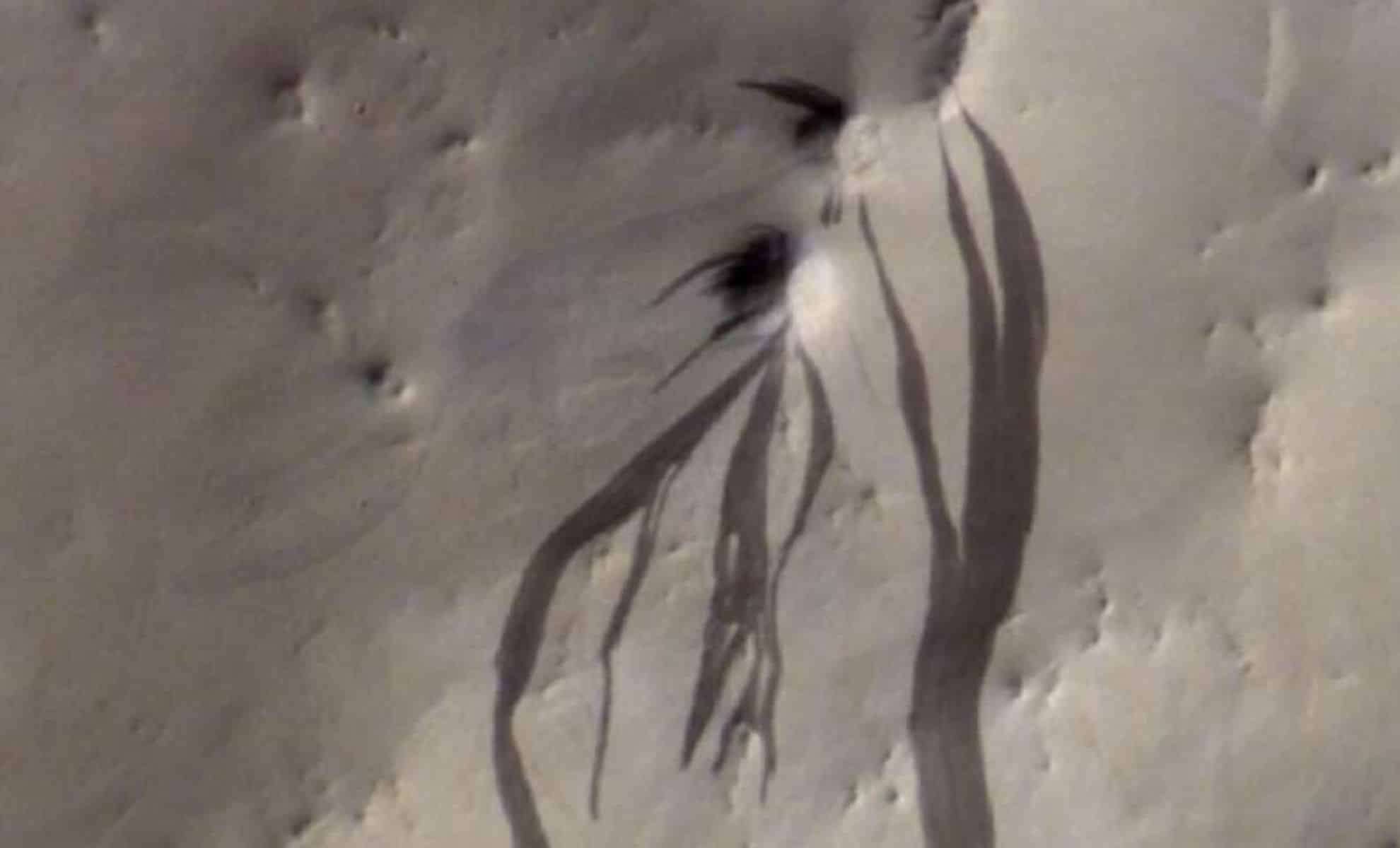
A recent investigation featured in Nature Communications challenges the long-held belief that dark streaks on Mars’ slopes indicate flowing liquid water. These recurring slope lineae (RSL) have sparked curiosity among scientists as potential signs of current water activity and habitable conditions. However, a team from Brown University and the University of Bern employed advanced machine learning to evaluate a massive set of data, revealing that these streaks are more likely the result of dry dust avalanches triggered by wind or impacts, rather than any liquid water flow. This discovery reshapes our understanding of present-day surface processes on Mars.
Martian Slope Streaks Linked to Dry Dust Movements Rather Than Water
“A key area of Martian research focuses on identifying active surface phenomena, including the possibility of liquid water,” explained Adomas Valantinas, postdoctoral scholar at Brown and coauthor of the paper alongside Valentin Bickel from the University of Bern. These streaks have been observed for nearly half a century, initially detected in Viking spacecraft imagery from the 1970s. Characterized as dark lines on steep inclines, often stretching several hundred meters and persisting from days to years, they were previously thought by some to result from transient salty water flows on Mars’ surface. Yet, Mars’ frigid and arid conditions make stable liquid water improbable today. The new study supports a different origin: the sudden movement of fine dust cascading down slopes, creating dark streaks without any water involvement.
Global Analysis via Machine Learning Sheds Light on Streak Origins
To delve deeper into these enigmatic features, researchers applied a machine learning method to analyze over 86,000 high-resolution images, identifying upwards of 500,000 slope streaks across Mars. “Mapping these features globally allowed us to compare their distribution with various environmental datasets such as temperature, wind patterns, moisture levels, and rockslide activity,” noted Valentin Bickel. This extensive statistical approach demonstrated no meaningful correlation between streak formation and the conditions needed for water or frost, like temperature highs or humidity. Instead, evidence pointed to strong associations with wind strength and dust deposit patterns, indicating that dry granular flows are the main drivers behind these marks.

Consequences for Mars Missions and Astrobiology
This revelation bears important consequences for Mars exploration and the hunt for extraterrestrial life. If the slope streaks are not indicators of liquid water, the likelihood that these spots provide habitable niches for microorganisms diminishes. Consequently, the risk of contaminating potentially life-supporting zones with Earth microbes transported by missions decreases. “This comprehensive data-driven method enables us to discard some possibilities from orbit before dispatching landers or rovers,” Valantinas added. With these insights, future missions can more strategically focus on regions with higher chances of finding evidence of past or existing life. Additionally, the work highlights the significant impact that wind and dust processes have in actively shaping Mars’ contemporary landscape and environment.
- Categories:
- News











0 comments
Sign in to Comment