
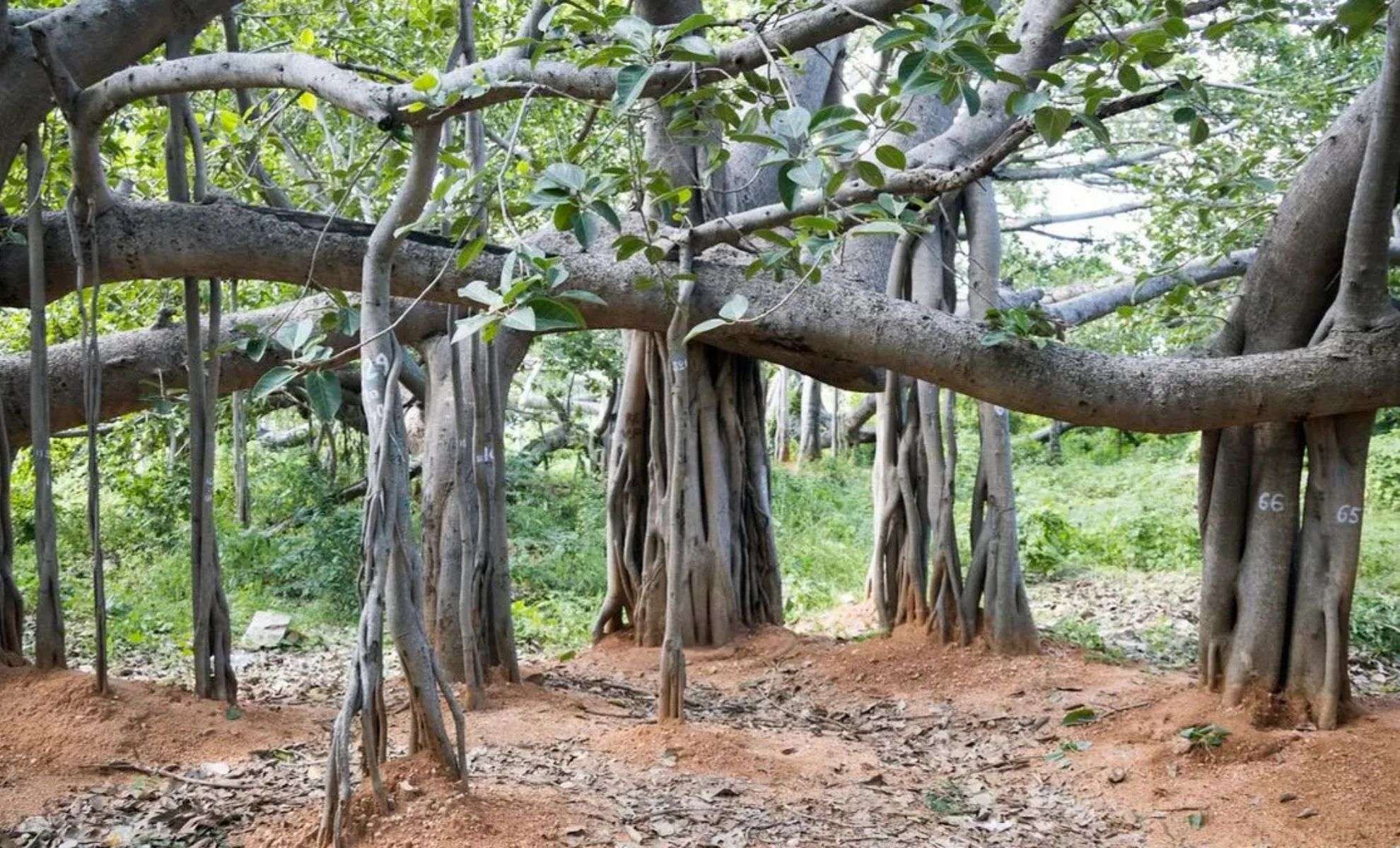
Located in the village of Kadiri, Andhra Pradesh, India, Thimmamma Marrimanu stands as a breathtaking natural spectacle and the largest banyan tree on Earth. This ancient giant, recognized by the Guinness World Records, boasts a canopy that stretches over 19,107 square meters, roughly the size of four football fields. Over more than five centuries, this tree has expanded outward through an extensive system of aerial roots, which provide structural support and allow the tree’s canopy to grow vast while remaining stable.
More than a remarkable botanical wonder, this majestic tree holds deep cultural and spiritual value. Embedded in local mythology and honored by communities, it attracts pilgrims and visitors from around the world, serving as a living link between nature, tradition, and legend. Despite its immense age and scale, Thimmamma Marrimanu thrives, overcoming natural challenges with resilience.
The Distinctive Characteristics of Thimmamma Marrimanu
With its phenomenal size and structure, this banyan represents a rare natural phenomenon. Its wide canopy is upheld by thousands of aerial roots that descend from branches and anchor into the ground, forming new trunks that help the tree expand laterally without losing strength. Unlike large single-trunk trees such as the General Sherman in California, Thimmamma Marrimanu grows by creating a complex forest of interconnected trunks.

Essential Facts About Thimmamma Marrimanu
The immense size of the tree and its ecological role as a refuge for diverse organisms emphasize its importance to the environment. Coupled with its sacred status, it stands as a powerful emblem of endurance and interconnected life.

A Tree Rooted in Legend and Reverence
Thimmamma Marrimanu is deeply connected to local folklore. It is believed to have originated from the ashes of Thimmamma, a devoted woman who performed sati—a now-prohibited ritual self-immolation on her husband’s funeral pyre in the 15th century. Legend says the tree sprang from one of the poles supporting the pyre, symbolizing her steadfast love and dedication.
Presently, the tree is a place of pilgrimage for thousands who come to receive blessings. It is thought to grant fertility to couples unable to conceive, and locals warn against plucking its leaves due to fear of divine punishment. These stories, combined with the tree’s biological significance, create a unique fusion of myth and science.
Ecological Significance and Survival Strategies
Ecologically, Thimmamma Marrimanu plays a crucial role as a keystone species, supporting complex ecosystems. Its vast canopy offers shelter and shade, while the roots stabilize the earth, reducing erosion. Birds, bats, and numerous insects find refuge amongst its branches, making it a hotspot of biodiversity.
Its growth pattern is particularly intriguing. As a strangler fig, its seeds germinate high in the branch canopy of a host tree. Over time, the roots cascade downwards, enveloping and hindering the host by cutting off nutrients and sunlight. This survival technique earns the banyan the nickname “living coffin.”
The tree’s roots and branches continuously adjust to environmental stresses, allowing it to endure cyclones, droughts, and human interference while maintaining its expansive reach.
A Lasting Icon of Strength and Balance
Thimmamma Marrimanu exemplifies resilience and adaptability. For over 550 years, its grand canopy and extensive root networks have withstood natural disasters and human pressure, continuing to grow in a gentle clearing. It serves as shelter for many species and symbolizes ecological harmony.
Beyond its function within the ecosystem, the tree embodies spiritual and cultural depth, attracting visitors yearly. Its legendary beginnings and enduring presence merge myth with reality in a rare natural monument.
Thimmamma Marrimanu stands as a tribute to the interconnected nature of life, demonstrating how strength and flexibility are key to survival. It is a lasting symbol of the beauty and power found in the natural world.
- Categories:
- News












0 comments
Sign in to Comment