
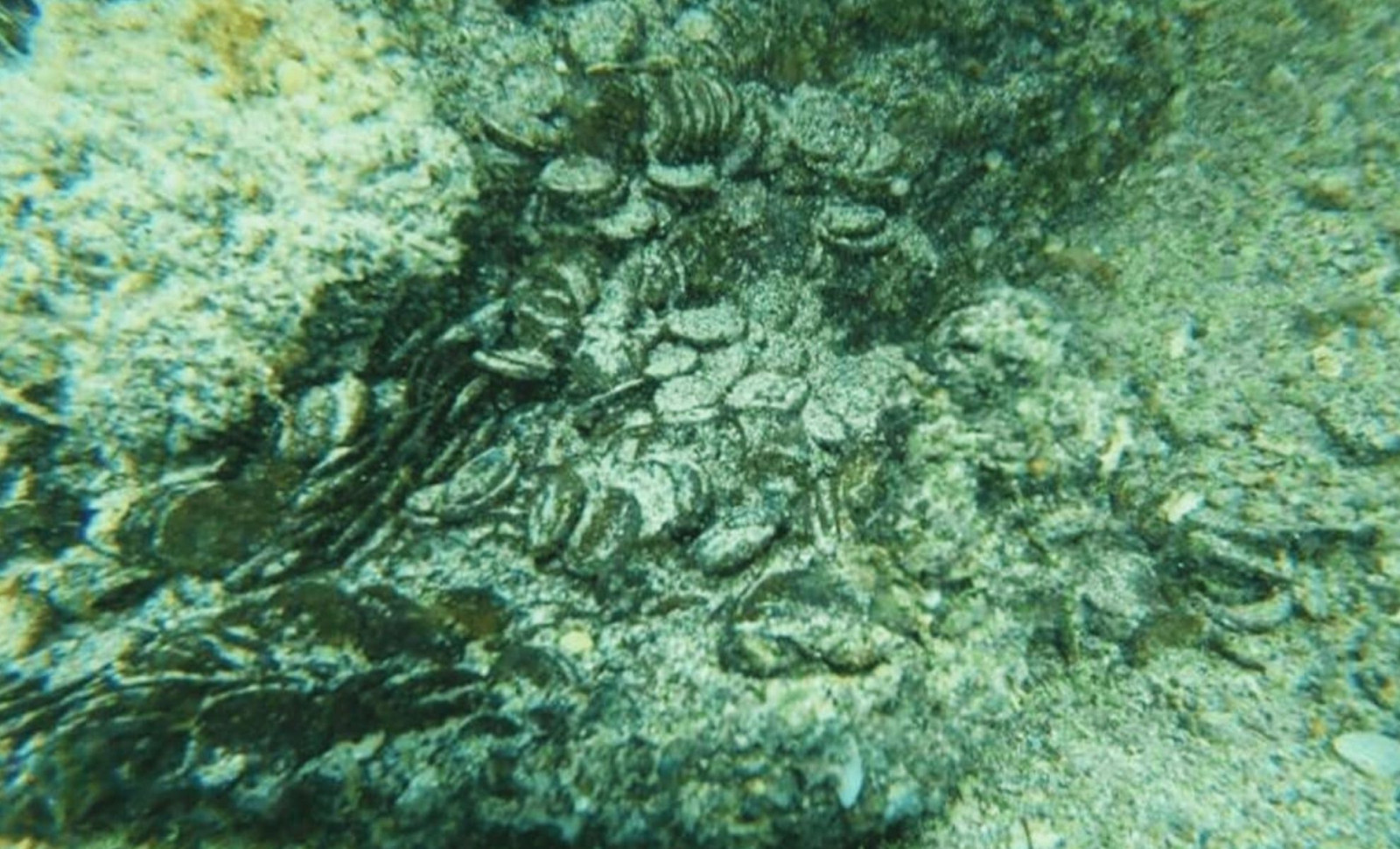
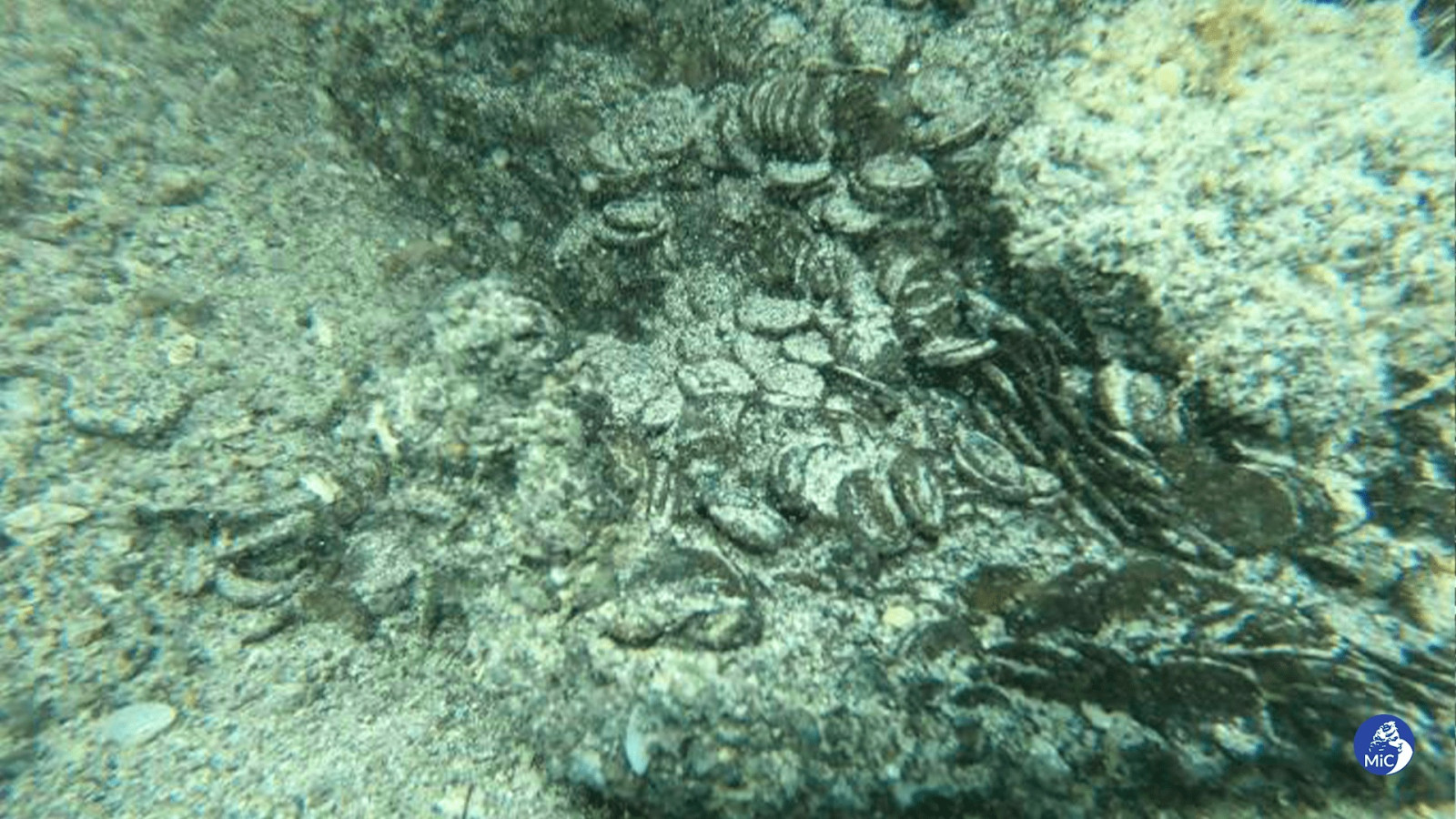
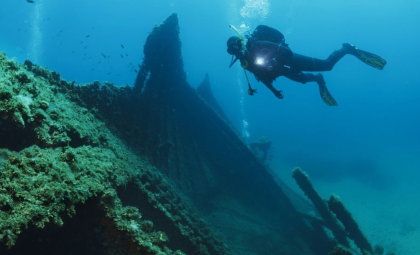
For over 1,600 years, the seabed near Sardinia’s northeast shoreline concealed a remarkable treasure. An enthusiastic diver, exploring waters better known for dispersed shipwreck remnants than intact collections, stumbled upon a dense cluster of bronze artifacts the Italian authorities have now confirmed includes more than 50,000 coins.
Discovered in late 2024 and carefully retrieved by salvage teams through 2025, this find is not tied to a visible shipwreck since no structural remains of a hull have been detected. Instead, archaeologists from the Ministero della Cultura documented ceramic amphora fragments, iron nails, packing materials, and a concentrated grouping of fourth-century Roman nummi, arranged in a pattern suggesting they were rapidly and permanently sealed rather than gradually dispersed.
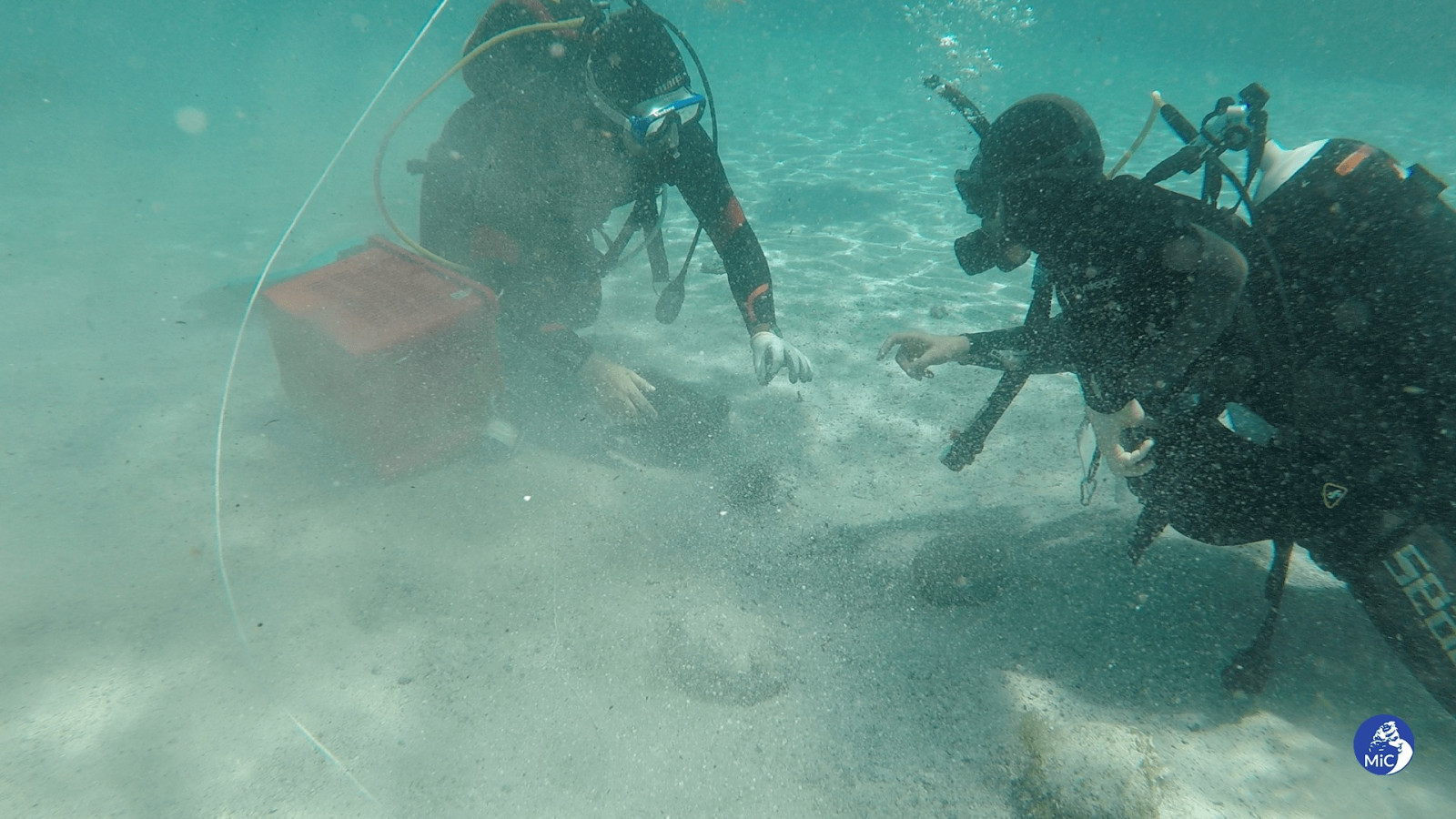
The Italian heritage agency has declared this the largest maritime Roman coin treasure ever found in the Mediterranean and one of the best preserved across Europe. This accolade raises intriguing questions: the coins are remarkably uncorroded, the presumed ship is absent, and the currency, dated between 324 and 340 AD through mint marks and iconography, dates to a time when Diocletian’s bronze monetary reforms were rapidly losing public trust.

Insights from Over 50,000 Bronze Coins
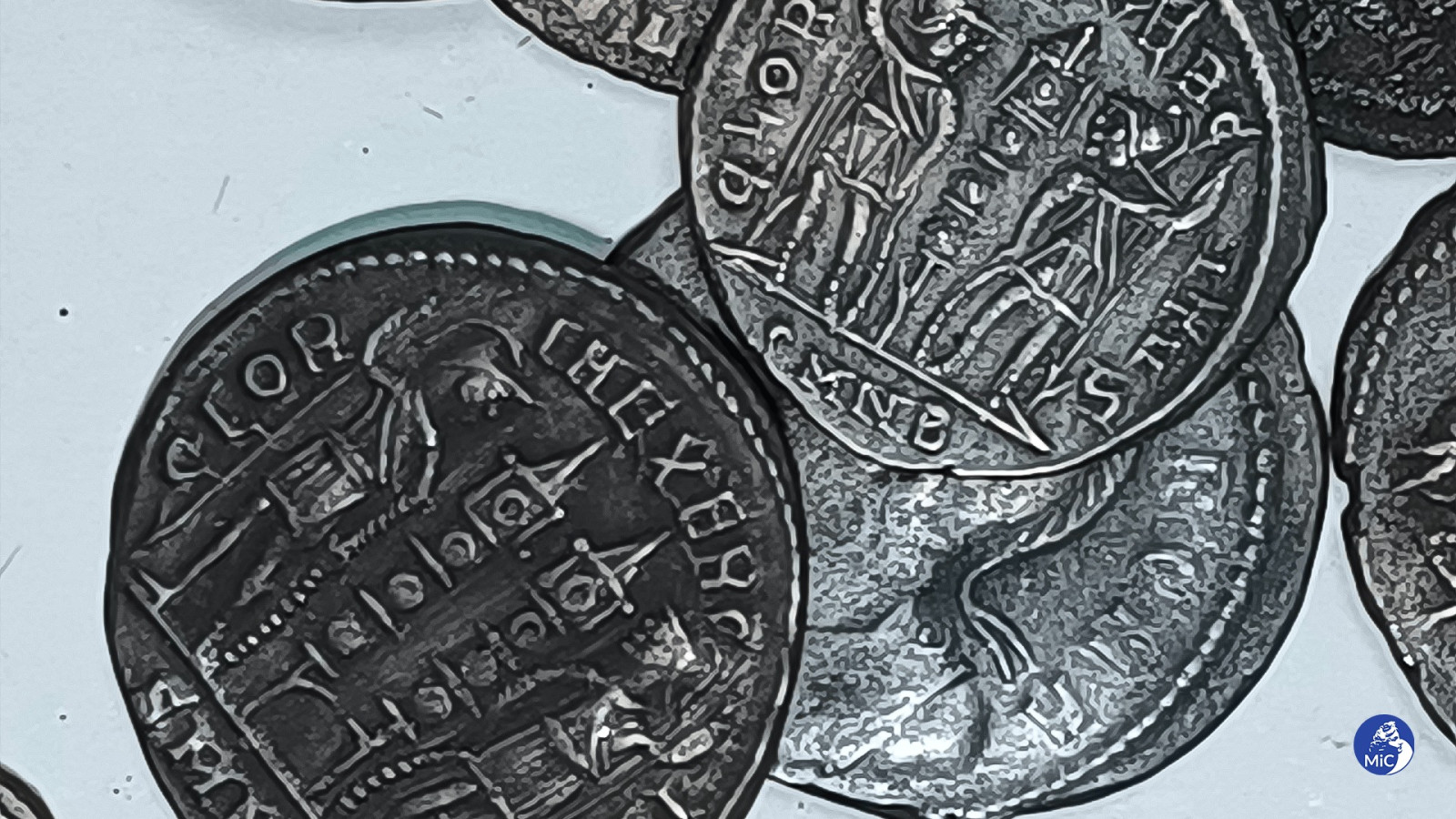
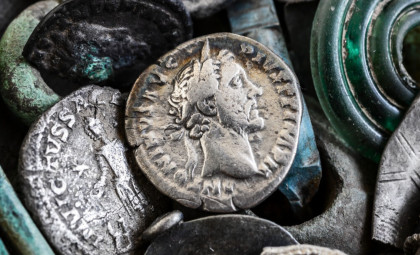
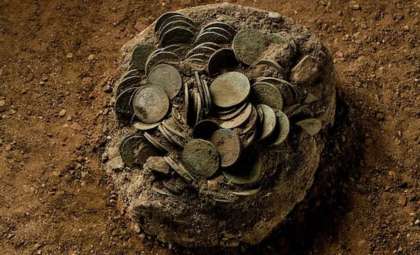
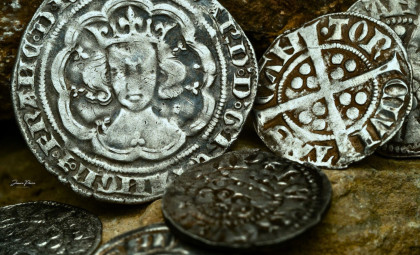
The hoard is overwhelmingly composed of bronze nummi, the denomination introduced by Diocletian’s 294 AD currency overhaul and widely minted during the Constantinian dynasty. Experts from the Ministero della Cultura noted the coins display imagery typical of fourth-century issues, including Sol Invictus, the Chi-Rho symbol, imperial fortifications, and motifs celebrating victory. Mint marks indicate production origins in Gaul and the Eastern Mediterranean, implying this collection aggregated treasury funds from several provinces.
The ceramic fragments correlate with known Roman amphorae types catalogued in the Classical Art Research Centre’s database at Oxford University. These containers would have been securely arranged in a ship’s hold, their tapered bases stabilized in packing materials or receptacles. Iron nails and remnants of packing were found in sufficient quantity to confirm maritime transport but insufficient to determine ship type, size, or owner.
The entire coin cache has been declared government property under Italy’s cultural patrimony legislation, with full information accessible through the Ministero della Cultura official website. There are no privately registered claims. Ongoing conservation and study at national facilities will culminate in select pieces being loaned to regional museums after 2026.
The Protective Role of Seagrass
The exceptional preservation of the nummi cannot be explained by their metal alone. Typically, fourth-century nummi only had fragile silver surface coatings, which research published in Heritage Science in 2019 confirmed usually degrade within decades in normal burial environments. Yet, these Sardinian coins still exhibit their original surfaces.
Investigators determined that the site lies within a flourishing meadow of Posidonia oceanica, a species of seagrass whose sedimentary characteristics have attracted growing archaeological interest.
A 2018 study in Ambio, available via the National Institutes of Medicine archive, describes Posidonia meadows as “security vaults” for submerged artifacts. The dense root mats trap sediments, raise the seabed level, and create low-oxygen conditions that slow electrochemical corrosion of metal objects.
The research estimated that sediment accumulation in these meadows ranges from 0.6 to 5 millimeters each year. Given these rates, the Sardinian hoard would have been completely buried within two to three decades after being deposited. Rather than mere preservation, the coins were effectively entombed.
A Contrast in Roman Hoards: Britain and Sardinia
Comparative terrestrial finds of similar era and makeup offer context. The Seaton Down Hoard, found in Devon, England in 2013 and examined by the Royal Albert Memorial Museum, contained 22,888 nummi buried inside a single leather pouch near a Roman rest stop. A study of the hoard in 2017 identified the youngest coins as dating to 348 AD.
Thomas Cadbury, assistant curator at the museum, noted then that “the lowest paid farm worker likely earned about one nummus per day.” Two nummi could buy a cheap Roman wine flagon, with better vintages costing up to eight.
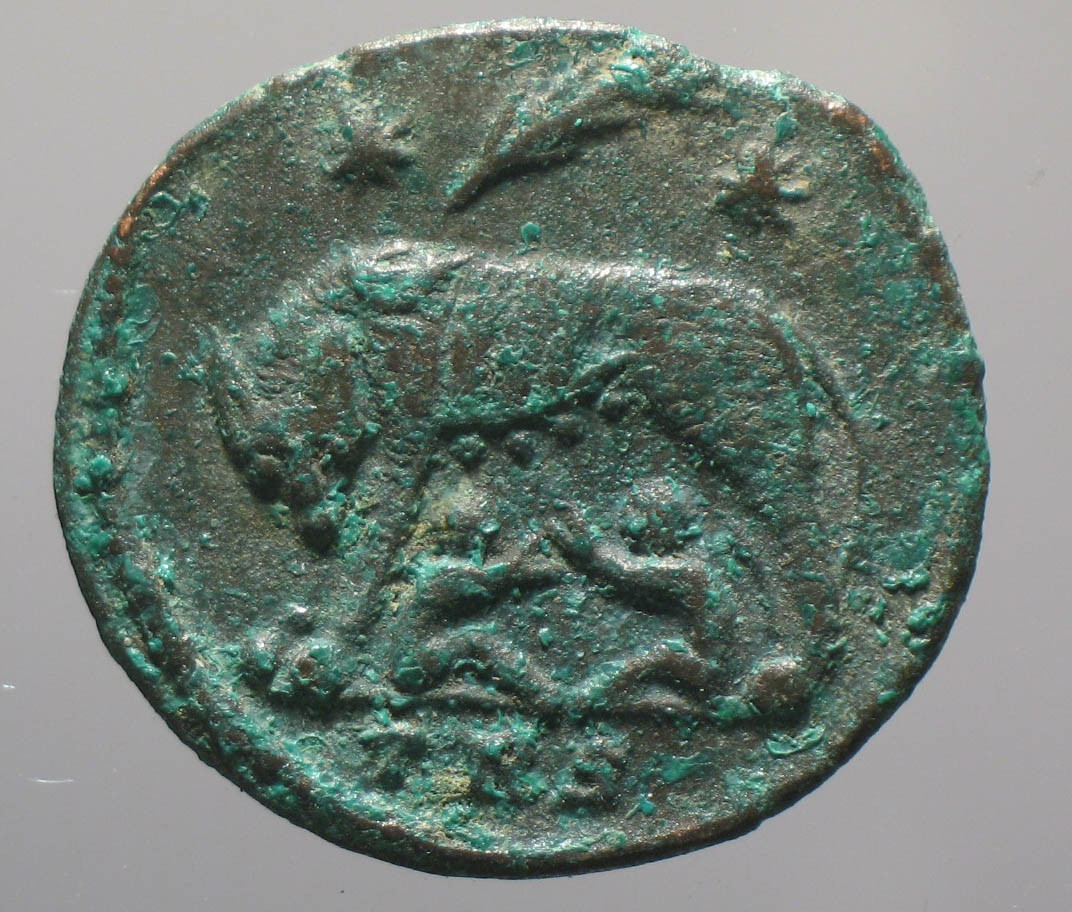
The Seaton Down coins originated from mints throughout Syria, Egypt, and Turkey, though most were struck in Gaul. Their proximity—just 300 meters—from a major Roman site led researchers to infer the hoard represented accumulated wages or estate funds.
Cadbury remarked that the hoard’s burial coincided with Emperor Constantius II’s dispatch of notary Paulus Catena to Britain to eliminate supporters of the usurper Magnentius. An observer later suggested, “the owner may have been a victim of Catena’s brutal purge, leaving the hoard buried and forgotten.”
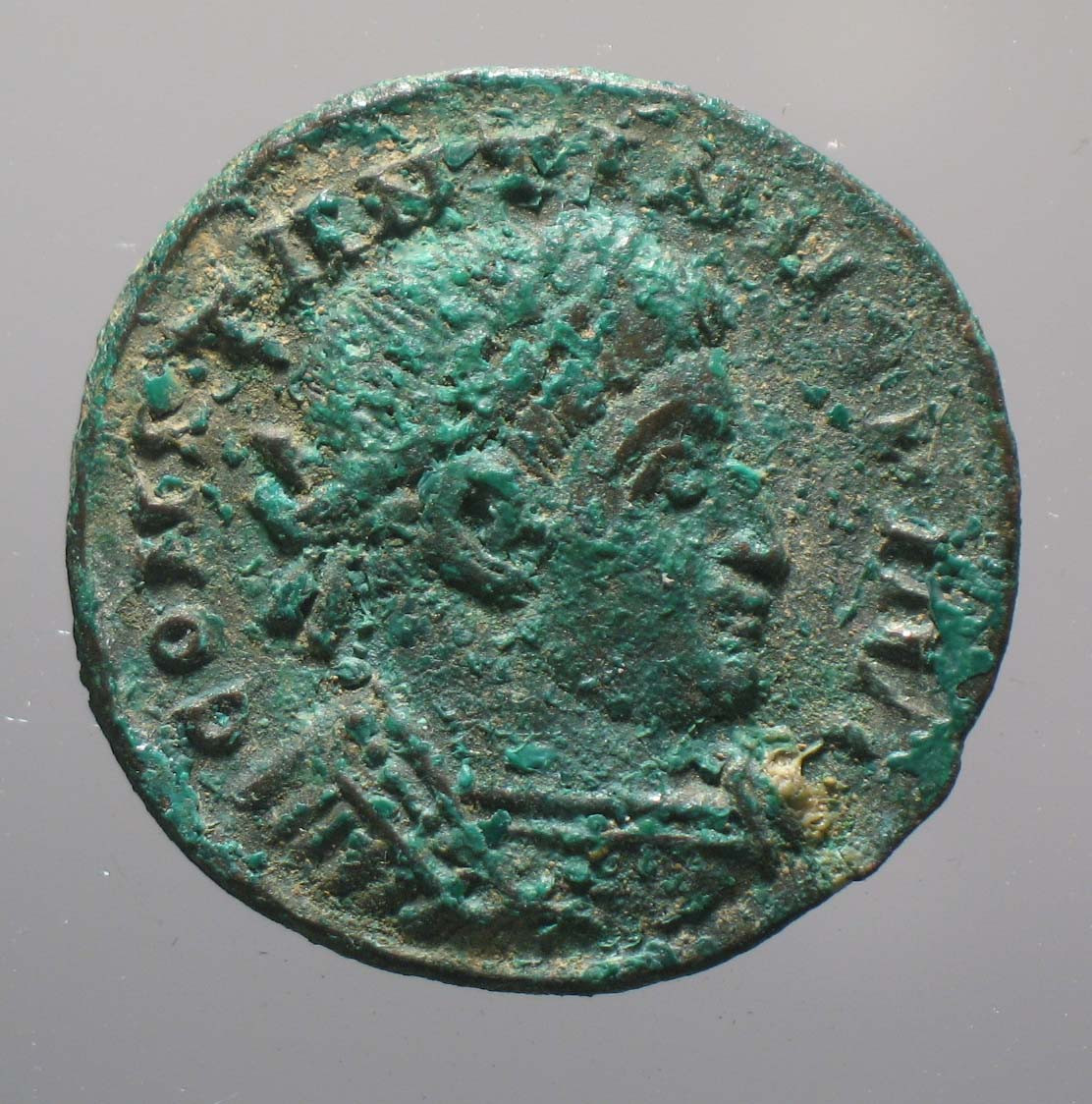
The Sardinian find stands apart in context: it is maritime, double in size, shows no sign of intentional recovery, and lacks clear political connections that characterize the British cache.
When Monetary Trust Faltered
The nummus was originally created as a remedy. Diocletian, who ruled from 284 to 305 AD, inherited a crumbling silver currency system widely rejected by the market. Historian Ralph W. Mathisen’s overview of Diocletian’s financial reforms notes that though the emperor implemented controls like the Maximum Price Edict, these had limited success, and the gold and silver coinage he tried to reintroduce couldn’t be maintained at scale.
The result was the survival of the bronze nummus, whose face value was upheld by imperial decree rather than metal content. The Sardinian hoard, minted decades after Diocletian’s abdication, marks the mature phase of this system. By 340 AD, economic historians estimate that the currency had lost enough trust that soldiers and officials increasingly received pay in kind—grain, oil, textiles—and other goods via the annona system.
Authorities investigating the hoard speculate the shipment might have been converting one form of state obligation into another. They have not excluded the possibility that the vessel was transporting tax revenues en route to regional allocations, or coins rejected by populations who preferred payment in goods.
- Categories:
- News


0 comments
Sign in to Comment