
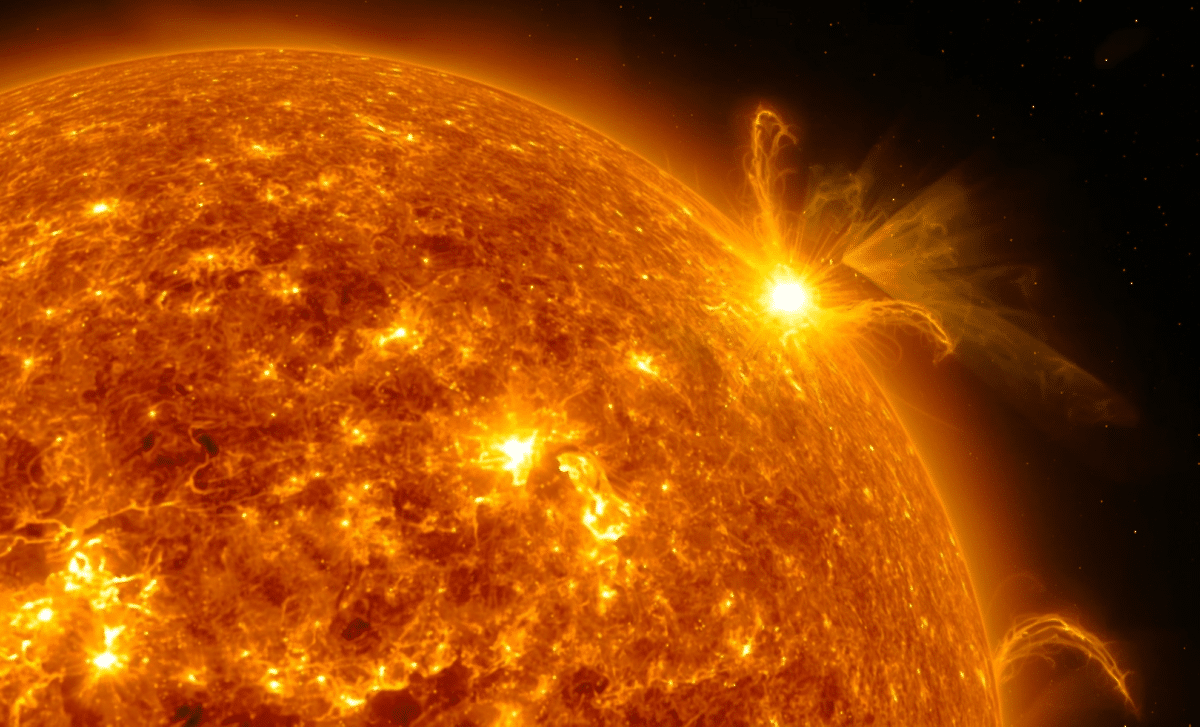
In a breakthrough observation, scientists have unveiled the subtle signals preceding a colossal solar flare. A new study posted on arXiv, led by Louis Seyfritz from the New Jersey Institute of Technology, documented the early warning signs of an X9-class solar flare several hours before it erupted, shedding light on the underlying processes that announce these powerful solar events.
Monitoring the Quiet Before Solar Turmoil
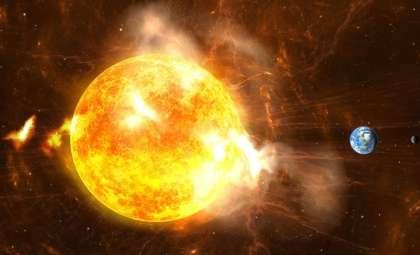
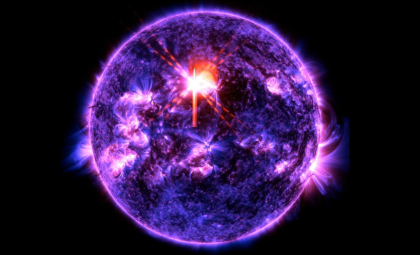
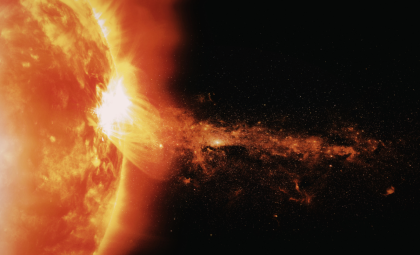
On October 3, 2024, the sun released an X9.0-class solar flare, ranking among the most potent flares observed. Fortuitously, multiple space observatories were already monitoring the same solar region following an earlier, strong flare. This simultaneous coverage enabled researchers to capture the sun’s activity during the crucial hours preceding the eruption.
The study centered on three key attributes of light emitted by the solar plasma: turbulence, velocity, and brightness. By examining temporal variations and employing wavelet analysis—a technique to detect recurrent patterns—the team reconstructed a precise sequence of events leading up to the flare. This comprehensive dataset marks one of the most detailed pre-flare observations, providing new insights into solar dynamics that have eluded detection until now.

Oscillatory Patterns Reveal Complex Internal Activity
The analysis uncovered two separate oscillation ranges prior to the flare: a shorter period of roughly 7–10 minutes and a longer one lasting about 18–21 minutes. These oscillations were concentrated along the interface of opposite magnetic polarities, indicating multiple interacting phenomena within the solar plasma.
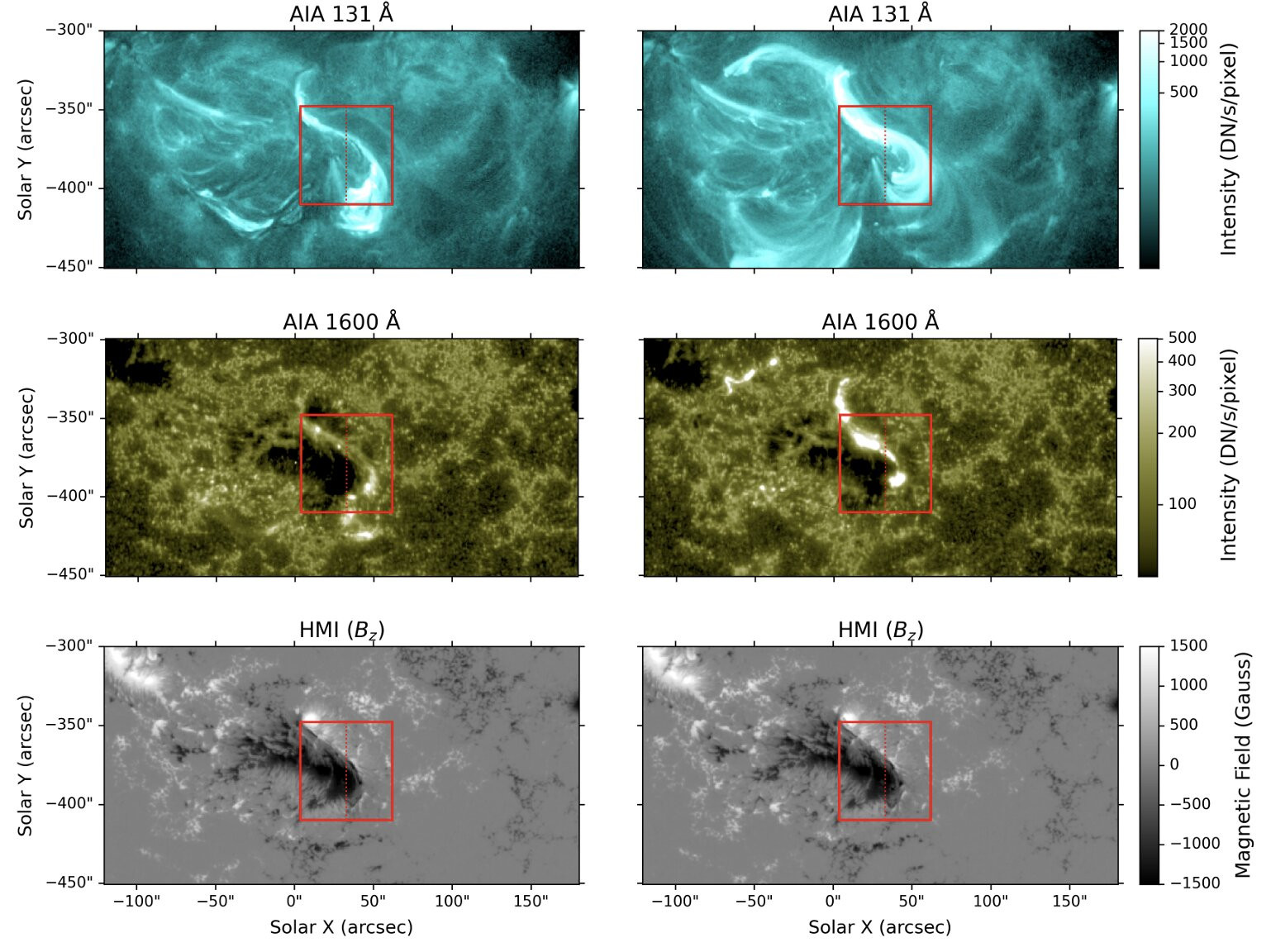
These rhythmic fluctuations demonstrate an active solar atmosphere. The quicker cycles likely represent localized turbulence and energy transfer within plasma dynamics, while the slower waves suggest significant magnetic field reorganizations. Their concurrent presence offers fresh perspectives on the triggers that precede major flaring events.
Steady Build-Up Culminates in a Rapid Outburst
Alongside these oscillations, a gradual increase in turbulence, speed, and luminosity was observed beginning about three hours ahead of the flare. This points to a progressive buildup of magnetic energy and stress, likely caused by the twisting of magnetic flux ropes.
The escalation became more pronounced 15–20 minutes before the flare, when plasma accelerated outward, signaling the onset of magnetic reconnection. This process unleashes immense energy, powering solar flares. This shift from slow destabilization to explosive release highlights the critical period during which early warning signs emerge, potentially enhancing flare prediction methods.
Advancing Forecasts for Solar Activity
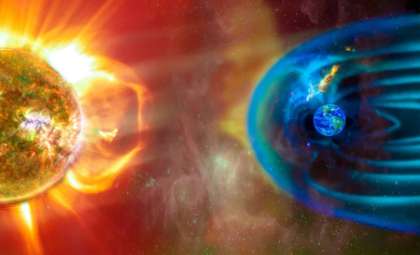
While centered on a single event, these findings propose a valuable model for spotting pre-flare indicators elsewhere on the sun. Detecting similar signals in future flares could empower astronomers to forecast solar storms more accurately, safeguarding satellites, electrical grids, and space missions from hazardous radiation.
This research, published on arXiv, establishes significant progress in unraveling the complex lead-up to solar eruptions. Seyfritz and his team illuminate the interactions between plasma oscillations and magnetic instability, setting the stage for further exploration and improved space weather prediction.
- Categories:
- Science






0 comments
Sign in to Comment