
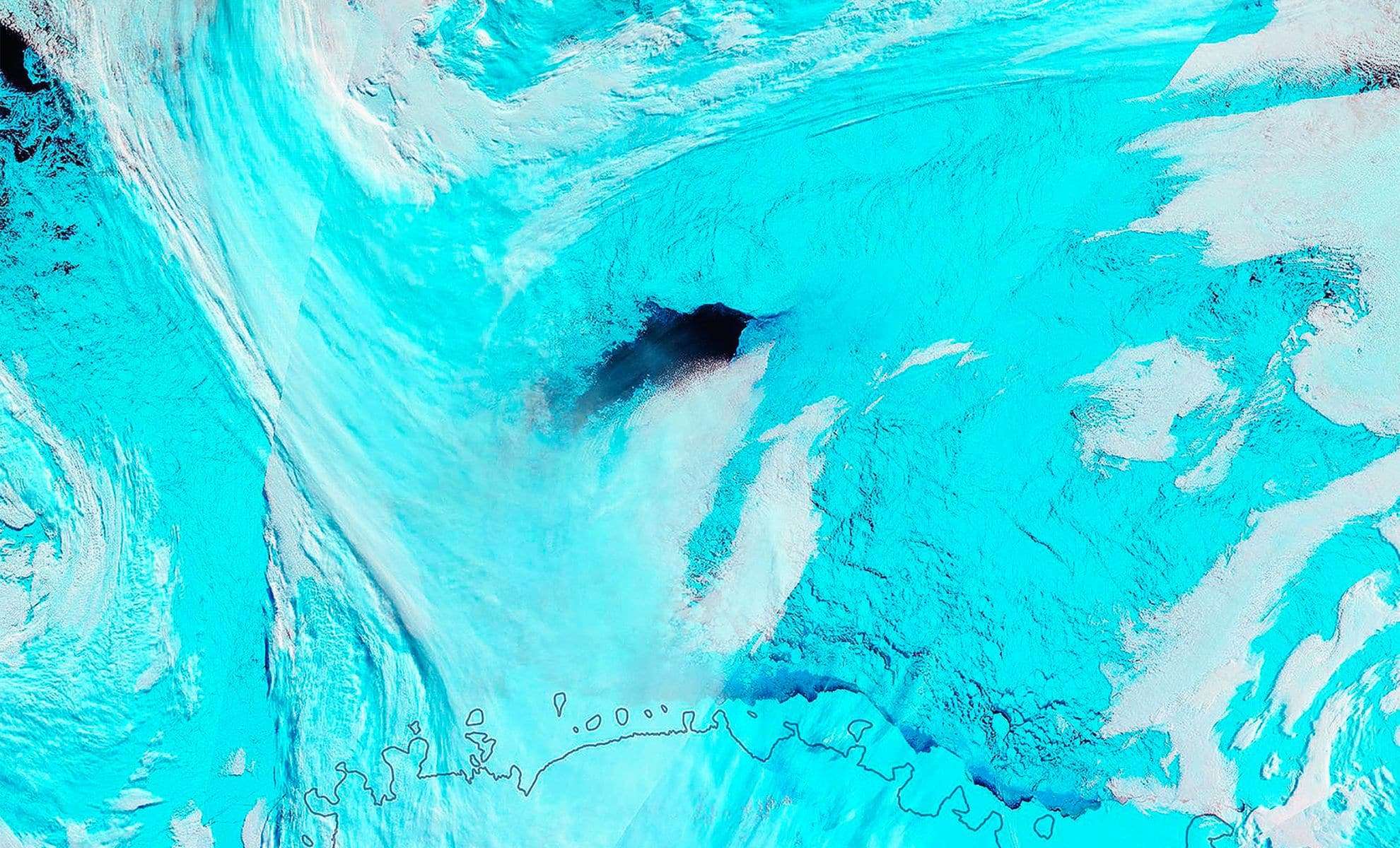
A striking phenomenon has emerged in Antarctica, drawing global scientific focus. This vast opening in the sea ice stayed exposed for multiple weeks, prompting investigation into the forces behind it. The polynya was observed above Maud Rise in the Southern Ocean, a region known historically for occasional polynya development.
Understanding Polynya: Its Formation and Dynamics
Polynyas are patches in sea ice where the frozen surface has fractured or melted away, revealing the ocean beneath. While such openings commonly occur in polar areas, the scale and duration of the Maud Rise polynya make this instance exceptional.
Several elements contributed to the creation of this immense opening. A key factor was Ekman transport, a phenomenon where wind-driven ocean currents push dense, salty water into the area. This process enhanced the subsurface melting of ice, sustaining the hole for weeks on end.
Maud Rise’s Influence During the 2017 Polynya Occurrence
Maud Rise, an underwater mountain beneath the Weddell Sea, has long been implicated in polynya formation.
The region was first noted as a site prone to these openings between 1974 and 1976 when a significantly larger polynya was recorded.
Researchers have hypothesized that interaction between the seamount and ocean currents generates circulation patterns that trap warmer salty water, eroding ice from below.

In 2017, after years of intermittent occurrences, a substantial polynya re-emerged over Maud Rise, reigniting scientific inquiry.
During this period, the Weddell Gyre intensified, bringing warmer deep water closer to the surface and weakening ice integrity from beneath. Despite this, the fact that the polynya persisted through winter remained a mystery.
The Impact of Storm Activity on Antarctica’s Ice
Wind and storm events played a significant role in the prolonged existence of the Maud Rise polynya. Recent studies indicate that extratropical storms, which have grown more frequent with global warming, injected energy to keep the opening from closing.
These storms facilitated the movement of sea ice outward, while atmospheric rivers—large streams of moisture—added heat at the surface, accelerating ice melt. Together, they were crucial in sustaining the polynya.
Evidence points to climate change as a driving force. As atmospheric and ocean conditions evolve with rising global temperatures, the likelihood and strength of such storms are expected to increase.
According to research published in Science Advances, scientists worry these shifts could disturb the Antarctic ice system further, causing faster ice retreat and more variable weather.
From Antarctic Melting to Global Ocean Processes
Although polynyas like the one in the Southern Ocean appear localized, their ramifications extend worldwide. Polynyas affect major ocean circulation systems, including the global conveyor belt that distributes heat and carbon throughout the Earth.
The deep convection triggered by the polynya allows heat to escape from the ocean’s interior, and upwelling waters may release carbon dioxide into the atmosphere, potentially accelerating climate change.
Additionally, oxygen-enriched waters combined with dense brine generated in the polynya travel along the seafloor.
The Maud Rise polynya influences ocean currents far beyond its immediate location, affecting global heat and carbon cycling.
- Categories:
- News










0 comments
Sign in to Comment