
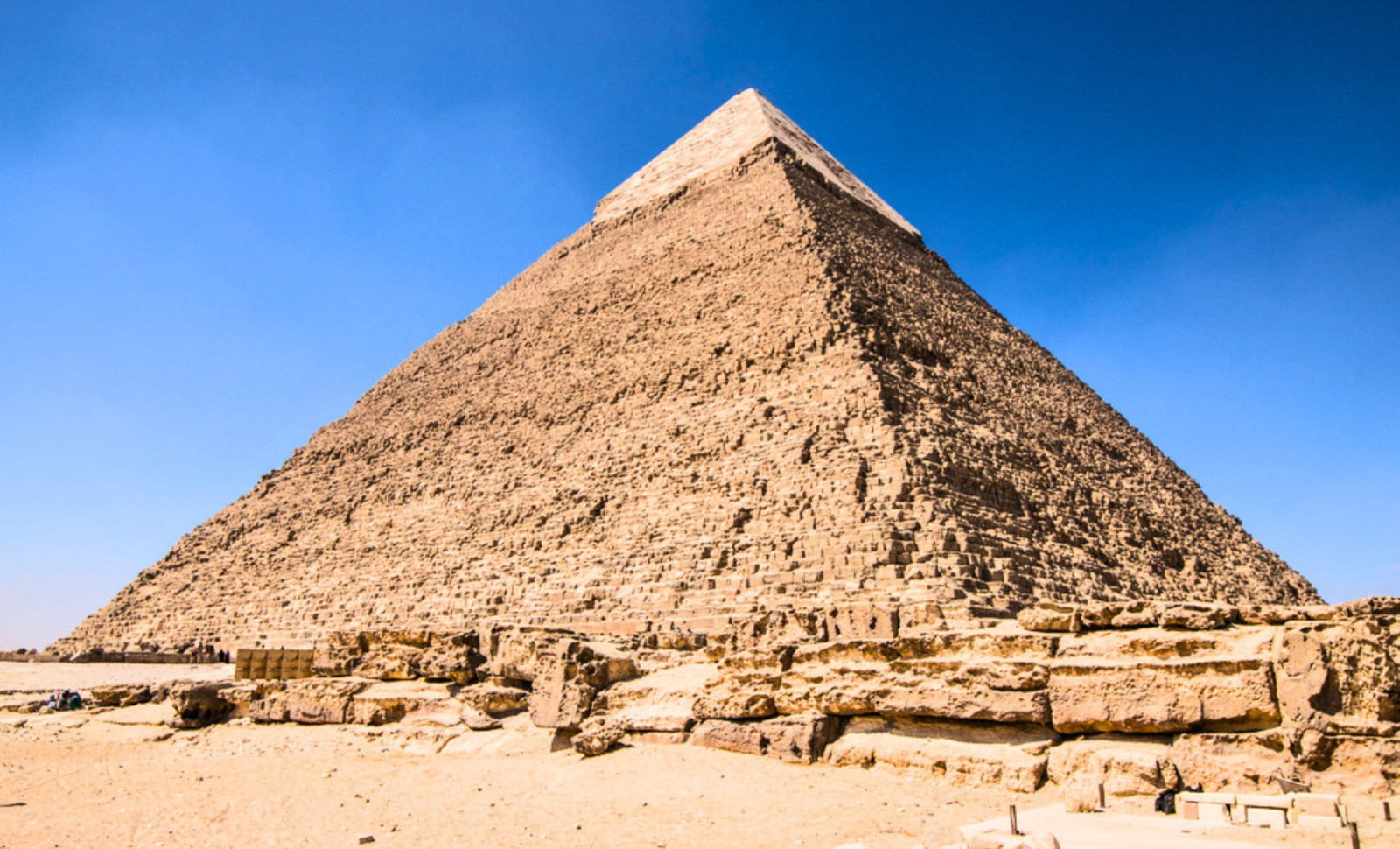
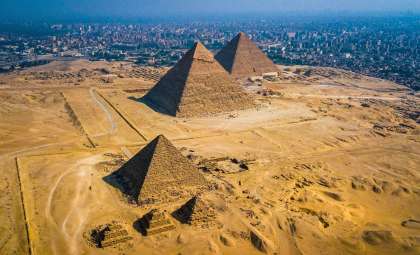
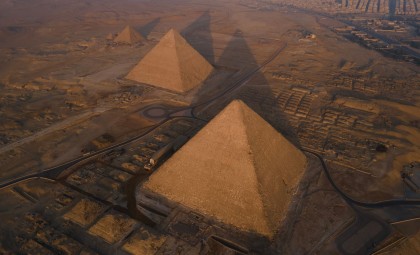
Researchers have verified the existence of a massive concealed cavity inside the Great Pyramid of Giza that has remained closed for almost 4,500 years. This discovery was independently confirmed using three distinct detection methods by separate physics teams, according to a paper published in Nature. Situated just above the Grand Gallery, the void extends at least 30 metres in length—rivaling the size of one of the pyramid’s most elaborate internal features.
This revelation marks the first significant internal structure discovered inside the pyramid since the 19th century. Further investigations have lengthened the estimated size of the void to a minimum of 40 metres, confirming it is a continuous open space rather than a collection of smaller voids.
Unveiling the Pyramid’s Interior With Cutting-Edge Physics
The ScanPyramids expedition, a collaboration led by Cairo University alongside France’s Heritage Innovation Preservation (HIP) Institute, utilized muon radiography to non-invasively peer inside the pyramid. Muons, subatomic particles produced when cosmic rays collide with atoms high in Earth's atmosphere, pass through materials at a predictable rate. By positioning detectors within and around the pyramid, scientists can pinpoint hidden cavities where muons are less impeded than by dense stone.

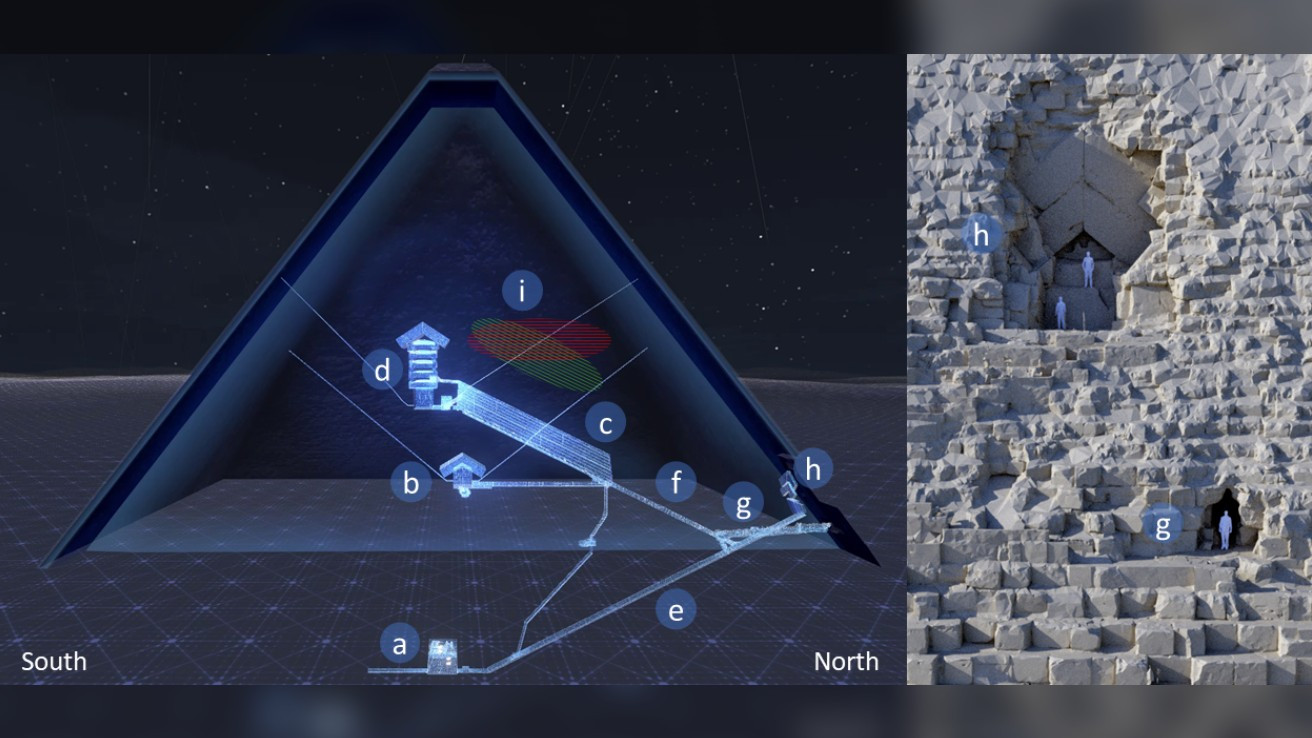
Teams from Nagoya University deployed nuclear emulsion detectors inside the Queen’s Chamber while researchers from Japan’s High Energy Accelerator Research Organization (KEK) placed scintillator hodoscopes at the same site. Meanwhile, physicists from France’s Commissariat à l’Énergie Atomique et aux Énergies Alternatives (CEA) stationed gas detector telescopes on the pyramid’s northern face.
Each team, employing their own instruments independently, observed the void in the exact same location. “Such a big void can’t be an accident,” remarked Mehdi Tayoubi, HIP Institute’s president and co-leader of the investigation.
A Cathedral-Sized Void With an Enigmatic Role
The newly termed Big Void measures approximately eight metres in height, two metres in width, and extends no less than 40 metres long, located about 20 metres from the pyramid’s base. Its cross-section nearly mirrors the adjacent Grand Gallery, which itself spans 47 metres in length and towers 8.6 metres tall.
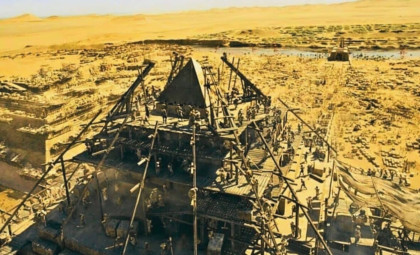
University of Cambridge archaeologist Kate Spence shared with National Geographic that the void lining up with the pyramid’s upper pressure-relief chambers suggests it might have been an internal ramp constructed during the pyramid’s assembly. Such a ramp would aid in elevating the immense granite slabs that form the roof of the King’s Chamber.
Post-construction, this internal passage could have been left hollow or filled with rubble. Egyptologist Salima Ikram from the American University in Cairo pointed out that the void’s position directly above the Grand Gallery hints at its potential involvement in the construction of that corridor.
Other experts speculate the space could conceal a burial chamber belonging to Pharaoh Khufu, whose mummified remains have never been located. The sarcophagus in the King’s Chamber was found empty, leaving open the question of Khufu’s final resting place. Neither hypothesis has been validated, as the cavity remains physically inaccessible.
Additional Passageways and a Locked Door
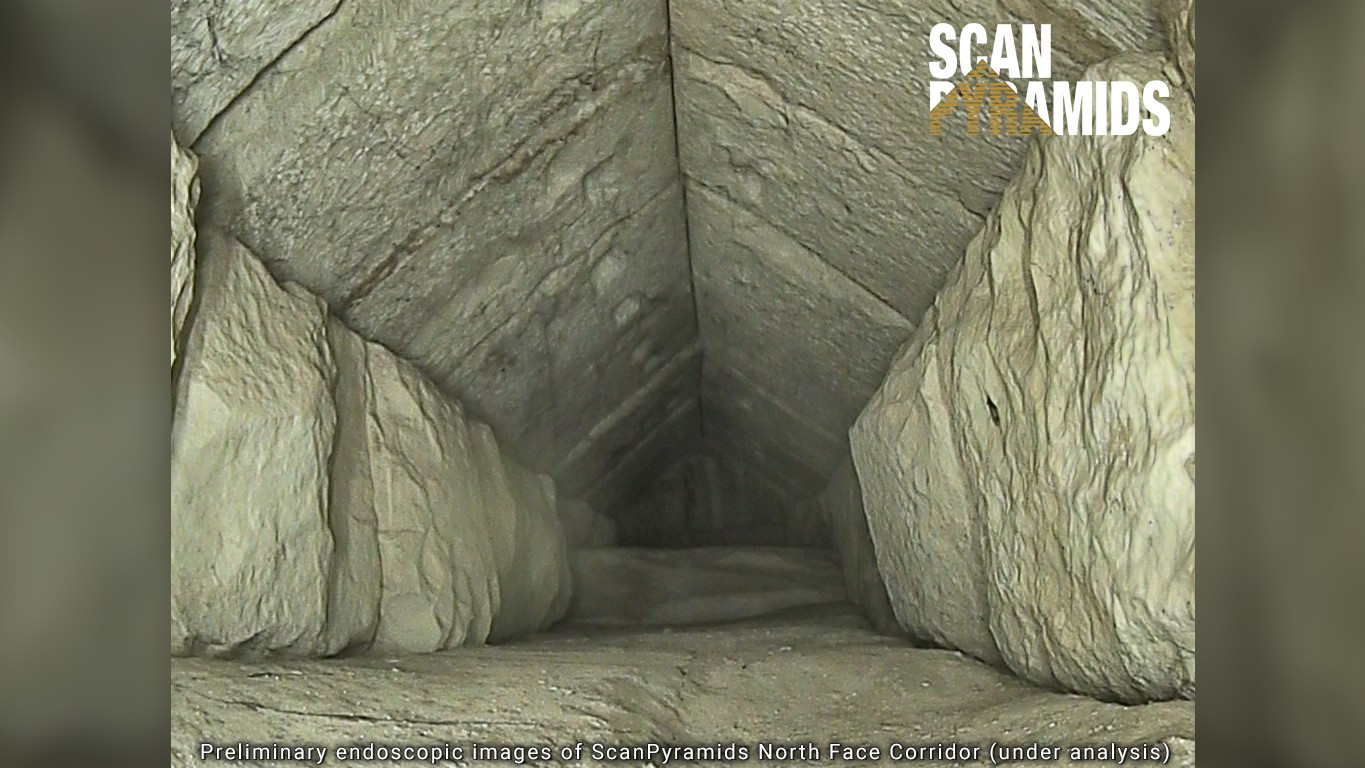
The ScanPyramids team uncovered more than just the Big Void. A smaller hidden corridor was discovered behind the distinctive chevron-patterned stones on the north face of the pyramid, situated between 17 and 23 metres above the ground. In early 2023, an endoscope was inserted into this passage, capturing the first-ever images from inside. Initial visuals revealed no artifacts, though the complete interior remains to be explored.
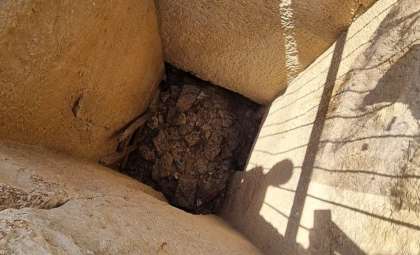
Egyptologist Zahi Hawass recently reported that a roughly 30-metre-long passageway has been discovered deeper inside the pyramid. Remote-controlled robots equipped with cameras explored this corridor and reached a sealed stone door. Hawass anticipates unveiling what lies beyond this door by 2026.
Next-Generation Technology Targets Ancient Mysteries
In 2022, a research group revealed plans to install muon detection instruments with sensitivity nearly 100 times greater than current devices, aiming to create the first full tomographic images of the pyramid from multiple perspectives simultaneously. Another recent study using Synthetic Aperture Radar Doppler Tomography proposed that the pyramid's internal passages could be far more intricate than existing maps suggest.
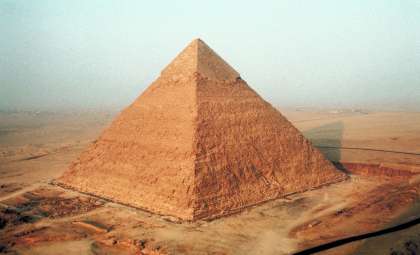
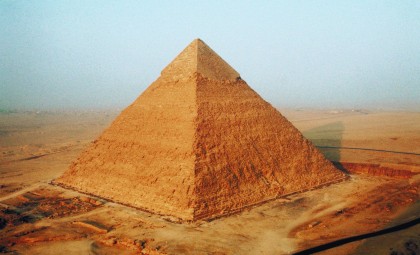
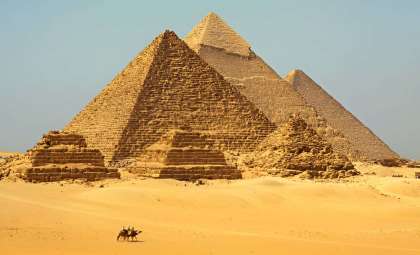
Commissioned by Pharaoh Khufu and constructed between roughly 2509 and 2483 BC, the Great Pyramid includes around 2.3 million limestone blocks and stands as the only surviving wonder of the ancient world. Despite extensive study over centuries, its interior continues to surprise researchers through advancements in imaging and particle physics.
A sealed stone barrier found at the end of a newly detected internal corridor, accessed by robotic probes, is planned to be opened and publicly disclosed in 2026.
- Categories:
- Science



0 comments
Sign in to Comment