
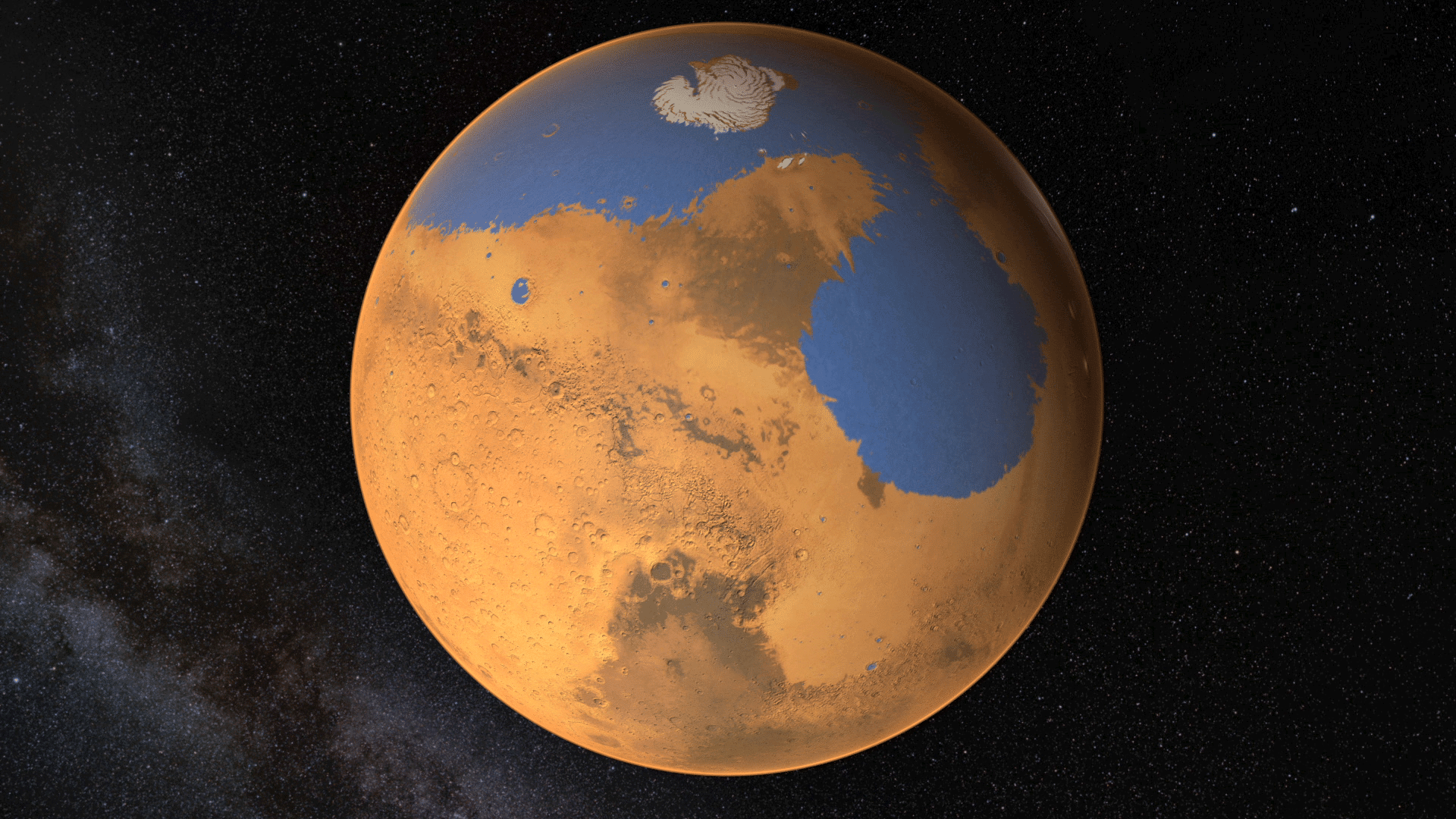
Scientists have unveiled a vast underground reservoir of water hidden beneath one of Mars’s most mysterious landscapes—the Medusae Fossae Formation. Situated almost two miles below the Martian surface, this thick ice-bearing deposit is believed to be the largest non-polar water store found on Mars so far. Detailed in a recent Geophysical Research Letters publication, these discoveries offer fresh insights into Mars’s past habitability, the prospects for future missions, and the planet’s climatic evolution.
Frozen Depths Under Martian Terrain
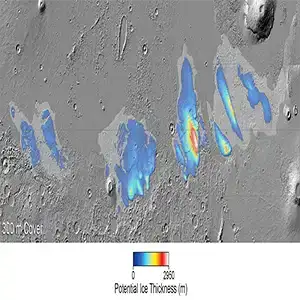
The Medusae Fossae Formation spans the boundary between Mars’s smooth northern plains and its more jagged southern highlands. Once thought to be composed mostly of dust and volcanic ash, new radar data reveal substantial layers of ice buried beneath its wind-carved ridges.
“Using updated MARSIS radar data from Mars Express, we’ve detected deposits reaching depths of up to 2.2 miles—thicker than previously estimated,” explained Thomas Watters from the Smithsonian Institution, the study’s principal investigator.

Watters’s team notes the radar signatures closely resemble those from Martian polar ice caps, affirming the presence of ice beneath the surface.
Transforming Our Understanding of Martian Water
Researchers estimate that if the ice beneath the MFF were to fully melt, it could generate a global ocean covering Mars to a depth of approximately 5 to 9 feet—comparable in volume to Earth’s Red Sea. This abundance of water in a region once considered predominantly arid challenges prior assumptions.
This massive subsurface water source might prove pivotal for ongoing exploration, resource extraction on Mars, and even discussions about potential planetary terraforming.
Revisiting Geological Assumptions
Scientists have long debated whether the MFF consisted mainly of windblown dust, volcanic ash, or dry sediments. Andrea Cicchetti from Italy’s National Institute for Astrophysics highlights how new radar evidence offers a different perspective.
“If the MFF were simply a dry sediment pile, its weight would compact it into something denser than what our radar detects. None of the ice-free materials modeled correspond with the observations. Ice must be a significant component,” Cicchetti said.
This discovery not only revises understandings about the MFF’s composition but also reshapes the timeline of when water existed in Mars’s equatorial zones.
Strategic Significance for Human Missions
Although Martian poles contain abundant ice, their rough terrain and logistical hurdles make them less appealing for human exploration. The presence of significant water ice near the equator—a region favored for future crewed landings—could represent a vital resource.
ESA’s Mars Express scientist Colin Wilson commented, “While the MFF’s icy deposits remain hidden beneath thick dust for now, every discovery expands our knowledge of Mars’s water reserves and hydrological past.”
Unraveling Mars’s Climatic Enigma
Beyond exploration, uncovering deep ice deposits near the equator raises intriguing questions about Mars’s climate evolution. What conditions allowed water to amass and endure far from polar regions? What environmental factors were at play when the ice formed? Could this frozen archive house evidence of ancient life?
“This new evidence compels us to rethink the Medusae Fossae Formation's history and leaves many mysteries to explore,” Wilson added.
The layered structure—ice capped by dust and ash—may have preserved these water reserves for millions of years, providing a glimpse into a wetter Martian past.
- Categories:
- Astronomy ,
- News




0 comments
Sign in to Comment