
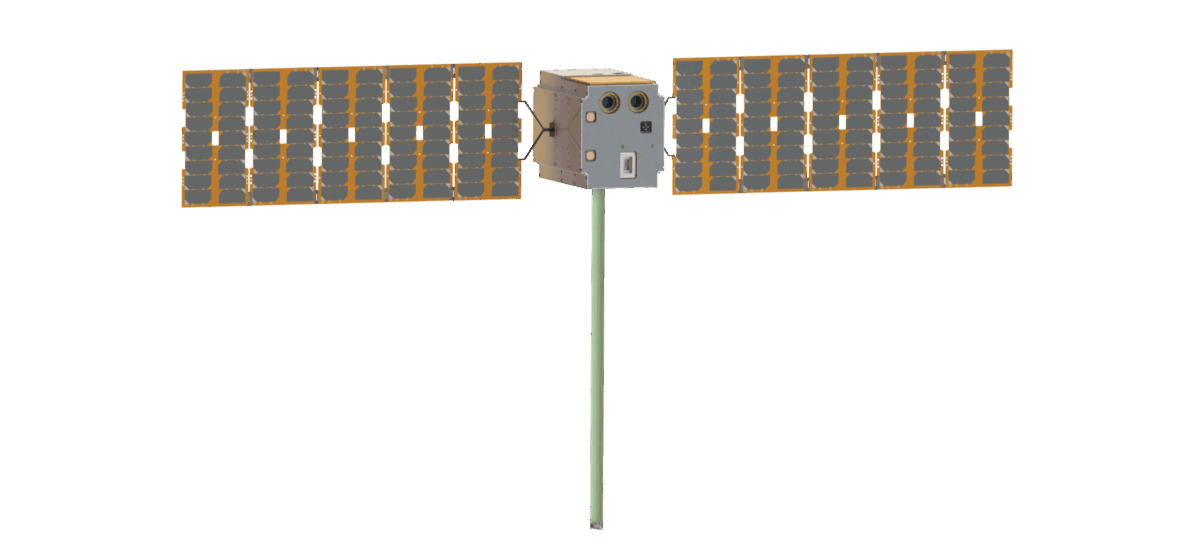
The European Space Agency (ESA) is on the verge of a breakthrough with Henon, the inaugural CubeSat crafted to independently explore deep space. This small but sophisticated spacecraft, about the size of a carry-on suitcase, will orbit the Sun, studying solar activity and signaling a major step toward autonomous missions far beyond Earth’s orbit.
Pushing the Limits of Compact Spacecraft Design
The Henon mission—short for Heliospheric Pioneer for Solar and Interplanetary Threats Defense—is setting new standards for CubeSat capabilities. Unlike earlier small satellites dependent on larger systems for communication and navigation, Henon will function solo, linking to Earth via ESA’s Estrack system with a cutting-edge mini deep-space transponder. This autonomous operation is unprecedented at this scale.
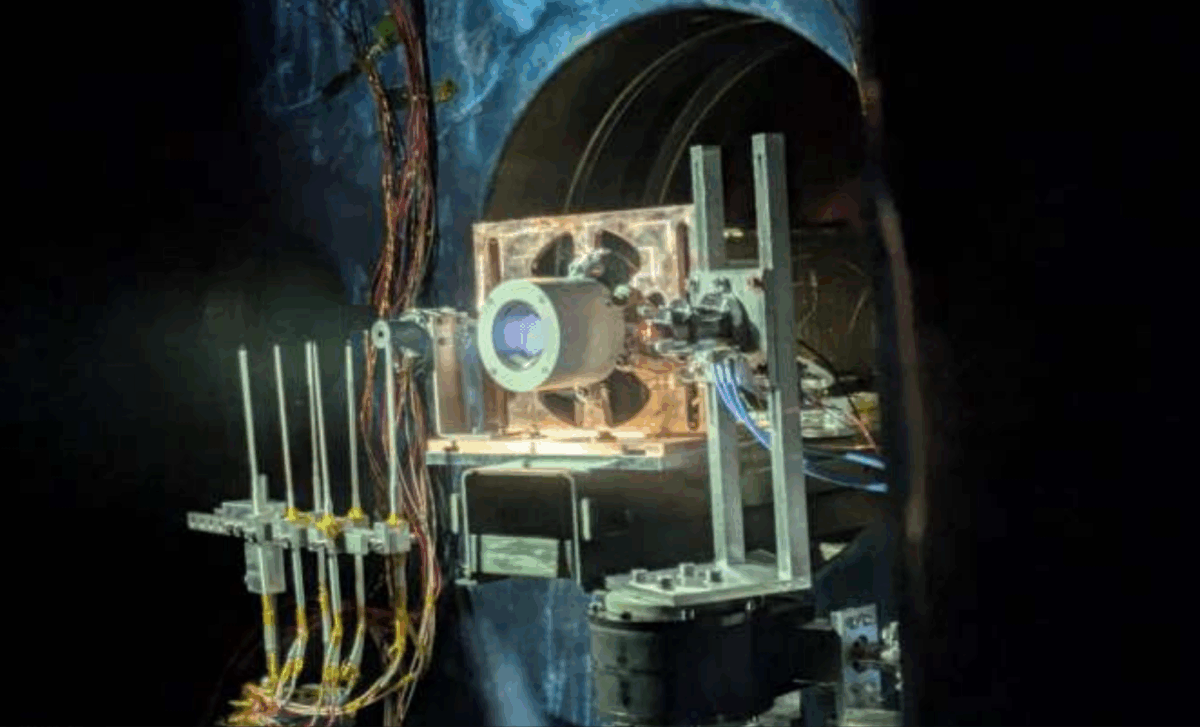
Central to Henon’s advanced design is its electric propulsion system—a compact ion thruster that uses energized xenon atoms to conduct precise maneuvers in the vastness of space.

“This new propulsion system, once demonstrated, will open up opportunities for future low-cost missions to the moon, asteroids, and even in Mars orbit,” adds Roger Walker, ESA’s Technology CubeSats Manager.
This propulsion innovation not only improves deep-space navigation efficiency but also slashes costs, making it feasible to deploy entire fleets of self-governing explorers.
ESA has confirmed that Henon’s design, developed by prime contractor Argotec, successfully passed the Critical Design Review, marking a vital engineering milestone. Davide Monferrini, Program Manager at Argotec, hailed the accomplishment:
“It showcases our collective commitment to achieving technical and programmatic excellence while validating a truly innovative configuration featuring three payloads and multiple miniaturized subsystems, including our Curie Power Suite, the advanced Power Conditioning and Distribution Unit (PCDU) that will serve as Henon’s ‘electric heart.’ Together, we remain committed to maintaining this high standard of excellence as we move forward.”
Charting a New Orbit Around the Sun
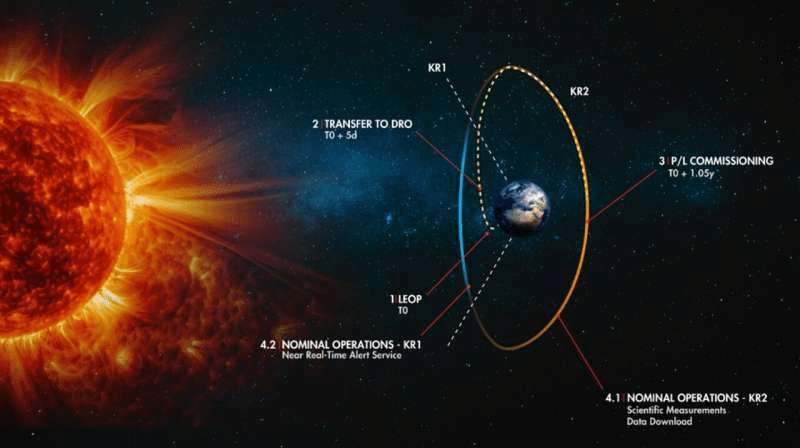
Henon’s path will take it to a Distant Retrograde Orbit (DRO) around the Sun, a fascinating trajectory first described by French astronomer Michel Hénon in 1969. This distinctive, elliptical orbit ranges from 12 to 24 million kilometers away from Earth. Positioned here, Henon will continuously monitor solar emissions to enhance forecasts of space weather.
ESA detailed how this orbit offers advantages beyond the traditional Sun-Earth Lagrange Point 1, favored by current solar observatories. Henon’s instruments aim to detect solar storms well before they reach Earth, potentially extending warning times from less than an hour to as long as six hours, crucial for safeguarding satellites, astronauts, and ground infrastructure from damaging solar events.
Juha-Pekka Luntama, leader of ESA’s Space Weather Office, highlighted the mission’s larger impact:
“Demonstrating this warning capability with Henon will open up a new pathway to develop a future constellation of small spacecraft that would operate in the DRO and keep a close watch on the progress of solar storms. This constellation would provide a continuous warning service for operators of critical infrastructure, like electrical power grids, on ground, giving us ten times more time to implement mitigation measures to prevent damage.”
Preparing for Launch: From Prototype to Final Testing
Prior to its launch, targeted for late 2026, a FlatSat prototype—featuring exposed electronics on a test bench—will undergo evaluations for software, communication systems, and overall robustness. Upon successful validation, the spacecraft will face demanding environmental tests simulating the harsh vacuum, radiation, and temperature conditions of interplanetary space.
These final qualifications are critical to ensure Henon’s durability millions of kilometers from Earth. If all goes well, the mission will not only yield valuable scientific insights but also blaze a trail for compact, cost-effective deep-space exploration platforms.
- Categories:
- Space




0 comments
Sign in to Comment