
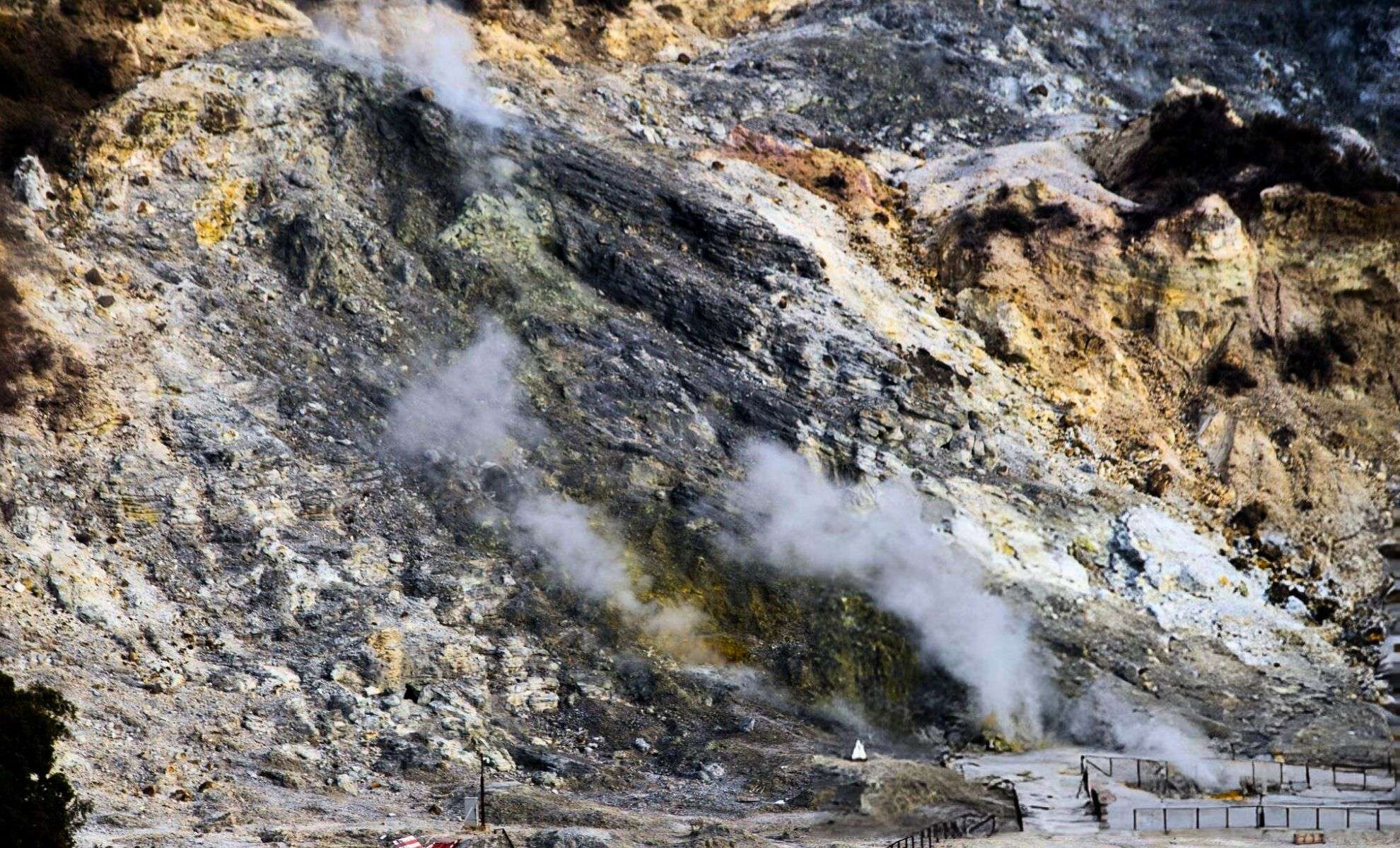
Hidden beneath Mount Vesuvius lies a far larger peril—the Campi Flegrei supervolcano, recognized as Europe’s most formidable volcanic threat. In the past year, increased seismic events have raised serious concerns, as this volcanic giant’s awakening could have devastating consequences. With a population exceeding two million residing in the danger zone, the inevitable question shifts from if to when this supervolcano will erupt.
Growing Menace Under Italy’s Coastline
Covering the Bay of Pozzuoli, Campi Flegrei is more than a simple volcano; it is an extensive caldera created by cataclysmic eruptions long ago, eclipsing any recent volcanic activity in magnitude. Its last major explosion occurred nearly 40,000 years ago, transforming the environment and possibly impacting prehistoric human development.
In 2023, seismic disturbances have surged beneath Naples, with experts detecting more than 3,000 earthquakes over six months, including upwards of 65 surpassing magnitude 2. A particularly strong magnitude 4 quake struck southern Naples on September 27, 2023—the most intense in four decades—triggering heightened vigilance among volcanologists.

The significance extends beyond tremor counts. Each quake weakens the earth's crust overlaying the magma chamber located just 5 to 6 kilometers underground, elevating the risk of a sudden eruption according to Italy's National Institute of Geophysics and Volcanology (INGV).
Potential Impact of an Eruption on Italy and Beyond
An eruption at Campi Flegrei could have catastrophic ramifications. At a minimum, harmful ash and gases would severely affect local farming and necessitate large-scale evacuations. In the worst case, it could induce a volcanic winter with global repercussions, disrupting ecosystems and food supplies worldwide.
Historical supervolcano events such as the Toba eruption in Indonesia have caused drastic climate alterations and species extinctions. Campi Flegrei’s massive blasts 36,000 and 14,000 years ago were among Earth’s most powerful, possibly influencing the extinction of Neanderthals. A similar eruption today would produce consequences unmatched in history.
Italy’s Preparedness Amid Rising Dangers
Italian officials have intensified emergency strategies, including evacuation exercises and public education efforts. Infrastructure upgrades aim to improve evacuation routes, and shelters have been readied for those displaced.
Nevertheless, the immense population density complicates evacuation plans—half a million individuals live within the caldera, alongside millions more at risk nearby. Rapid evacuation under sudden eruption conditions could become a logistical nightmare.
Adding to the complexity is the phenomenon called bradyseism, where gradual ground uplift and subsidence due to shifting magma and gases makes it challenging to distinguish between normal volcanic patterns and signals of impending eruptions.
Monitoring and Future Outlook
At present, researchers continue rigorous surveillance of volcanic gases, ground deformation, and seismic activity to identify any early indications of eruption. Experts at the Vesuvius Observatory emphasize that while a major eruption imminently is improbable, the likelihood of smaller eruptions cannot be dismissed.
Although the direst scenarios may not unfold immediately, the passage of time draws nearer to an eventual eruption. One fact remains undeniable: Campi Flegrei’s revival is certain, with potentially profound impacts on Italy and the planet.
This article has been republished from the following materials. Note: material may have been edited for length and content. For further information, please contact the cited source.
- Categories:
- Science












0 comments
Sign in to Comment