
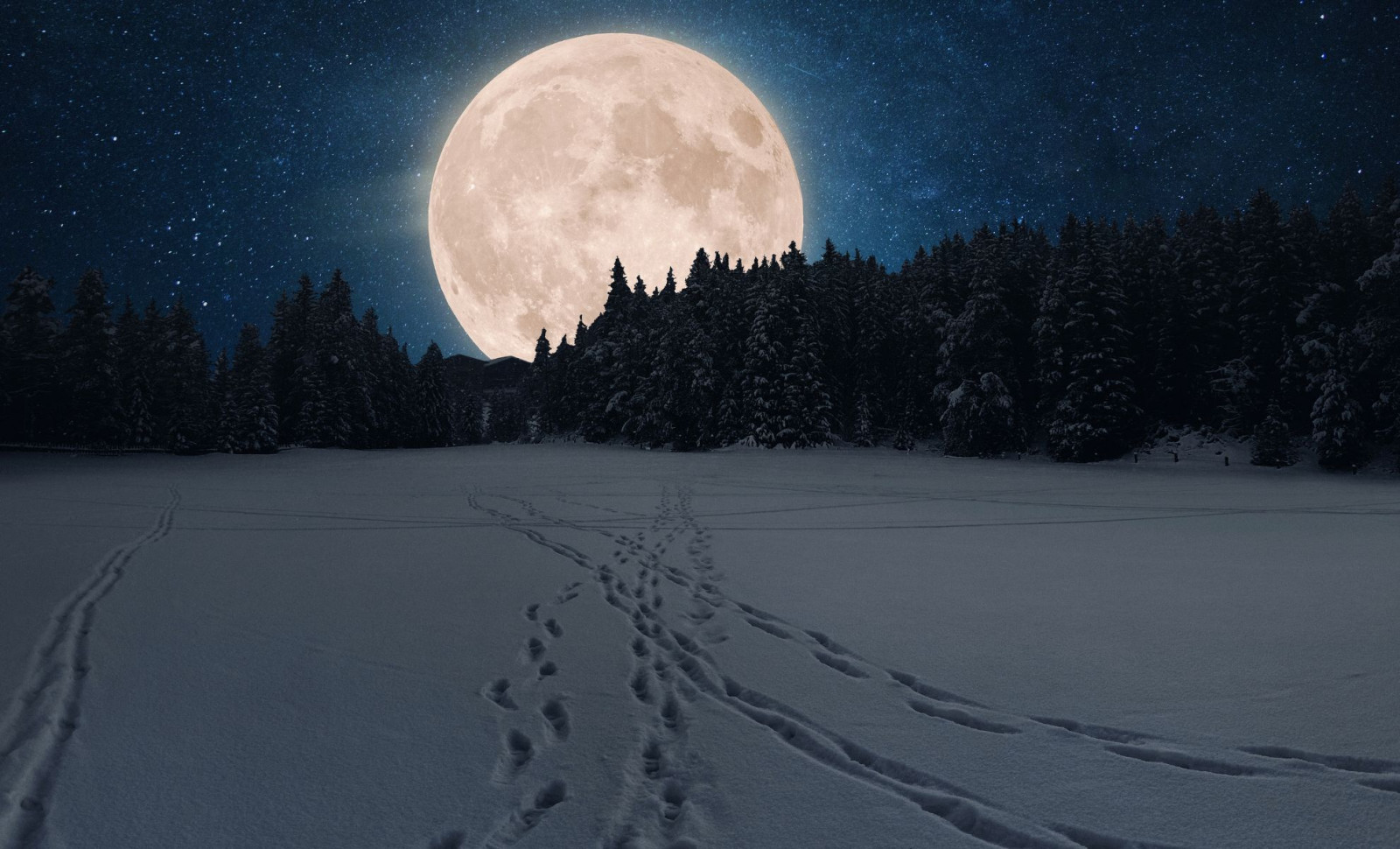
The night sky in February holds a subtle but stunning event. The Snow Moon will rise at twilight, accompanied closely by the Beehive Cluster, a compact group of stars that will appear within the same region of the sky, captivating anyone who looks upward.
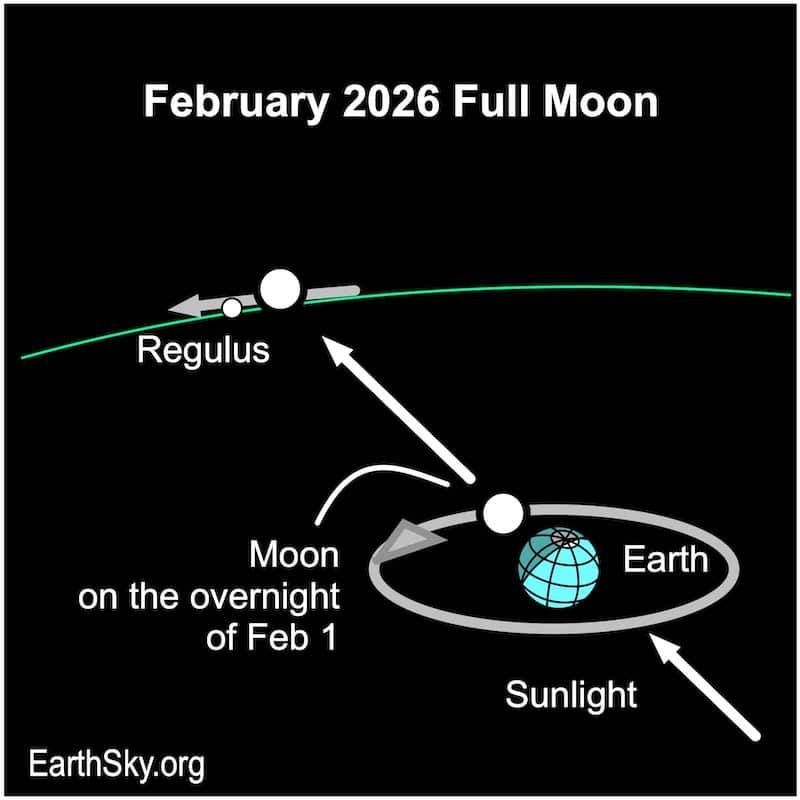
The highlight occurs shortly after. On February 2, observers in parts of North America could witness Regulus, the brightest star in the Leo constellation, temporarily disappear as it passes behind the nearly full Moon in a rare lunar occultation. This fascinating interaction between the Moon and Regulus is not expected again until the late 2030s.
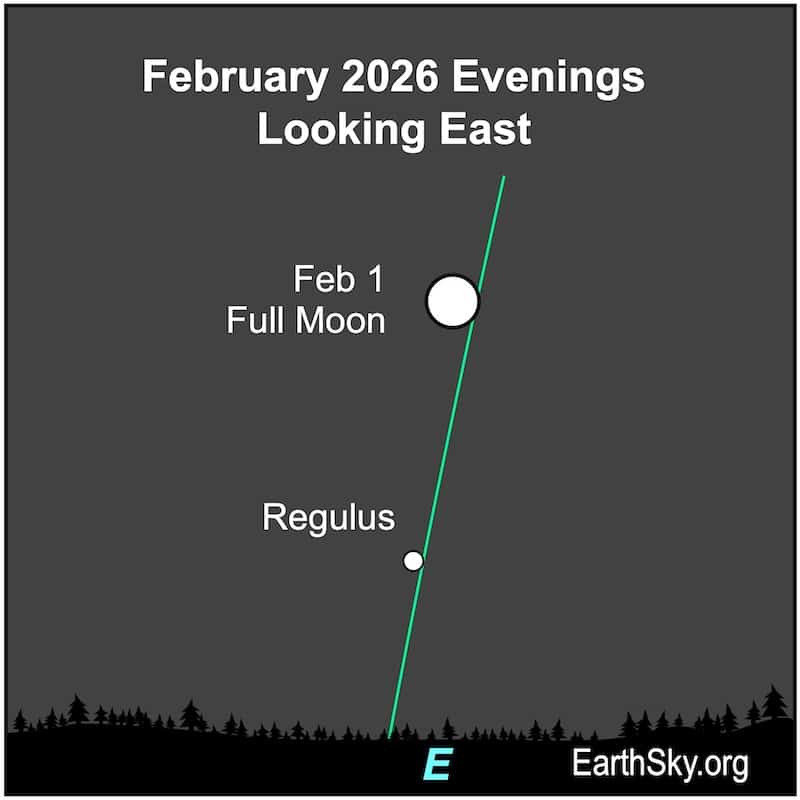
Moonrise Near the Beehive Cluster
The full Moon will reach its maximum illumination at 5:09 p.m. EST on February 1. As the sky darkens, the Moon will ascend just under the Beehive Cluster, one of the closest and most notable open star clusters visible from Earth. According to Live Science, this cluster lies between Pollux in Gemini and Regulus, the leading star of Leo.

Commonly called Praesepe, the Beehive Cluster contains nearly 1,000 stars densely packed, and it can be seen with the naked eye under dark conditions, enhancing the beauty of this lunar display.
Regulus’s Uncommon Eclipse
On February 2, certain locations across North America will be able to observe the sudden disappearance of Regulus as it passes behind the lunar disk, a phenomenon called a lunar occultation. This occurs when the Moon’s trajectory aligns to cover a star from Earth’s perspective.
As highlighted by EarthSky.org, such an event involving a prominent star like Regulus combined with a nearly full Moon is rare, and the next opportunity for this will be in the late 2030s. For those within the viewing area, the star’s fleeting disappearance and return promise a quietly mesmerizing spectacle.
Viewing Details
The event begins with the Moon rising in the east shortly after sunset on February 1, appearing large and bright near the horizon. EarthSky reports that the lunar peak occurs at 22:09 UTC (4:09 p.m. CST), coinciding closely with sunset for viewers in the central U.S.
By midnight, the Moon will be well-positioned in the southern sky and will slowly move westward before dawn on February 2. Observers will notice the Moon nearly full the evening before and the night following the peak illumination.
- Categories:
- News




0 comments
Sign in to Comment